
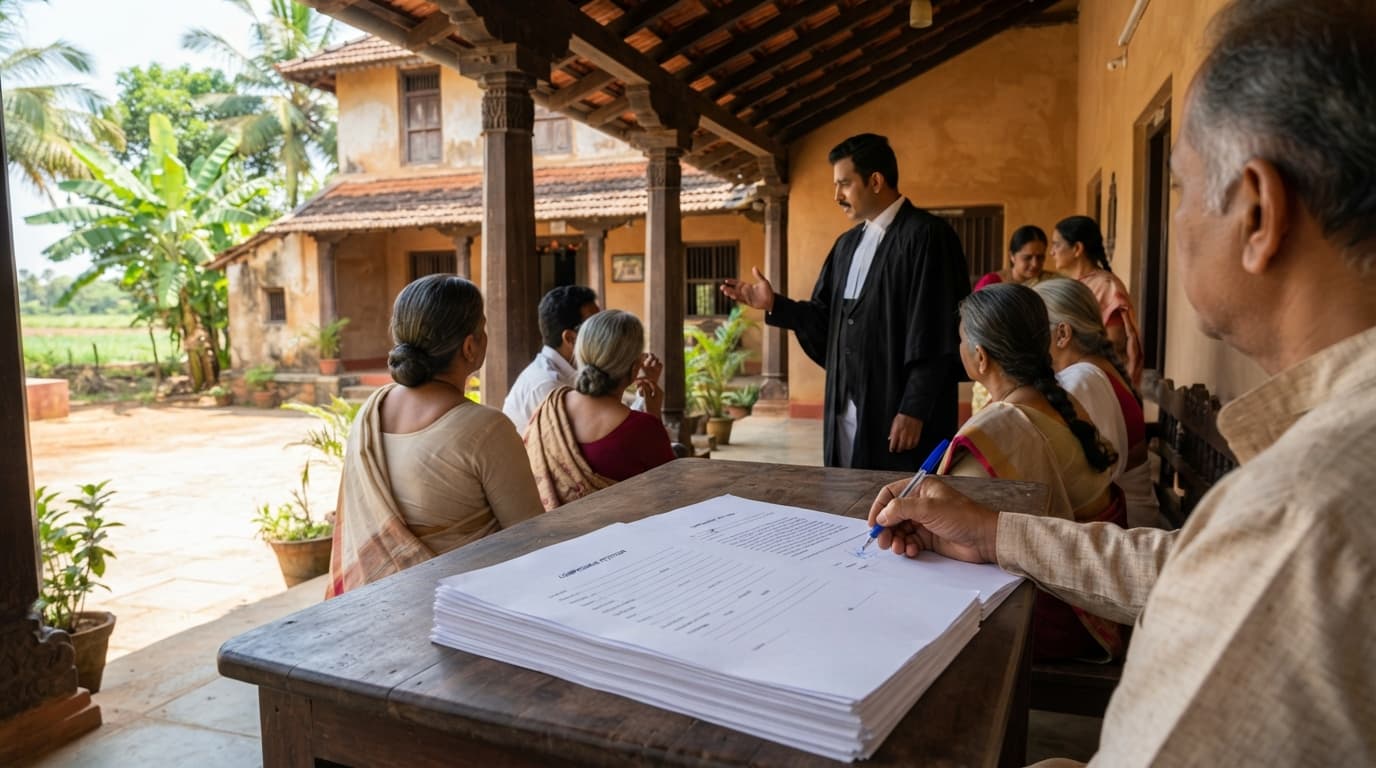
The Karnataka High Court has quashed a compromise decree dated July 11, 2026 passed by a Lok Adalat Bench in a partition suit and sent the suit back to the trial court for fresh decision in line with law. The order on the award of lok adalat directs trial courts to follow a fixed procedure before any settlement is forwarded for disposal.
Terms of settlement must be read over to the parties, the court must confirm the parties have understood them, and signatures must be taken on every page of the compromise petition. The Bench said the check would stop later claims of foul play and show the settlement was lawful and voluntary.
In this case, a compromise in the partition suit was placed before the Lok Adalat and ended in the July 11 award. The petitioner said the settlement was recorded without full understanding and not in the manner required by law.
The High Court allowed the plea after looking at the compromise papers and the award. It found the Advocate Conciliator had not signed the award. That gap, with nothing on record to show the parties had understood and accepted each term, hit the regularity of the proceedings, the Court said.
A trial court that refers a matter to the Lok Adalat is not a mere forwarding authority, the Court said. It must apply its judicial mind before acting on a compromise and satisfy itself the agreement is lawful, settles the real dispute, and was signed without pressure, misrepresentation or misunderstanding.
For this view the Court cited two recent decisions of the Supreme Court, K.G. Subbaiah v. Shardamma (2026) and Krishna Kumar Ojha v. Jitendra Chaudhary (2026). Those rulings lay down how courts must deal with consent terms before passing a decree, and the High Court said they covered the present case.
Under Order XXIII Rule 3 of the Code of Civil Procedure, 1908, a court must record a lawful agreement that adjusts the suit and pass a decree in its terms. The Court said satisfaction under that provision means more than receiving a signed paper. It calls for a look at the terms and a direct confirmation from the parties.
Why award of lok adalat was quashed
The defect found had nothing to do with the merits of the partition claim. It was about process. A compromise decree in a partition suit fixes shares, allotments and rights in immovable property once and for all, and it is later used for mutation, registration and execution. Mistakes at that point are hard to undo.
That is why the Court insisted on a full paper trail. The compromise petition must carry the full terms in clear words. Each page must bear the parties' signatures. The order sheet must note the terms were read over and explained, and the parties admitted them as correct. Where counsel or a guardian signs, the power to compromise must be on file.
Partition papers often run to several pages, with schedules, survey numbers, boundaries and shares. Initials only on the last page leave room for claims that pages were added, swapped or changed. Signatures on each page shut that dispute and let the court trust the document before it is the one agreed to.
The Court also gave weight to the missing signature of the Advocate Conciliator on the award. Lok Adalat Benches usually include a judicial officer and a conciliator from the Bar. Their signatures record that conciliation was tried and the settlement came out of it. An unsigned award casts doubt on whether that process was complete.
Lawyers in the trial courts said the ruling will tighten practice at the referral stage. Many compromises now come with a joint memo signed at the end and affidavits of parties, and the court refers the matter to the next Lok Adalat date. After this order, the referring court must verify understanding before the reference, and the Lok Adalat must satisfy itself again at disposal.
Court demands page-by-page signatures
Partition, family and property suits often involve old litigants, illiterate parties, heirs added after a death, and persons living outside the State. Terms drafted in English may need to be explained in Kannada or another language. A reading over noted in the order sheet guards both the parties and the court.
Foul-play claims were central to the safeguard, the Court said. Claims that signatures came on blank papers, terms were never explained, or a party did not know what was conceded come up often against consent decrees. A record made at the time, showing the terms were read over and separately accepted, lets such attacks be tested on evidence, not assertion.
The ruling restates the narrow ground for challenge to Lok Adalat awards. Under the Legal Services Authorities Act, 1987, an award is deemed a decree of a civil court. It is final and binding, and no appeal ordinarily lies. The law gives it finality to close settlements and cut arrears.
At the same time, courts have said a lok adalat award can be challenged for want of jurisdiction, fraud, or failure to meet the test of a lawful settlement. A writ petition under Articles 226 and 227 is the accepted remedy. The petitioner gets no rehearing on merits, only a check on whether the settlement was lawful and voluntary and the right procedure was used.
That is the ground on which courts set aside lok adalat award in fit cases. Here the High Court used that power. It did not decide shares in the suit property. It held the compromise decree could not stand because informed consent and lawful recording were not shown, quashed the award and restored the suit.
What trial courts must do now
Trial judges now face a clear drill before a compromise is sent up or accepted. The court will call the parties and confirm identity. Terms will be read over in a language they follow. Each party will be asked if the terms are understood and voluntarily accepted. Signatures or thumb impressions will be taken on every page with its schedules. Each step will go into the order sheet.
Drafting will have to change as well. Property schedules must type survey numbers, extents and boundaries in legible form. Translated copies must come where needed. Where a power of attorney holder or guardian signs, the authorisation must be annexed. Cuts, insertions and overwriting must carry the parties' attestation.
Conciliators and Lok Adalat Benches must see awards are complete before signing and sealing. Names of parties present, terms of settlement or the annexed compromise, and signatures of all Bench members including the Advocate Conciliator must be there. A complete award leaves less room for later attack and moves faster in execution.
The partition suit will now be heard afresh. The parties may try a fresh settlement, but any new compromise must clear the verification the High Court has laid down. If no settlement comes, the court will frame issues, take evidence and decide on merits under the law of partition and succession. No costs were ordered, and the suit stands as it stood before July 11, 2026.
Comments
Sign in to read the discussion and share your thoughts.
Latest from LawWorld
News
View all- Supreme Court Seeks Centre, ECI Reply On Plea Against Immunity For CEC And ECs4 Nov 2026
- Supreme Court Directs MP Speaker To Decide Bina MLA Disqualification Plea In Two Months4 Nov 2026
- Supreme Court Orders Special Cell To Monitor Child Labour Law Enforcement4 Nov 2026
- Bail Cannot Rest On Judge's Personal Notions Of Morality, Rules Supreme Court4 Nov 2026
- Supreme Court Refers Two-Child Norm Penalties To Larger Bench As Outdated4 Nov 2026