
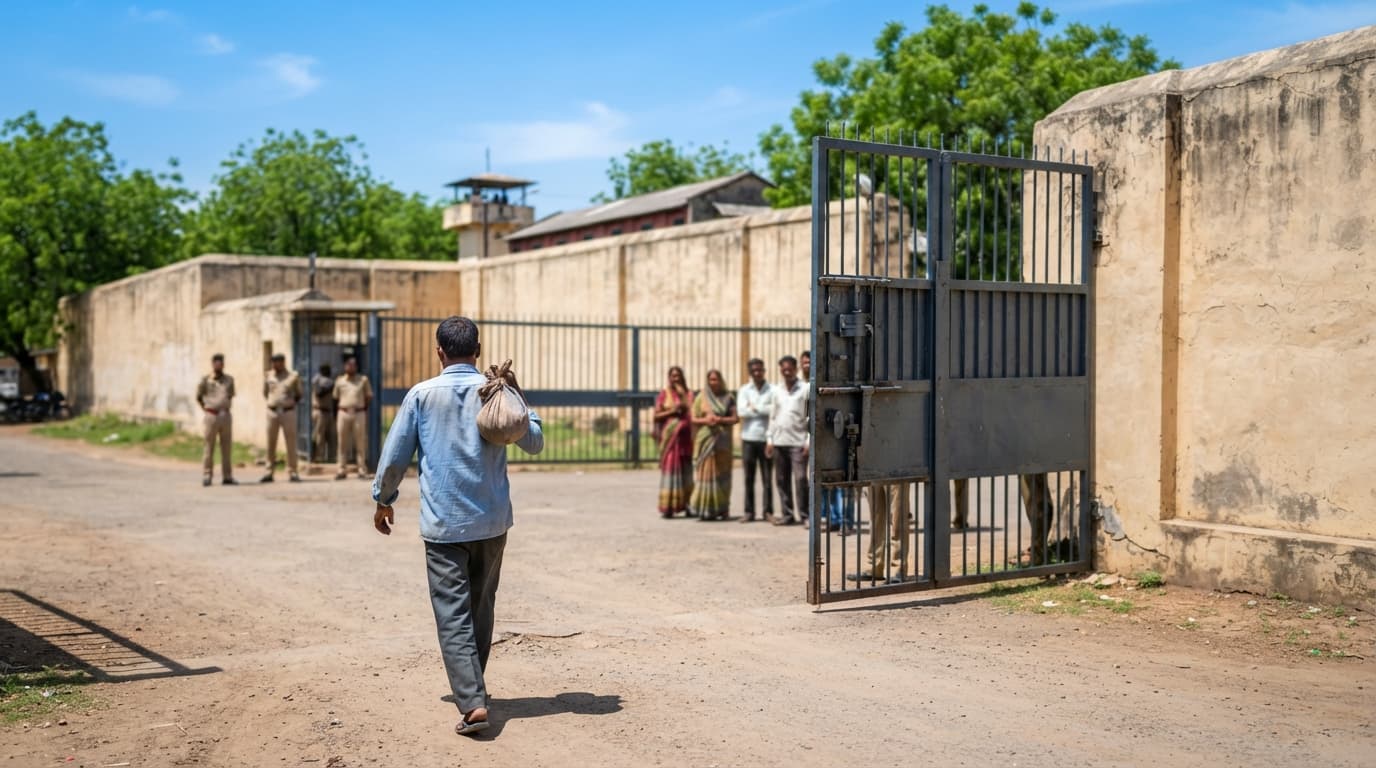
The Supreme Court has granted regular bail to an appellant held since September 10, 2025, setting aside the Madhya Pradesh High Court's order of March 20, 2026 that refused him relief. Justices Ujjal Bhuyan and Atul S. Chandurkar said bail or continuation of criminal proceedings cannot turn on a judge's personal notions of morality. The plea for bail in Supreme Court succeeded on prolonged incarceration of more than a year and the time the trial is likely to take. The prosecution invokes the Bharatiya Nyaya Sanhita, 2023, the Protection of Children from Sexual Offences Act, 2012 and the Scheduled Castes and Scheduled Tribes (Prevention of Atrocities) Act, 1989.
Records list charges under Sections 137(2), 65(2), 64(2)(m) and 87 of the Bharatiya Nyaya Sanhita, 2023, with Sections 3(A), 4(2) and 5(m) read with Section 6 of the Protection of Children from Sexual Offences Act, 2012, and Sections 3(1)(w)(ii) and 3(2)(v) of the Scheduled Castes and Scheduled Tribes (Prevention of Atrocities) Act, 1989. The Madhya Pradesh High Court rejected regular bail on March 20, 2026. The appellant then moved the apex court. By the time the case came up, he had spent over a year in custody. The Bench said the trial was unlikely to end soon and continued detention on that account would not serve pre-trial custody.
Justices Bhuyan and Chandurkar kept the order to custody alone. They did not go into the merits beyond what custody required. The focus stayed on time already spent in jail, the stage of the trial and the wait before a verdict. The Court set aside the High Court order and directed release on bail on terms to be fixed by the trial court. Those conditions will cover appearance, non-tampering and other requirements while evidence is led.
High Court refusal set aside
Under bail law in India, regular bail after arrest turns on the nature of the charge, the punishment prescribed, the risk of flight, the chance of tampering with evidence or influencing witnesses, and the custody already undergone. The order here lays down no new Supreme Court guidelines on bail after chargesheet on whether a chargesheet by itself gives a right to release. It applies the settled approach that pre-trial detention is not punishment and delay in trial counts in favour of release, especially where the accused has been inside for over a year and the end of trial is not near.
Lawyers will read the decision with the latest judgement of Supreme Court on bail 2025 on long incarceration and trial delay, where custody without prospect of early conclusion was held to tilt the balance toward liberty with safeguards for trial. This order follows that line. It does not decide guilt or innocence and does not dilute the special procedures under the POCSO Act or the SC/ST Act. It decides only that the appellant need not stay in custody till the trial ends. The trial court will still examine witnesses, test evidence and decide the charges on proof.
What bail in Supreme Court weighed
Custody ran from September 10, 2025, with the High Court rejection on March 20, 2026. That left the appellant past a year behind bars when the apex court heard the plea, with no sign that evidence would close quickly given the charges under three laws. Courts in that setting ask whether more detention is needed to secure presence or protect the process. The Bench found no such need that bail conditions could not meet. It allowed the appeal, set aside the refusal and ordered release, leaving the concerned court to fix terms.
Cancellation did not arise here. The order grants regular bail; it does not withdraw liberty. The phrase bail once granted cannot be cancelled Supreme Court is often cited to describe the separate test for withdrawing liberty once given, such as misuse, breach of conditions, interference with witnesses or fresh material. That test was not in issue because the appellant had not been on bail. The question was only whether the first denial should continue. Arguments for grant and arguments for cancellation address different stages and call for different showings.
That stage differs from the latest Supreme Court judgements on anticipatory bail, which deal with protection from arrest before custody and not release after months in jail. The same applies to discussion of an anticipatory bail without FIR Supreme Court judgement on apprehension of arrest even before a first information report is registered. Those principles turn on prima facie case, threat of arrest and need for protection during investigation. Here the appellant was already arrested, had been in custody for over a year, charges had been set out under three laws, and the High Court had refused regular bail. The issue was whether more custody pending trial was justified, not whether pre-arrest protection was needed.
Comparisons with the latest judgement of Supreme Court on 302 IPC bail, on murder charges under the former Indian Penal Code now reflected in the Bharatiya Nyaya Sanhita, help little here. Murder bail turns largely on the role attributed, the weapon, the eyewitness account and criminal history, while this prosecution turns on its own allegations under the BNS, POCSO Act and SC/ST Act. The Bench laid down no general formula for any category. It confined itself to prolonged custody, expected trial delay and the bar on deciding liberty on personal views of conduct rather than legal factors.
He will now be produced before the trial court for execution of bail bonds and for conditions on residence, attendance and contact with witnesses. The prosecution can seek modification or cancellation if conditions are breached. The trial will move to evidence under the three statutes, and the verdict will depend on proof led in court.
Comments
Sign in to read the discussion and share your thoughts.
Latest from LawWorld
News
View all- Supreme Court Seeks Centre, ECI Reply On Plea Against Immunity For CEC And ECs4 Nov 2026
- Supreme Court Directs MP Speaker To Decide Bina MLA Disqualification Plea In Two Months4 Nov 2026
- Supreme Court Orders Special Cell To Monitor Child Labour Law Enforcement4 Nov 2026
- Supreme Court Refers Two-Child Norm Penalties To Larger Bench As Outdated4 Nov 2026
- Commercial Rival Cannot Appeal Grant of Insecticide Registration, Rules Supreme Court4 Nov 2026