
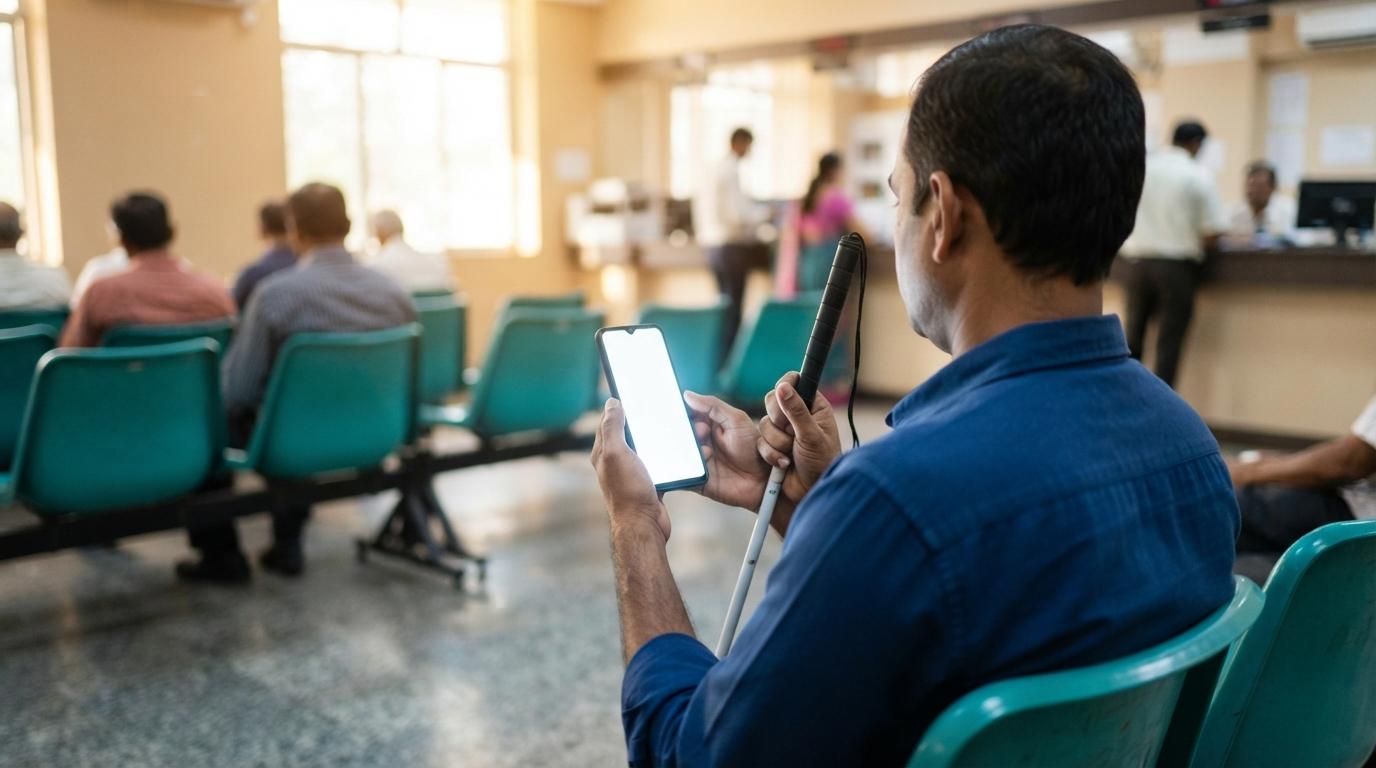
On November 16, the Supreme Court told the Union government and the authorities concerned they could face contempt action if they did not file a detailed response to an application on Aadhaar face authentication for visually impaired persons.
Advocate Amar Jain filed the application. It says many visually impaired and low-vision persons are still unable to independently complete their Aadhaar face authentication.
The plea asked the Court to direct accessible alternatives to the present mode of verification. It also raised compliance with disability access obligations in digital identity verification.
Authorities responsible for Aadhaar authentication must answer each difficulty set out in the application, the Court said. The reply must deal with the barrier to independent use and not be a formal denial of the problem.
Plea cites inability to authenticate independently
According to the applicant, blind and low-vision users cannot complete the process on their own. The application says the inability continues despite the central role of authentication in obtaining benefits and services.
It links the design of the present system to exclusion in welfare and service delivery tied to Aadhaar authentication. A person who cannot authenticate alone must take the help of another person each time identity has to be proved.
The Court did not decide the merits of those claims at this stage. It said the authorities must first place on record a full account of the position.
Judges want to know how the system currently operates for persons who cannot see and complete the steps unaided. The government must also state what accessible methods are available or under preparation.
A short or general statement will not satisfy the order, the bench made clear. The response has to be detailed and must engage with the facts raised by the applicant.
The warning of contempt of court was addressed to the Union government and the authorities impleaded in the matter. Failure to give the required response could invite action for non-compliance with its direction, the Court said.
What happens next turns on that reply. The Court will examine on the basis of that reply whether visually impaired persons can use Aadhaar face authentication independently and whether disability access obligations are being met.
Comments
Sign in to read the discussion and share your thoughts.
Latest from LawWorld
News
View all- Karnataka High Court Quashes Rs 25,000 RTI Penalty, Finds Misuse By Serial Applicant17 Nov 2026
- Karnataka High Court Remands Customs Case For Denial Of WhatsApp Evidence And Section 138-C Certificate17 Nov 2026
- Karnataka High Court Quashes Gold Theft Case Against Jewellers, Seeks Police SOP On Theft Probes17 Nov 2026
- Karnataka High Court Quashes Criminal Case Against Maruti Suzuki Directors Over Failure To Implead Company17 Nov 2026
- Supreme Court Upholds Stay of Conviction for Azam Khan, Extends Relief to Family17 Nov 2026
Articles
View all- Supreme Court Proposes Systematic Scrutiny of High Court Judgments for Gender-Insensitive Remarks17 Nov 2026
- Supreme Court Confines OBC Creamy Layer PSU Ruling But Applies Principle to UPSC CSE 2025 Allocation16 Nov 2026
- Article 22(2) Clock Starts at Curtailment of Liberty, Not Formal Arrest: Supreme Court in NDPS Bail Case15 Nov 2026