
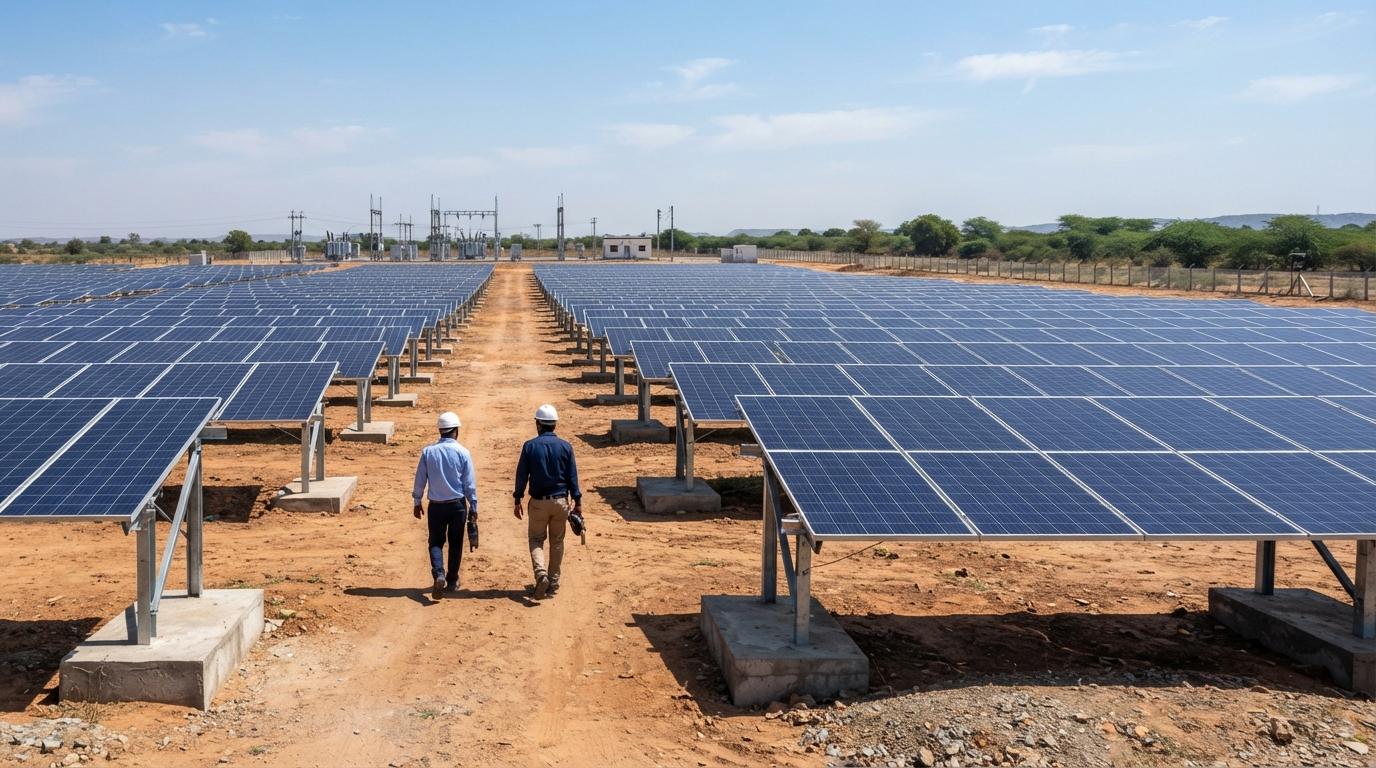
The Supreme Court Bench of Justices Sanjay Kumar and Sanjeev Sachdeva allowed the appeal by Sterling and Wilson Pvt Ltd against the Union of India and others in SLP(C) No. 23844 of 2025. It set aside a goods and services tax demand on its solar power generating system contracts. The Bench upheld the Andhra Pradesh High Court judgment for the company in its open-court pronouncement.
Sterling and Wilson sets up solar power plants and had paid tax at 5% on its turnover. Its refund claim under the inverted duty structure was rejected. A show cause notice then proposed to treat the turnover as a works contract taxable at 18%. It raised a demand of Rs 63 crore with an equal penalty.
Foundations Do Not Create Immovable Property
At the High Court stage, the judges had held that a solar power generating system does not answer the description of immovable property. It treated the transaction as falling outside works contract under Section 2(119) of the GST Act and as a composite supply. For that finding it distinguished Duncans Industries Ltd and relied on Sirpur Paper Mills Ltd. It observed that once the property is held not to be embedded in the earth, the question of permanent embedment does not arise. The Supreme Court agreed. Mere fixation of the system to civil foundations does not convert it into immovable property.
Ratio Was An Option, Not Mandate
On valuation of goods and services under GST, the dispute centred on Notification No. 24/2018-Central Tax (Rate) dated December 31, 2018. The notification became effective on January 1, 2019 and deems 70% of the gross value to be goods and 30% to be services where a renewable energy system is supplied along with specified goods and services for a single consideration. The mechanism under the GST valuation rules operates through Entry 234 of Notification No. 1/2017 and Entry 38 of Notification No. 11/2017. The Bench said the valuation of GST on the 70:30 ratio was an option for assessees, not a mandate. It said the authority was wrong to apply that valuation under GST across the board, including to past transactions. It therefore held that valuation rule in GST could not be imposed compulsorily on supplies from the earlier period.
Extended limitation also failed. The Court rejected the invocation of extended limitation under Section 74 of the Central Goods and Services Tax Act, 2017. The company keeps the benefit of the High Court's classification for the disputed turnover.
Comments
Sign in to read the discussion and share your thoughts.
Latest from LawWorld
News
View all- Karnataka High Court Quashes Rs 25,000 RTI Penalty, Finds Misuse By Serial Applicant17 Nov 2026
- Karnataka High Court Remands Customs Case For Denial Of WhatsApp Evidence And Section 138-C Certificate17 Nov 2026
- Karnataka High Court Quashes Gold Theft Case Against Jewellers, Seeks Police SOP On Theft Probes17 Nov 2026
- Karnataka High Court Quashes Criminal Case Against Maruti Suzuki Directors Over Failure To Implead Company17 Nov 2026
- Supreme Court Upholds Stay of Conviction for Azam Khan, Extends Relief to Family17 Nov 2026
Articles
View all- Supreme Court Proposes Systematic Scrutiny of High Court Judgments for Gender-Insensitive Remarks17 Nov 2026
- Supreme Court Confines OBC Creamy Layer PSU Ruling But Applies Principle to UPSC CSE 2025 Allocation16 Nov 2026
- Article 22(2) Clock Starts at Curtailment of Liberty, Not Formal Arrest: Supreme Court in NDPS Bail Case15 Nov 2026