
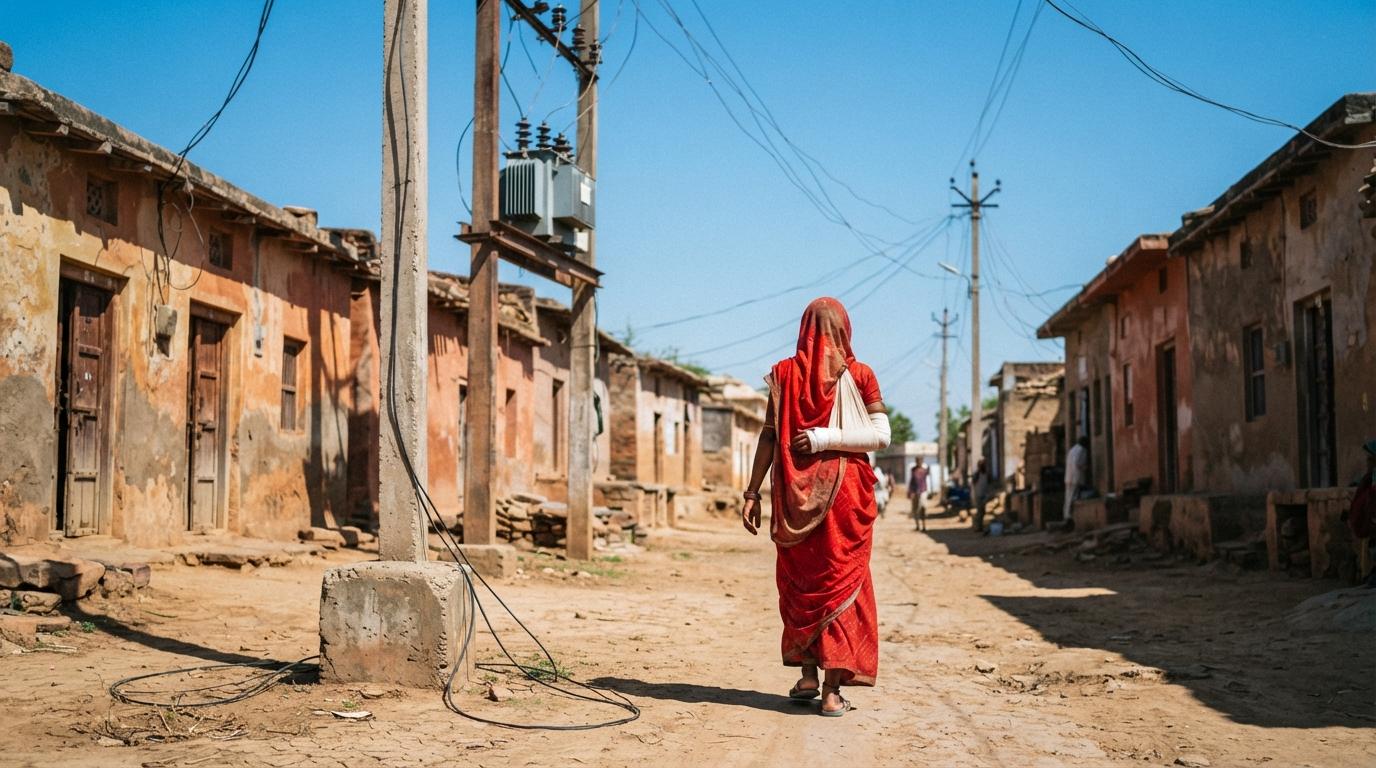
On November 16, 2026, the Supreme Court restored a trial court decree of Rs 8.70 lakh with 6 per cent interest in favour of a woman who lost her right hand due to electrocution. The order set aside the Rajasthan High Court decision which had reversed the trial court decree and rejected her claim.
A Bench of Justices Prashant Kumar Mishra and Shree Chandrashekhar heard the matter. Justice Shree Chandrashekhar authored the judgment, numbered as 2026 INSC 1216. The Bench held that suspicion cannot replace evidence in civil appeals. It said a first appellate court cannot dismiss an electrocution compensation claim merely because the incident appears doubtful.
Such doubt, the Court said, must be tested against the witnesses examined and the documents proved on record. Without that evaluation, it said, rejection of the suit has no basis in the evidence. The judgment said civil cases are governed by preponderance of probability.
High Court reversal set aside
The Bench said the party asserting a fact must show a fair degree of certainty in its favour. A mere possibility, it said, does not meet that requirement. Applying that measure to the record, the Court found the claim for compensation for electrocution established. It held that strict liability attached to the respondents for the supply-related incident.
According to the judgment, an appellate court must deal with the testimony and the material placed on record before concluding that the incident did not occur. The High Court had not carried out that exercise when it set aside the decree, the judgment said.
The result is that the woman is entitled to recover the decretal sum with interest from the respondents in terms of the trial court order. The order closes the second round of litigation over the incident and leaves the trial court decree as the enforceable adjudication between the parties. Payment is to be made in accordance with the interest rate fixed by the trial court.
Comments
Sign in to read the discussion and share your thoughts.
Latest from LawWorld
News
View all- Karnataka High Court Quashes Rs 25,000 RTI Penalty, Finds Misuse By Serial Applicant17 Nov 2026
- Karnataka High Court Remands Customs Case For Denial Of WhatsApp Evidence And Section 138-C Certificate17 Nov 2026
- Karnataka High Court Quashes Gold Theft Case Against Jewellers, Seeks Police SOP On Theft Probes17 Nov 2026
- Karnataka High Court Quashes Criminal Case Against Maruti Suzuki Directors Over Failure To Implead Company17 Nov 2026
- Supreme Court Upholds Stay of Conviction for Azam Khan, Extends Relief to Family17 Nov 2026
Articles
View all- Supreme Court Proposes Systematic Scrutiny of High Court Judgments for Gender-Insensitive Remarks17 Nov 2026
- Supreme Court Confines OBC Creamy Layer PSU Ruling But Applies Principle to UPSC CSE 2025 Allocation16 Nov 2026
- Article 22(2) Clock Starts at Curtailment of Liberty, Not Formal Arrest: Supreme Court in NDPS Bail Case15 Nov 2026