
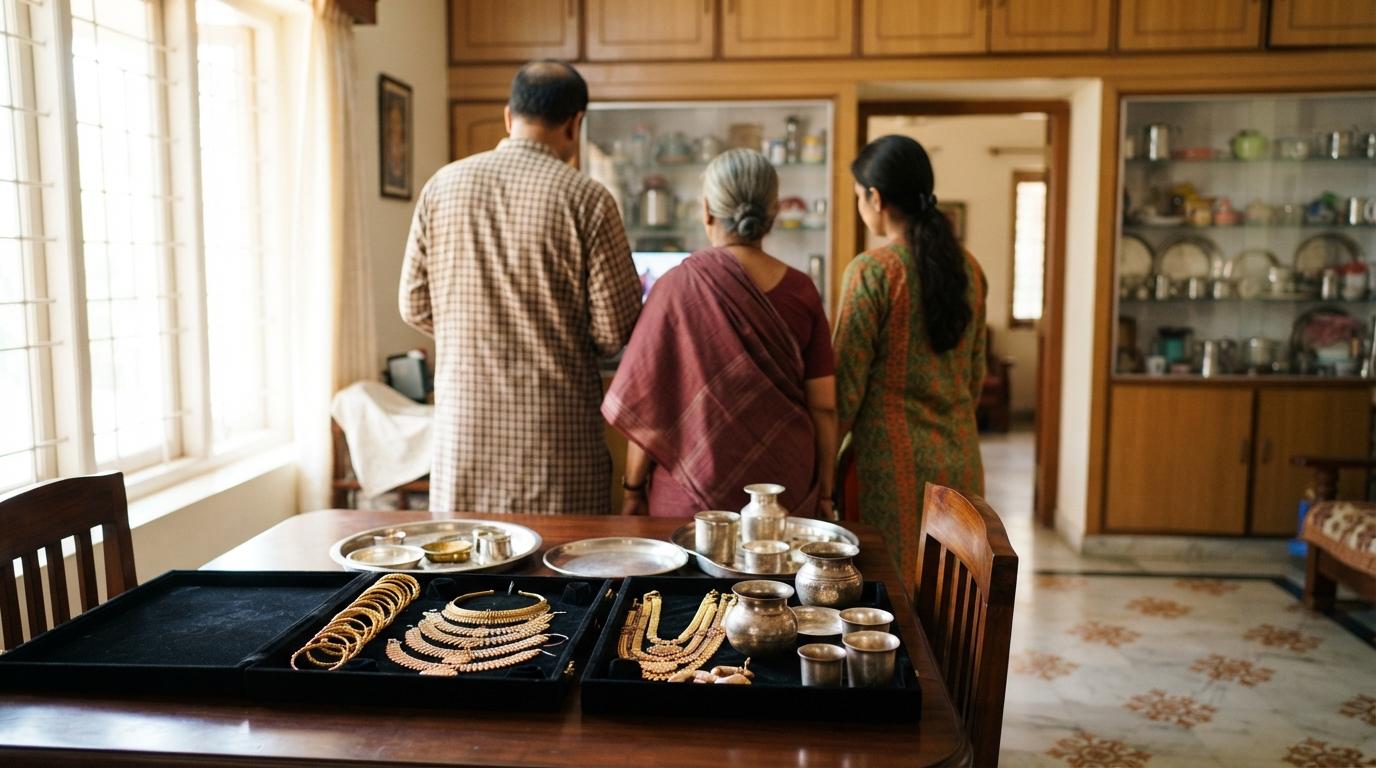
The Karnataka High Court permitted the petitioners in Narayan Vedavathi v. Deputy Commissioner of Income Tax and connected petitions to apply for release of seized jewellery after substantial relief from the Commissioner (Appeals) and the Income Tax Appellate Tribunal. The order in W.P. No. 26501 of 2025 and connected matters was decided on 4 November 2026, bearing Neutral Citation 2026:KHC:61322. No immediate release was ordered. The bench left intact the statutory time for giving effect to the appellate orders.
Searches under section 132 of the Income-tax Act, 1961 on 23-25 June 2022 gave rise to the dispute, described in the order as search and seizure under Income Tax Act proceedings against members of a family. Gold, silver and diamond jewellery belonging to different family members were seized in those searches. The petitioners approached the Court seeking return of the articles.
Certain petitions also challenged CBDT Instruction F.No. 299/06/2023 dated 16 October 2023, particularly its alleged condition for adjustment of explained jewellery against liabilities and the limits it placed on release against security. One petition questioned an assessment order and a corrigendum issued in the same search-related proceedings. During pendency of the writ petitions, the petitioners secured substantial relief in appeal, after which counsel confined the immediate prayer to a decision on release.
According to the order, the petitioners contended that no demand would survive once the appellate relief was given effect to. Their grievance was that the Department declined to decide release until it took a view on filing further appeals. They asked the Court to fix a definite timeline for passing appeal-effect orders. In the alternative, they sought leave to approach the jurisdictional Principal Commissioner of Income Tax for release with a direction for a time-bound decision.
Release routed through Principal Commissioner
The Court held that such a release plea must link the appellate relief to any surviving demand and specify the articles whose retention was no longer required for enforcement under section 132B. It said there could be no direct release before the appeal-effect order, but the Principal Commissioner could examine the request. The bench clarified that its direction neither struck down the CBDT Instruction nor approved the alternative securities suggested by the petitioners. The constitutional and statutory challenges to the Instruction and to the assessment action were left open, with the grounds urged by the petitioners preserved for future consideration.
Comments
Sign in to read the discussion and share your thoughts.
Latest from LawWorld
News
View all- Karnataka High Court Quashes Rs 25,000 RTI Penalty, Finds Misuse By Serial Applicant17 Nov 2026
- Karnataka High Court Remands Customs Case For Denial Of WhatsApp Evidence And Section 138-C Certificate17 Nov 2026
- Karnataka High Court Quashes Gold Theft Case Against Jewellers, Seeks Police SOP On Theft Probes17 Nov 2026
- Karnataka High Court Quashes Criminal Case Against Maruti Suzuki Directors Over Failure To Implead Company17 Nov 2026
- Supreme Court Upholds Stay of Conviction for Azam Khan, Extends Relief to Family17 Nov 2026
Articles
View all- Supreme Court Proposes Systematic Scrutiny of High Court Judgments for Gender-Insensitive Remarks17 Nov 2026
- Supreme Court Confines OBC Creamy Layer PSU Ruling But Applies Principle to UPSC CSE 2025 Allocation16 Nov 2026
- Article 22(2) Clock Starts at Curtailment of Liberty, Not Formal Arrest: Supreme Court in NDPS Bail Case15 Nov 2026