
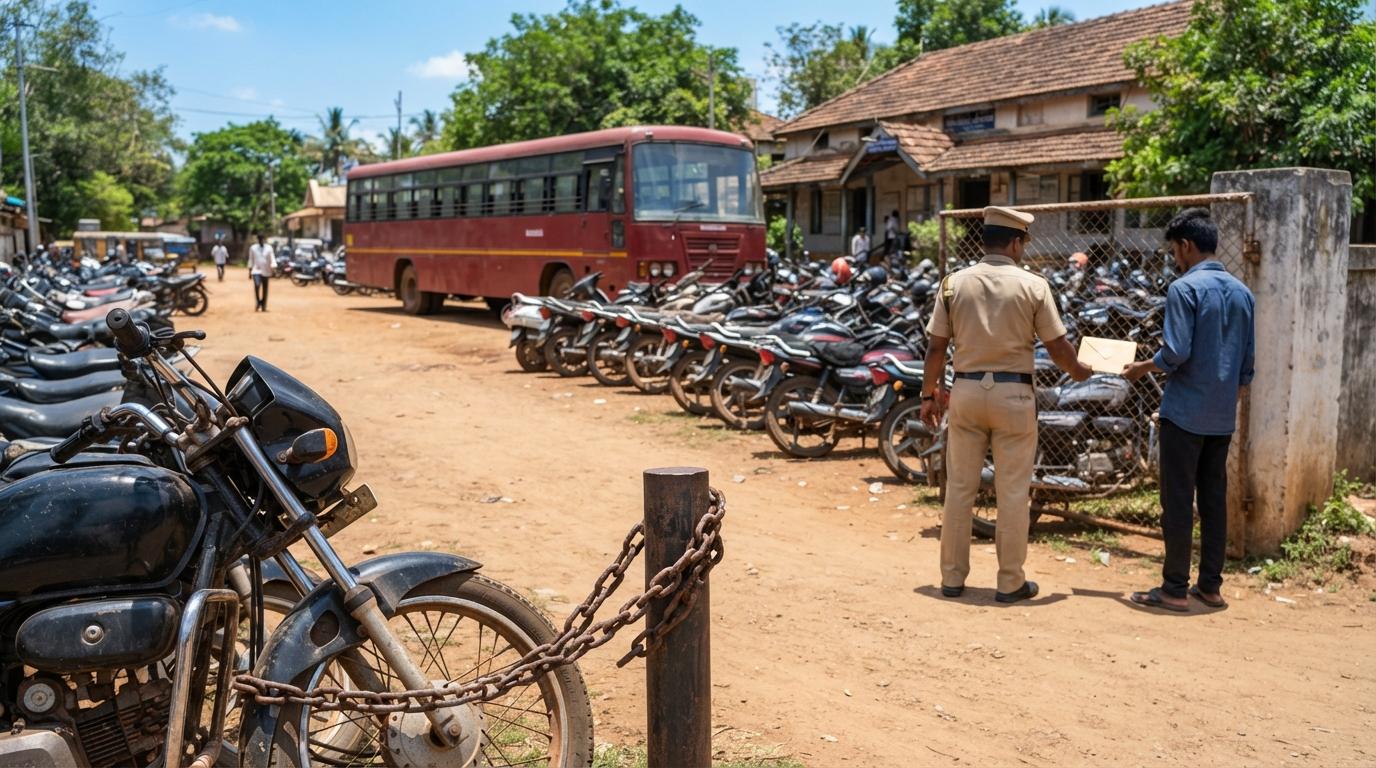
Justice K.V. Aravind of the Kalaburagi Bench of the Karnataka High Court issued the direction in Divisional Controller, NEKRTC v Marenna while deciding an appeal under Section 173(1) of the Motor Vehicles Act, 1988 against a compensation award of the Motor Accident Claims Tribunal. The Bench directed the Director General and Inspector General of Police to instruct police authorities across the State not to release seized vehicles involved in any offence without production of a valid insurance policy covering the vehicle, and directed jurisdictional courts to pass release orders only on such production.
The claim arose from an accident on September 11, 2017 between the claimant's motorcycle and a bus belonging to the North Eastern Karnataka Road Transport Corporation. The Senior Civil Judge and MACT, Shorapur, had by award dated March 10, 2022 held the bus driver negligent and awarded Rs 2,30,443 compensation against the Corporation. The Corporation challenged the finding of negligence before the High Court.
For the appellant Corporation, Advocate Sangeeta Bhadrashetty contended the claimant rode without a valid licence and without insurance while carrying two pillion riders. The Corporation relied on the spot sketch to argue the accident resulted from the claimant's own riding. The claimant remained served and unrepresented, and the Court took assistance from counsel regularly appearing in motor accident matters, including Advocate Sanganagouda Biradar.
Failure to produce the driving licence called for an adverse inference, the Bench said, recording that the motorcycle was admittedly uninsured. The sketch in the Crime Detail Form showed the collision in the middle of the road where sufficient space remained for the two-wheeler to pass, the order records. Filing of the charge sheet against the bus driver was not conclusive on negligence without corroboration and ran contrary to the contents of the same record, according to the Bench.
Rider held 50% negligent
The order states the Court had consistently attributed 30% negligence where a rider lacked a valid licence. Triple riding on an uninsured motorcycle increased the risk to the rider himself and justified 50% contributory negligence on the claimant in this case, the Bench held. The Bench said, “Though the M.V. Act is a beneficial legislation, the principle of liberal interpretation cannot be extended to condone violations of its mandatory provisions, particularly when such provisions are intended to ensure road safety, maintain road discipline and protect the interests of the public and the community at large.” It added that extending liberal interpretation to clear statutory violations would reward or give a premium to such violations.
According to the Bench, vehicles found without licence or insurance are in many cases released after payment of a fine, after which the violation of the statute continues. Tribunals face difficulty in recovery of awards where the offending vehicle is uninsured, it observed. It referred to observations of the Supreme Court in Oriental Insurance Co. v. Tuni Pati and National Insurance Co. v. Thungala Dhana Laxmi on fraudulent claims and uninsured vehicles. The Additional State Public Prosecutor submitted before the Court that police have no power to retain a vehicle on these grounds. The Bench posted the matter for compliance on December 14, 2026.
Comments
Sign in to read the discussion and share your thoughts.
Latest from LawWorld
News
View all- Karnataka High Court Quashes Rs 25,000 RTI Penalty, Finds Misuse By Serial Applicant17 Nov 2026
- Karnataka High Court Remands Customs Case For Denial Of WhatsApp Evidence And Section 138-C Certificate17 Nov 2026
- Karnataka High Court Quashes Gold Theft Case Against Jewellers, Seeks Police SOP On Theft Probes17 Nov 2026
- Karnataka High Court Quashes Criminal Case Against Maruti Suzuki Directors Over Failure To Implead Company17 Nov 2026
- Supreme Court Upholds Stay of Conviction for Azam Khan, Extends Relief to Family17 Nov 2026
Articles
View all- Supreme Court Proposes Systematic Scrutiny of High Court Judgments for Gender-Insensitive Remarks17 Nov 2026
- Supreme Court Confines OBC Creamy Layer PSU Ruling But Applies Principle to UPSC CSE 2025 Allocation16 Nov 2026
- Article 22(2) Clock Starts at Curtailment of Liberty, Not Formal Arrest: Supreme Court in NDPS Bail Case15 Nov 2026