
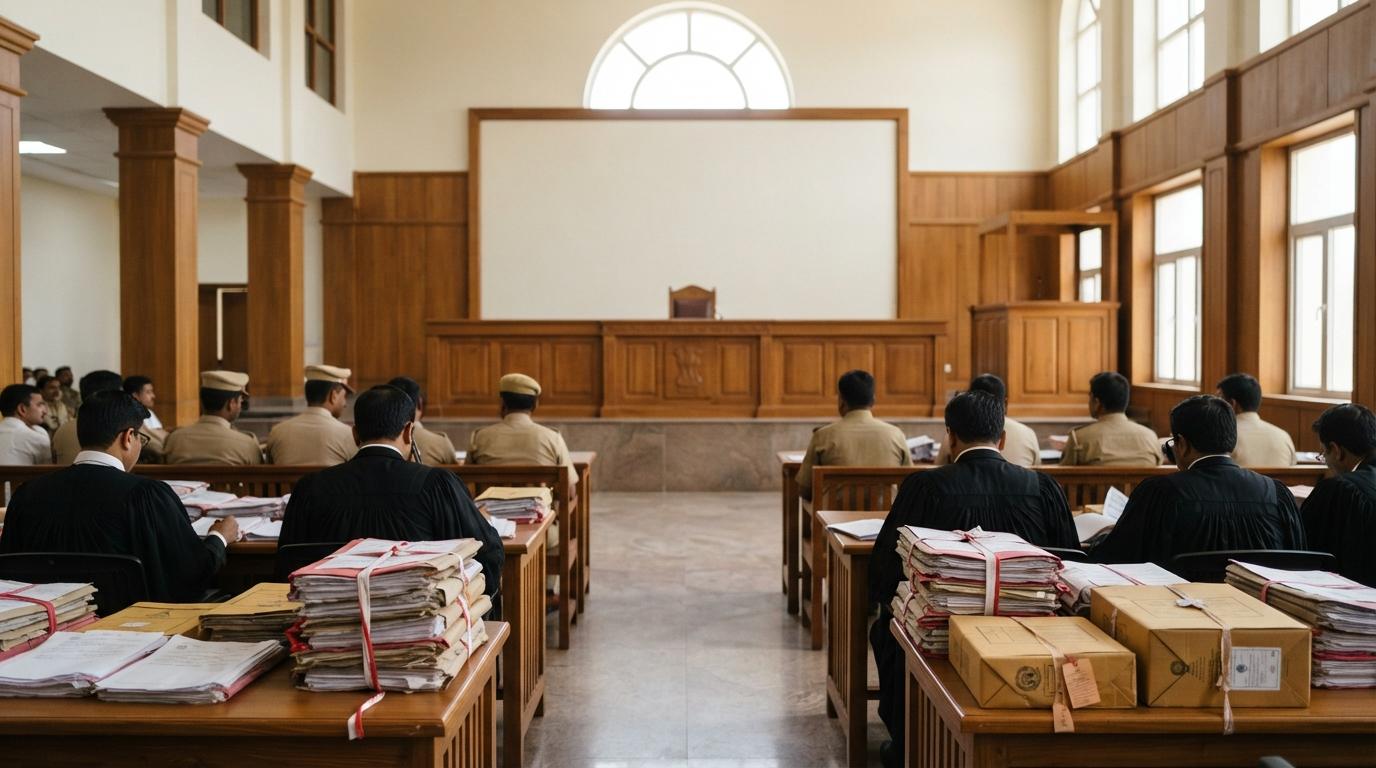
The Supreme Court on Monday asked the Centre, States and Union Territories to file fresh status reports on setting up exclusive special courts for speedy trial of heinous offences under the NDPS Act and the NIA Act. The direction came from a Bench of Justices Joymalya Bagchi and V. Mohana in a suo motu case on November 16, 2026.
Additional Solicitor General Aishwarya Bhati, for the Centre, said little progress had been made under the recent orders on setting up the courts.
The hearing also noted the matter was to go before three judges. Reference was made to the non-availability of Chief Justice Surya Kant.
The Bench said the suo motu case would be listed after a few weeks, preferably before the winter vacation in December.
The court had earlier voiced concern over the alarming increase in narcotics-related offences across the country and the growing pendency of cases under the NDPS Act.
On September 7, it had told governments to speed up work on the exclusive courts and provide infrastructure and staff to make the remaining courts operational, preferably within six weeks.
In its affidavit, the Union government said 449 exclusive courts were needed across the country to clear the backlog. Of these, 176 were already operational, according to the Centre.
On those figures, the Bench had said the existing pendency and the "unfortunate, alarming increase" in offences made it imperative to set up all the identified courts at the earliest.
Review of NIA special courts
The Bench also took stock of exclusive special courts for trial under Section 11 of the NIA Act, 2008. Its earlier directions for day-to-day trial and completion within a maximum of one year had been largely implemented.
Most States with more than 10 pending cases had set up exclusive courts. Work was generally allotted at not more than 10 to 12 cases per court to allow time-bound trial.
Karnataka told the Bench three exclusive courts would come up at Bengaluru, Chikkamagaluru and Udupi.
In Tamil Nadu, one of the two proposed courts was already operational and the second would start within a few weeks, while Keralam assured two exclusive courts.
Assam, with one exclusive court functional, was told to speed up two additional proposed courts.
For West Bengal, the Bench ordered three additional courts to take the total to five. Counsel appearing for the Calcutta High Court clarified 50 cases were pending in the State, not 21 as in the NIA's status report, with only two exclusive courts operational there.
In Jammu and Kashmir, four exclusive courts were needed for 47 pending cases, though only one had been notified.
The Bench had earlier said expeditious disposal was necessary to strike a balance between the rights of the accused and those of the victims and to ensure timely outcomes in the criminal justice system.
The suo motu proceedings were initiated amid concerns that trials in cases investigated by the NIA were remaining pending for years.
Comments
Sign in to read the discussion and share your thoughts.
Latest from LawWorld
News
View all- Karnataka High Court Quashes Rs 25,000 RTI Penalty, Finds Misuse By Serial Applicant17 Nov 2026
- Karnataka High Court Remands Customs Case For Denial Of WhatsApp Evidence And Section 138-C Certificate17 Nov 2026
- Karnataka High Court Quashes Gold Theft Case Against Jewellers, Seeks Police SOP On Theft Probes17 Nov 2026
- Karnataka High Court Quashes Criminal Case Against Maruti Suzuki Directors Over Failure To Implead Company17 Nov 2026
- Supreme Court Upholds Stay of Conviction for Azam Khan, Extends Relief to Family17 Nov 2026
Articles
View all- Supreme Court Proposes Systematic Scrutiny of High Court Judgments for Gender-Insensitive Remarks17 Nov 2026
- Supreme Court Confines OBC Creamy Layer PSU Ruling But Applies Principle to UPSC CSE 2025 Allocation16 Nov 2026
- Article 22(2) Clock Starts at Curtailment of Liberty, Not Formal Arrest: Supreme Court in NDPS Bail Case15 Nov 2026