
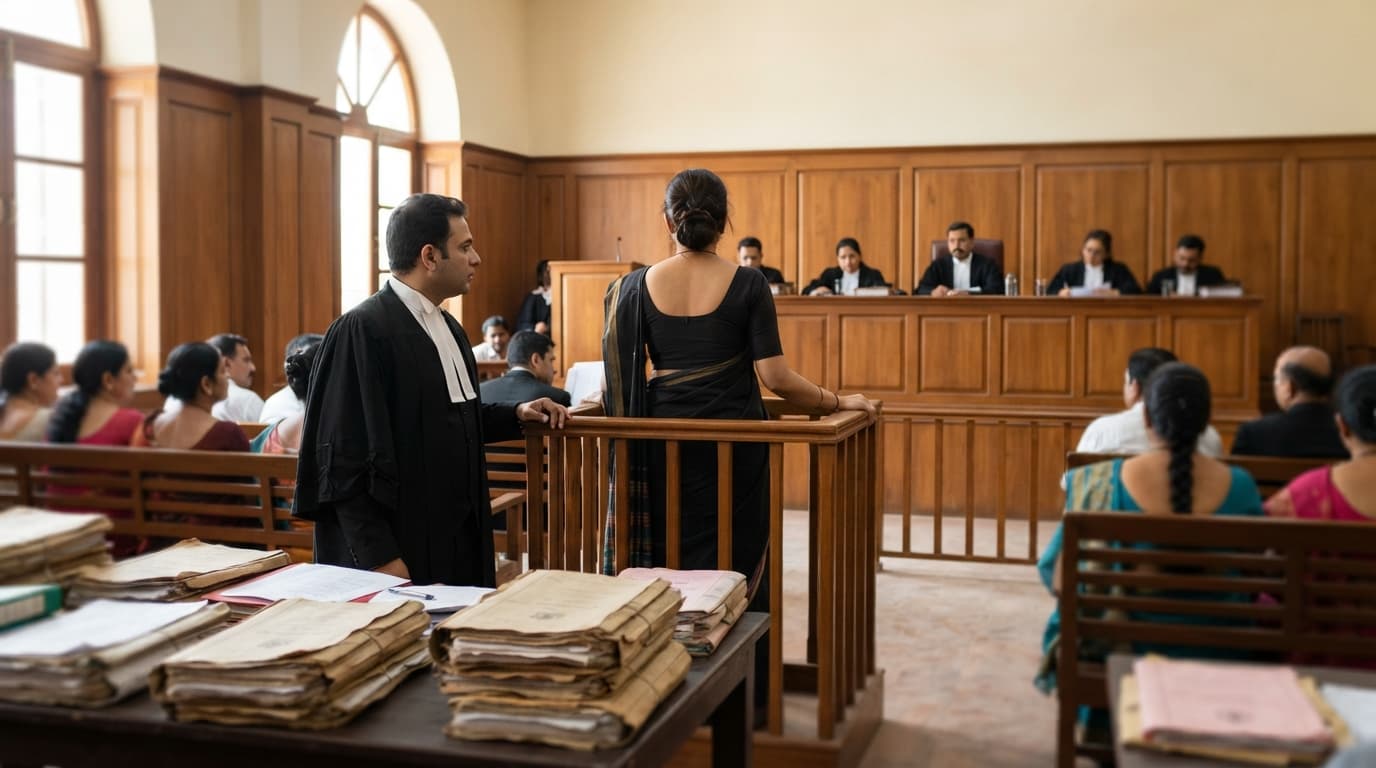
The Supreme Court has set aside an order summoning a woman as an additional accused under CrPC section 319, holding that the trial court acted on the examination-in-chief alone without weighing what the same witness said in cross-examination. A Bench of Justices Manoj Misra and Nongmeikapam Kotiswar Singh said the whole deposition had to be read together before a person not facing trial could be called in, especially where the cross-examination went to the root of the allegation. The provision now corresponds to Section 358 of the Bharatiya Nagarik Suraksha Sanhita.
Her summoning had rested only on a few lines from the examination-in-chief. A decision under the provision, the Bench said, cannot pick out the inculpatory part and skip the rest. The judge must look at the statement as a whole, including answers given when the defence tested the witness.
That power to add an accused during inquiry or trial is extraordinary and must be used with care. It calls for more than a prima facie case as at charge, but less than certainty for conviction. The Bench said that call cannot be taken unless both parts of the testimony are placed side by side.
In practice, an application under section 319 CrPC often cites a paragraph or two from the examination-in-chief. The defence then points to admissions, contradictions or qualifications in cross-examination. The order makes clear the trial judge must deal with both and give reasons showing why, even after the cross-examination, material strong enough to summon a new accused remains.
What CrPC section 319 Requires Courts to Weigh
Examination-in-chief is led by the party calling the witness and usually puts the allegation at its strongest. Cross-examination tests memory, presence at the scene, prior statements, motive and identification. If the witness resiles, explains, limits or contradicts the earlier version, the value of that evidence against a third person changes. That change, the Bench said, must be addressed in the order.
Once summoned, she faces arrest, bail, charge and trial, with the cost and stigma of a criminal case. The Court's insistence on a full reading works as a fair-trial safeguard. It does not bar action where the material truly calls for it. It bars mechanical orders that repeat the examination-in-chief and ignore what followed in the witness box.
How Trial Judges Must Record Satisfaction
Trial courts in India see frequent pleas to add accused, often where family members or associates are named by witnesses after the chargesheet. The section 319 CrPC latest judgement restates the method those courts must follow. The judge must say what evidence was considered, including the cross-examination, and explain why it meets the required degree of satisfaction. A short order that lifts only the inculpatory lines will be vulnerable on challenge.
Judges can also act on their own, as the power is not confined to cases where the prosecution or complainant moves. A judge who notices from the evidence that a person appears involved may act suo motu. Even then, the judge must apply the same test and write a reasoned order. The record must show the full deposition, not an isolated answer, formed the basis.
Where This Test Sits in Precedent
Past orders in landmark judgments on section 319 CrPC have repeatedly called the power discretionary and extraordinary. Mere suspicion or a repeat of the first information report is not enough, and the evidence must be tested for strength before a new person is made to stand trial. The present order stays in that line. It lays down no new threshold. It enforces the old one by insisting cross-examination be part of the record.
For those tracking the latest law on section 319 CrPC, the shift to the new Code also matters. Section 319 of the Code of Criminal Procedure, 1973, now corresponds to Section 358 of the Bharatiya Nagarik Suraksha Sanhita, 2023. The language and purpose remain in substance the same, and trial courts continue to apply the cautions built up under the old Code. Orders under either provision will be tested on the same question, whether the judge considered the whole evidence available at that stage.
Remedies After a Summoning Order
On challenge, the usual remedy against section 319 CrPC orders is a revision before the sessions court or the High Court, and then recourse to the High Court in its inherent powers or to the Supreme Court in fit cases. Revisional courts do not re-try the case. They check whether the trial court applied the right test and considered the complete material. Where the order shows on its face that cross-examination was missed, interference is more likely, as here.
Prosecutors and complainants who seek summoning will now need to do more than annex the examination-in-chief. They will need to explain why the allegation survives the cross-examination, and point to corroboration where it exists. Defence counsel will need to put the full deposition on record and draw attention to answers that dilute or contradict the claim. Judges will need to refer to those answers and say why they do or do not change the result.
The woman need not face trial as an additional accused under the set-aside order. The trial against those already charged will go on its own merits, uninfluenced by observations made for the limited summoning question. If fresh evidence comes later that meets the test on a full reading, the court can consider it according to law.
Comments
Sign in to read the discussion and share your thoughts.
Latest from LawWorld
News
View all- Supreme Court Seeks Centre, ECI Reply On Plea Against Immunity For CEC And ECs4 Nov 2026
- Supreme Court Directs MP Speaker To Decide Bina MLA Disqualification Plea In Two Months4 Nov 2026
- Supreme Court Orders Special Cell To Monitor Child Labour Law Enforcement4 Nov 2026
- Bail Cannot Rest On Judge's Personal Notions Of Morality, Rules Supreme Court4 Nov 2026
- Supreme Court Refers Two-Child Norm Penalties To Larger Bench As Outdated4 Nov 2026