
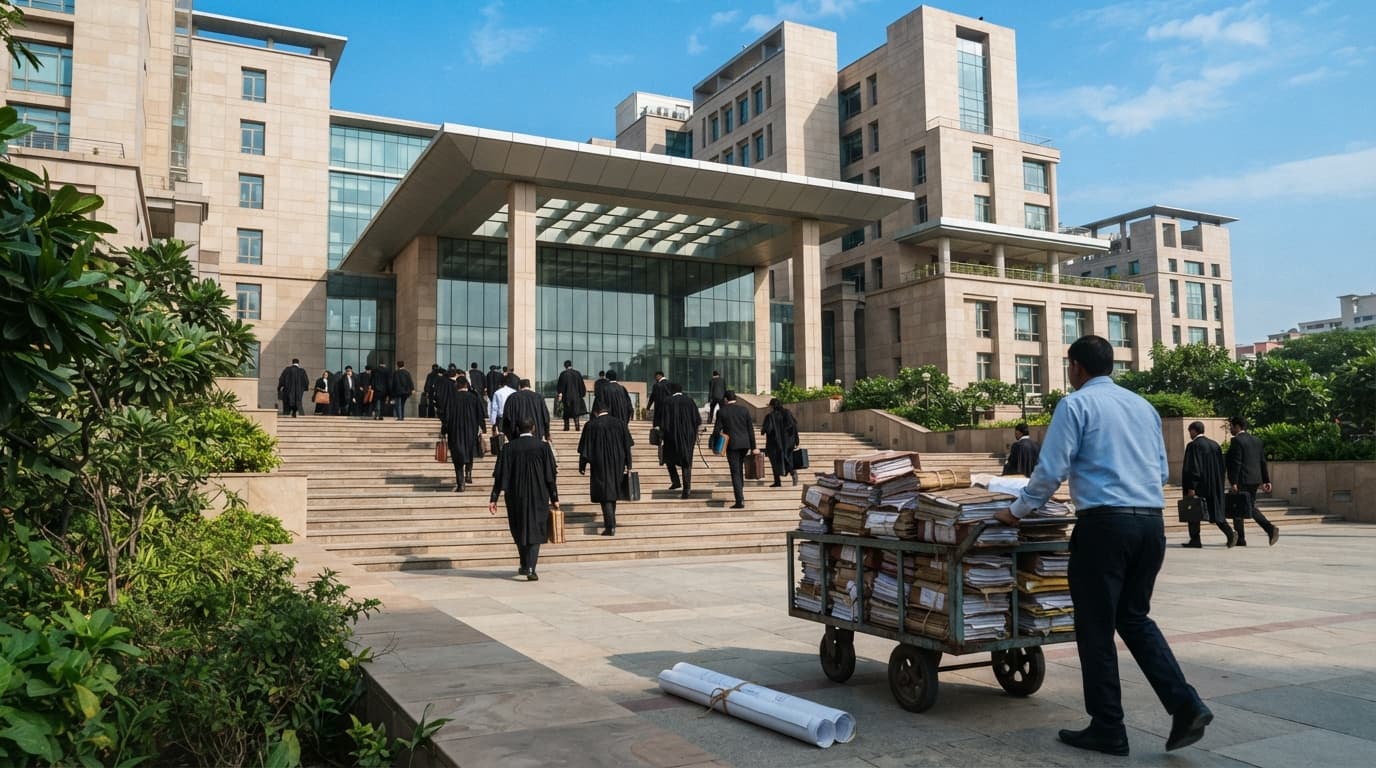
New Delhi, Oct 29: The Supreme Court on Thursday gave the presidents of the NCLT and NCLAT four weeks to file detailed proposals on land, buildings and staff for day-to-day work. The order came from Chief Justice Surya Kant, sitting with Justices Joymalya Bagchi and V Mohana, in a suo motu case on appointment of judicial and technical members and poor infrastructure in the National Company Law Tribunal. The proposals must spell out needs for land and buildings as well as staff at different benches.
Registry support came up early in the hearing. The Bench asked the NCLT President to examine whether each bench should have an officer of the rank of Deputy Registrar or Joint Registrar to maintain judicial records. Proper custody of files, cause lists, orders and case data, the Court said, was central to cutting delay in company matters. Benches hearing insolvency, merger and oppression and mismanagement petitions cannot run without trained registry help. The report on this point must come within the same four weeks.
The Court also told the Centre to call a meeting with the tribunal leadership and the Bar to fix immediate priorities. The suggestion for a joint discussion came from the Attorney General. Officials, the tribunal administration and members of the Bar who appear regularly before the benches are to take part. The outcome must feed into action on the infrastructure and staffing proposals. A report on that exercise is also due in four weeks.
Discontent over the Ministry of Corporate Affairs' control of NCLT administration ran through the hearing. Administration of a tribunal must vest in its President, the judges said, and cannot be run from the executive. Dependence on the Ministry for premises, staff and day-to-day decisions has affected benches across the country. Effective authority over postings, deployment and office management must rest with the head of the institution. Administrative arrangements, the Court said, must aid adjudication, not hold it up.
On contract staff, the Bench made sharp oral observations. It questioned whether persons who had not come through competitive selection could claim regularisation or a right to continue. Sympathy for individual workers cannot replace a regular, transparent method of recruitment. The power of appointment must rest solely with the NCLT President. Engagement of staff outside that authority, the Court indicated, raises questions of legality and accountability.
The suo motu case concerns vacancies of judicial and technical members and gaps in infrastructure and staff in NCLT benches. Benches in different parts of the country have flagged shortage of courtrooms, office space and support personnel. Vacancies and lack of facilities together slow disposal and add to pendency, the Bench said. Company disputes, including those under the insolvency law, need timely disposal because delay hits creditors, workers, investors and management. Infrastructure is a precondition for adjudication, not a side issue.
What NCLT and NCLAT Presidents Must File
On buildings, land and staff, the Court wants specifics, not general requests. For buildings, it seeks details of owned premises, rented accommodation, adequacy of courtrooms, chambers, record rooms and space for litigants and counsel. For land, it wants plots identified or proposals pending with central or state authorities, with the stage of allotment or construction. For staff, it wants bench-wise strength, vacant posts, posts held on contract or deputation, and extra hands needed for registry, accounts, IT and support. Vague requests, the Court said, will not help.
The difference in NCLT vs NCLAT work explains why the Court addressed both together. The NCLT is the first-level forum for company disputes, insolvency petitions, mergers, and claims of oppression and mismanagement. Appeals from its orders generally lie to the NCLAT, which also hears appeals in competition and insolvency matters under the statutory scheme. Pressure on the first forum travels upward on appeal. Lawyers say that when benches sit short of strength or without registry support, listings slip and orders are delayed at both levels.
Delay here is not only about numbers. Resolution applicants wait for plan approvals, lenders for recovery, employees for dues and managements for clarity on restructuring. Counsel pointed to adjournments for want of a coram, shortage of stenographers and court officers, and shifting of benches for want of space. Such ground-level constraints cannot be solved by orders on paper alone, the Bench observed. Premises and trained hands are as necessary as members to keep the docket moving.
Centre-Bar Meeting to Set Priorities
The Attorney General's suggestion for a meeting is meant to close the gap between what the tribunals seek and what the executive can give at once. The discussion should yield a prioritised list, not a general statement of need. Tribunal leadership will place building and staffing data on the table, while Bar representatives explain where litigants face the most difficulty. Centre officials will then give timelines for sanction, funds and creation of posts. That method, the Court said, will let it pass workable directions.
Recruitment to regular posts must follow a competitive process with clear rules on eligibility, selection and tenure. The Bench questioned the practice of keeping persons engaged informally for long periods and then seeking regularisation as a matter of course. Such claims, if accepted without scrutiny, dilute standards and breed litigation. Decisions on who serves in the registry must be taken by the President of the tribunal, who answers for discipline and performance.
The matter will come up after four weeks, when the Presidents' proposals and the report on the joint meeting are placed before the Bench. The Court will then consider further orders on land, buildings, posts and meeting of expenses. Till then benches will function under existing arrangements, and the test will be whether the promised data turns into sanctions and construction on the ground.
Comments
Sign in to read the discussion and share your thoughts.
Latest from LawWorld
News
View all- Supreme Court Seeks Centre, ECI Reply On Plea Against Immunity For CEC And ECs4 Nov 2026
- Supreme Court Directs MP Speaker To Decide Bina MLA Disqualification Plea In Two Months4 Nov 2026
- Supreme Court Orders Special Cell To Monitor Child Labour Law Enforcement4 Nov 2026
- Bail Cannot Rest On Judge's Personal Notions Of Morality, Rules Supreme Court4 Nov 2026
- Supreme Court Refers Two-Child Norm Penalties To Larger Bench As Outdated4 Nov 2026