
On November 3, 2026, the Supreme Court of India sought responses from the Ministry of Petroleum and Natural Gas and the Assam government on a plea by Oil India Ltd for permission to extract hydrocarbons lying 3,500 to 4,000 metres beneath the Dibru-Saikhowa National Park in Tinsukia district. The three-judge Bench of Chief Justice Surya Kant and Justices Joymalya Bagchi and V. Mohana heard the public sector company's challenge to the refusal of its proposal and posted the matter for consideration after November 17.
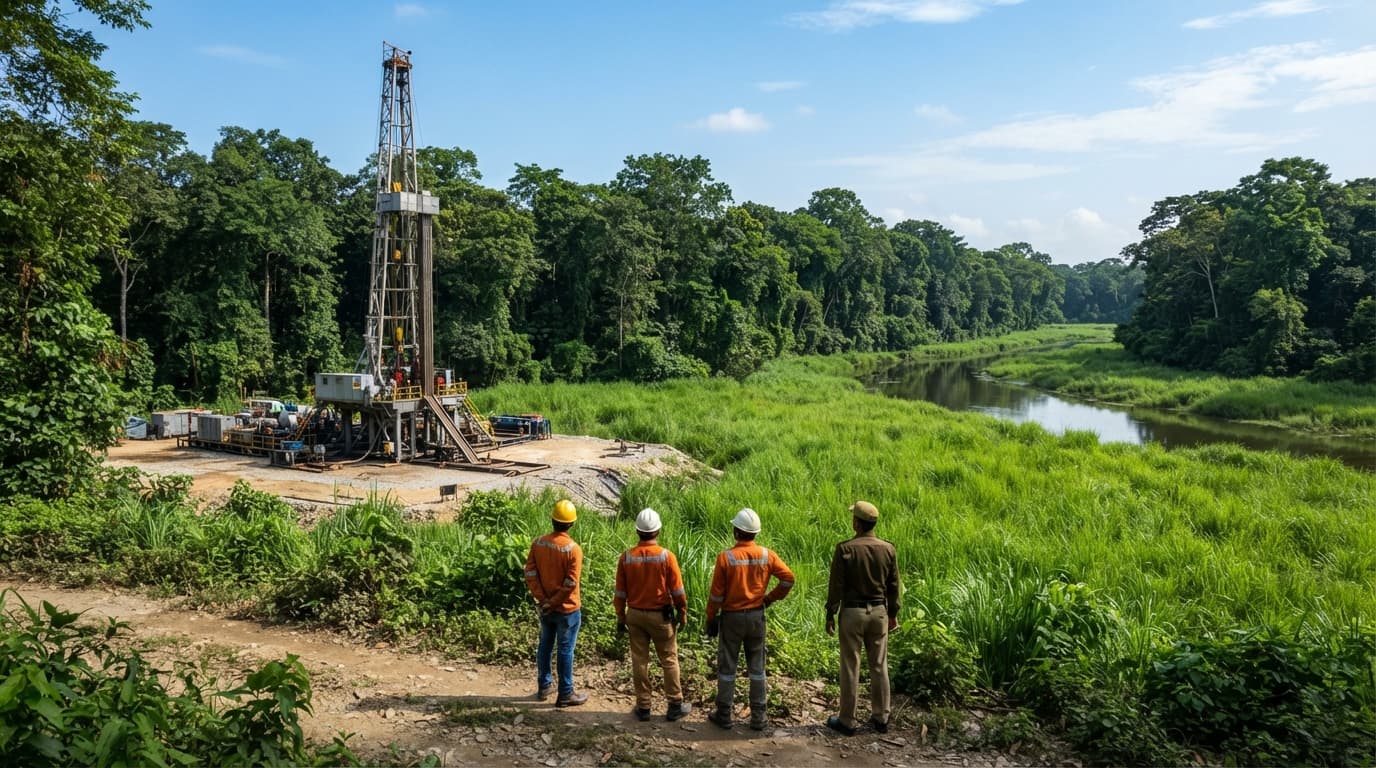
The method at issue is Extended Reach Drilling. A well starts at a surface point outside a protected area and is steered at an angle to reach a reservoir below it. Oil India has told the court its surface infrastructure would stay outside the park and only the subsurface well path would pass below it. It seeks use of 0.069 hectares of forest land under Section 2(1)(ii) of the Van (Sanrakshan Evam Samvardhan) Adhiniyam, 1980.
Oil India called the matter urgent. It said it cannot proceed with exploration in a block estimated to hold about three per cent of India's total hydrocarbon reserves unless the court clears the proposal. Drilling at that depth, the company said, would not damage the flora and fauna of the park, and the authorities had refused permission by wrongly applying a 2023 order of the court dealing with mining inside national parks.
No order was passed on the merits at the first hearing. The Bench asked the Petroleum Ministry and the state to file replies to the challenge. It also said inputs would be needed from the Ministry of Environment, Forest and Climate Change, and that any view on allowing exploration would turn on research and development reports and assessments placed by the competent authorities.
Drilling From Outside Park Boundary
Location is the core of Oil India's case. No rig, road, camp or production facility is proposed inside Dibru-Saikhowa itself, it said. The surface point would sit outside, while advanced drilling would run several kilometres underground to tap oil and gas below the park. Depth is part of the argument. At 3,500 to 4,000 metres below ground, the target formation lies far beneath root zones, surface water, soil layers and the habitats that sustain the park.
According to the company, that separation between surface and subsurface footprints should matter in law. Its plea draws a line between mining or drilling that takes land, clears forest and sets up works inside a park, and a project where surface use is confined to 0.069 hectares of forest land outside the core protected landscape. That small patch, sought to be used under the Van Adhiniyam, has become the legal focus of the dispute.
Under Section 2(1)(ii) of the Van (Sanrakshan Evam Samvardhan) Adhiniyam, 1980, prior central approval is needed before forest land is used for a non-forest purpose. Even a narrow patch therefore needs clearance, and refusal can stall a much larger project. Oil India has challenged that refusal in proceedings arising from the court's continuing forest conservation jurisdiction.
Counsel argued the rejection rested on a wrong reading of the court's 2023 ruling on mining in national parks. On that argument, a bar on mining operations located inside parks was extended to a proposal where only the reservoir lies below the park while operations start outside it. The court will now have to decide whether that reading was correct and, if not, what safeguards must still apply.
The Bench gave no final view and spoke in terms of caution. It said it might allow exploration on the basis of scientific material and reports from the departments concerned. That remark points to a two-stage inquiry. First, whether the law permits such a proposal at all. Second, if it does, what conditions on technology, monitoring, depth, direction, waste handling and emergency response would be needed to protect the park.
What Supreme Court of India Must Weigh Next
Replies now sought from the Petroleum Ministry and Assam will set the terms of that inquiry. The Petroleum Ministry is the administrative ministry for oil and gas exploration. It is expected to place on record its position on the block, the production sharing or lease terms, the national interest in domestic reserves, and whether it supports the technical claim that the work can be done without surface disturbance inside the park.
Assam's response will carry separate weight. The state administers land and the local forest machinery, handles day-to-day protection of the park, and will be heard on the effect of any drilling on wildlife, water channels, local communities and the forest staff who manage the area. It is a split familiar to readers of environmental law India coverage: the Centre speaks to energy policy and forest clearance, the state speaks to ground-level protection and enforcement, and the court tests both against the law governing national parks.
Also central will be the Ministry of Environment, Forest and Climate Change, though it was not directed to reply in the same order. The Bench flagged the need for its inputs in the continuing T.N. Godavarman Thirumulpad against Union of India matter, the 1995 forest conservation case in which the court continues to pass orders on forest use across the country. Views from its expert bodies, on whether Extended Reach Drilling at the proposed depth and trajectory risks subsidence, groundwater contamination, noise, vibration or blowouts, are likely to shape the next hearing.
In such clearance disputes the court often calls for site-specific studies rather than general assurances. Questions that may come up include the exact surface coordinates, the well path, casing and cementing design, the handling of drilling mud and cuttings, the source of water, the disposal plan, the distance from rivers and wetlands, and the plan for independent monitoring. The 0.069 hectares at issue may look small. The court has in the past treated even narrow uses as part of a larger ecological assessment.
Oil India's urgency argument will also be tested. The company says three per cent of national reserves is involved and delay will hold up exploration. Against that stands the precautionary approach that governs national parks, where the legal standard does not allow harm first and remedy later. The Bench has given no indication yet that urgency alone will decide the outcome.
Godavarman Case and Forest Approval
Procedure matters here as much as technology. This plea is not a standalone writ but an application in the court's long-running Godavarman jurisdiction, through which forest and wildlife issues from different states are tracked and decided under continuing orders. That history explains why the Bench linked the Oil India request to environmental inputs and research reports, rather than treating it as a routine contract or licence dispute.
Under that framework, the court has repeatedly required prior approvals, compliance with conditions imposed by expert committees, and strict limits on activities in and around protected areas. Proposals involving national parks get the closest scrutiny, because the Wild Life (Protection) Act, 1972 and the forest conservation regime treat such areas as the highest category of protection. Even where a project proponent offers to keep its footprint outside, the court examines subsurface effects, accident risk and cumulative impact.
The company's distinction between inside and below will therefore face close examination. The question is whether extraction of hydrocarbons from beneath a park, without surface occupation inside it, is barred by the 2023 mining order or stands on a different footing that can be regulated by conditions. The rejection under challenge took the first view. Oil India asks the court to take the second.
Much will turn on the record the governments produce after November 17. If the Petroleum Ministry and Assam support the proposal, they will need to explain why, with data. If they oppose it, they will need to identify the specific legal bar and the ecological risk. The Environment Ministry's scientific material, when placed before the court, will help the Bench decide whether Extended Reach Drilling at 4,000 metres can be insulated from the park above it or whether uncertainty itself requires refusal.
For now, no drilling has been allowed and no clearance has been restored. The court has only called for replies and expert-based assessment. The hearing after November 17 will decide whether the project moves toward conditional exploration or stays stalled at the clearance stage.
Comments
Sign in to read the discussion and share your thoughts.
Latest from LawWorld
News
View all- Supreme Court Seeks Centre, ECI Reply On Plea Against Immunity For CEC And ECs4 Nov 2026
- Supreme Court Directs MP Speaker To Decide Bina MLA Disqualification Plea In Two Months4 Nov 2026
- Supreme Court Orders Special Cell To Monitor Child Labour Law Enforcement4 Nov 2026
- Bail Cannot Rest On Judge's Personal Notions Of Morality, Rules Supreme Court4 Nov 2026
- Supreme Court Refers Two-Child Norm Penalties To Larger Bench As Outdated4 Nov 2026