
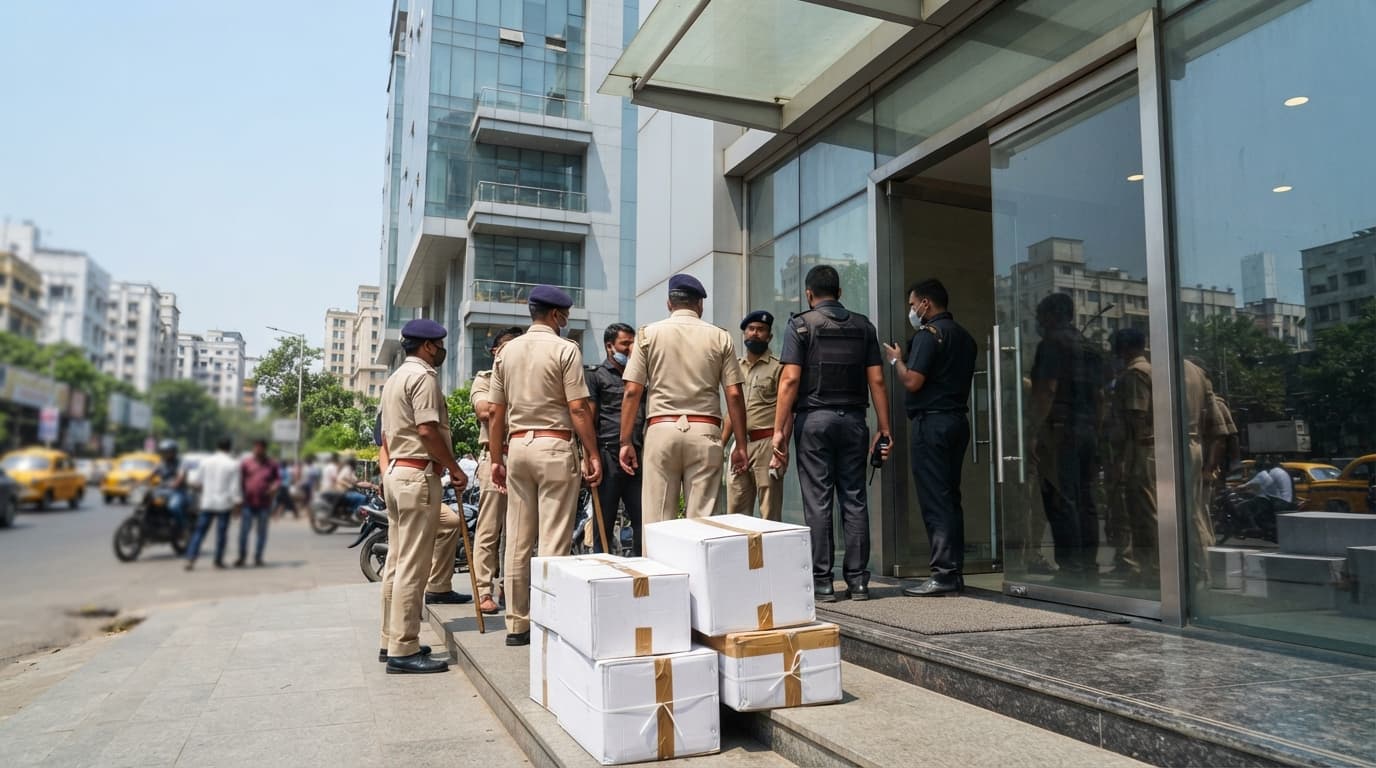
New Delhi: The Supreme Court on October 29, 2026 reserved its order on a writ petition filed by the Directorate of Enforcement and its officers seeking registration of a first information report and investigation against former West Bengal Chief Minister Mamata Banerjee and certain police officials over alleged obstruction of an Enforcement Directorate search at the offices of I-PAC, the political consultant of the Trinamool Congress, a plea that turns on enforcement directorate powers during searches and the remedy when officers claim they were stopped from completing their work.
Justices Prashant Kumar Mishra and N V Anjaria heard the matter in full before reserving orders. The bench did not go into the merits. It said it would decide only the limited question of who should inquire into the complaint, if at all.
As framed in court, the choice is between referring the complaint to the Central Bureau of Investigation and leaving it to the newly appointed State Government to investigate under ordinary criminal law. That referral question will be answered in a reasoned order to be pronounced later.
Senior Advocate Kapil Sibal, for the former Chief Minister, opposed any direction for a CBI inquiry. He said the State machinery can investigate the complaint and no order from the Court is required. He stressed that Mamata Banerjee is no longer Chief Minister, so the concerns that arise when an investigation is sought against a serving head of government do not apply in the same way.
Enforcement Directorate Powers During Searches
The dispute has brought focus back on what are the powers of enforcement directorate when it conducts searches, surveys and seizures in suspected violations. The Directorate works under two central statutes. Its officers draw authority from Parliamentary law, and the safeguards written into those laws apply to every action, subject to review by courts. The present petition does not ask the Court to expand those search powers. It asks what follows when officers allege they were stopped from using them.
For context, the powers of enforcement directorate under PMLA relate to investigation of the offence of money laundering, including search and seizure, attachment of property and filing of complaints before Special Courts. The law sets conditions for search, recording of reasons and handling of seized material. Courts have tested how those conditions operate, when statements can be recorded, and what safeguards apply to persons summoned or searched.
By contrast, the powers of enforcement directorate under fema relate to investigation of contraventions of foreign exchange law, which is largely civil in character with adjudication and penalties prescribed under that Act. Officers can call for records, hold inquiries and place findings before adjudicating authorities. The difference between the two regimes matters because procedure, standard of proof and consequences differ, though both involve collection of documents and examination of transactions.
Obstruction of a search stands on a different footing. The allegation in such cases is not about foreign exchange or money laundering by the searched party. It is about whether public servants or others blocked officers on duty, took away papers or devices, or otherwise interfered with the search. Such conduct, if proved, is examined under the criminal law on obstruction, intimidation and interference with public servants. The ED petition seeks a first information report on that basis and investigation into the roles attributed to the former Chief Minister and police officials.
In court, it was stated that the search was directed at the offices of I-PAC, described as the political consultant of the Trinamool Congress. The ED has alleged its teams were obstructed during that operation. The defence disputes the need for a court-monitored or outside inquiry. The Court has recorded no finding on whose version is correct.
CBI Referral or State Investigation
The question now reserved is one Indian courts face often. Where the allegation involves police officers of the same State that would otherwise investigate, petitioners argue that a fair inquiry needs the Central Bureau of Investigation. Respondents answer that the regular police under a new administration can act without bias, and that CBI investigation must remain an exception. The Supreme Court in different cases has applied tests of necessity, credibility and public confidence before shifting an investigation.
That debate is why lawyers compare the present plea with other cases where transfer was argued, including commentary around the Delhi excise policy CBI probe on one hand and discussion of the ruling in which the sc rejects sit CBI probe in hindenburg adani case on the other. Those matters arose on entirely different facts and statutes. They are cited here only to show that the Court orders or declines CBI investigation with restraint, after asking whether State agencies can credibly investigate, and gives reasons for the decision. No parallel is drawn on the merits of the I-PAC allegation.
Sibal's change-of-government argument adds another layer. The submission is that even if investigation by a police force under a political executive headed by the named person raised concerns while Mamata Banerjee held office, much of that concern falls away after she demitted office and a new State Government took charge. The ED case, as understood in court, is that the alleged role of serving police officials itself creates a conflict, whoever heads the political executive. The reserved order is expected to decide which view holds on the facts placed before the bench.
Court to Decide Forum First
If the Court refers the matter to the CBI, that agency will register a case as per law and proceed under the supervision the order lays down. If the Court leaves the matter to the State, the State police will be expected to register a first information report where a cognisable offence is disclosed and to investigate under the Code of Criminal Procedure and applicable guidelines. Questions of sanction for prosecution of public servants, where attracted, and the evidentiary value of material from the I-PAC search will come later, not at the referral stage.
The hearing has closed. All sides now await the reasoned order. The decision will settle only the forum of investigation, not the truth of the obstruction charge. Whether officers were obstructed, who gave what directions at the search site, and what liability follows will turn on evidence collected if investigation proceeds. The order, when pronounced, will fix the next procedural step and the time within which the agency concerned must act.
Comments
Sign in to read the discussion and share your thoughts.
Latest from LawWorld
News
View all- Supreme Court Seeks Centre, ECI Reply On Plea Against Immunity For CEC And ECs4 Nov 2026
- Supreme Court Directs MP Speaker To Decide Bina MLA Disqualification Plea In Two Months4 Nov 2026
- Supreme Court Orders Special Cell To Monitor Child Labour Law Enforcement4 Nov 2026
- Bail Cannot Rest On Judge's Personal Notions Of Morality, Rules Supreme Court4 Nov 2026
- Supreme Court Refers Two-Child Norm Penalties To Larger Bench As Outdated4 Nov 2026