
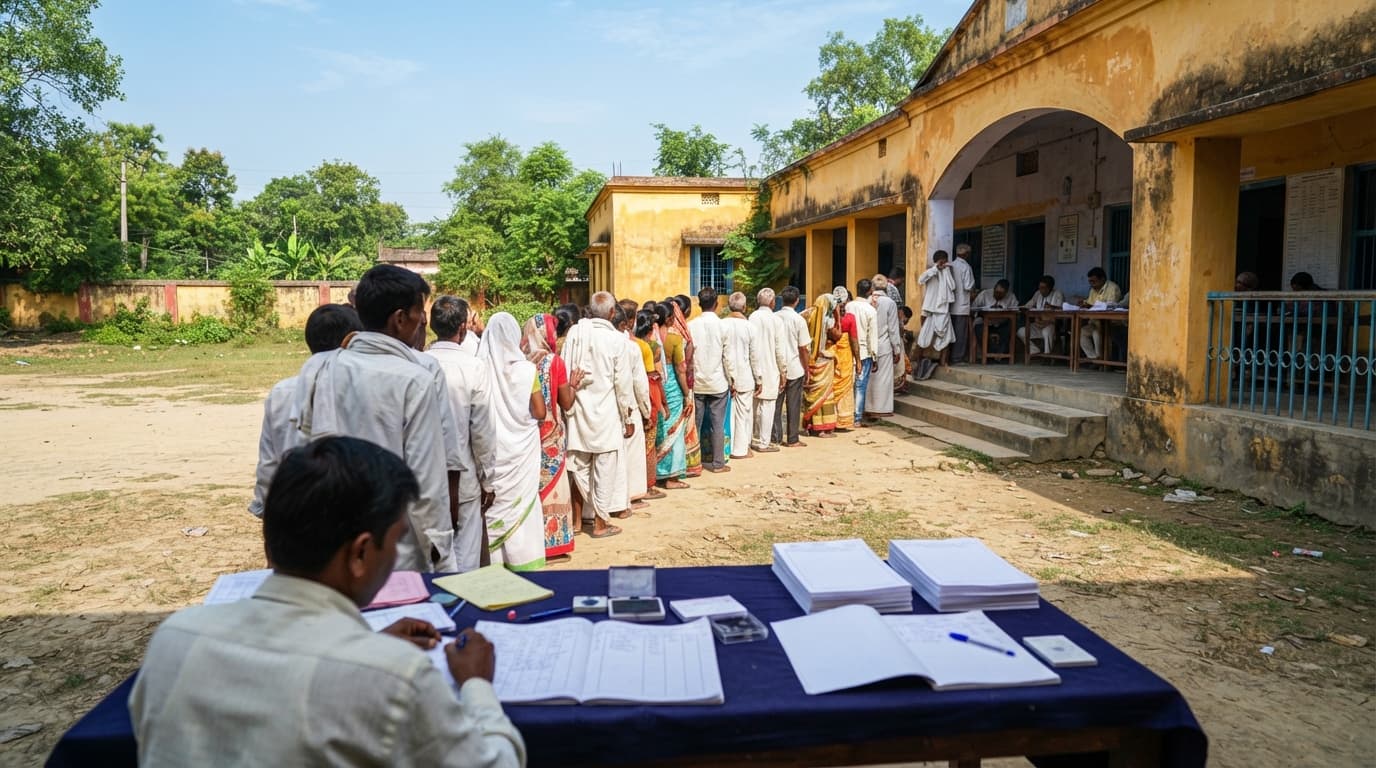
New Delhi, October 27, 2026: The Supreme Court on Monday gave petitioners 10 days to file a rejoinder to the Election Commission of India's 248-page defence of its special intensive revision of electoral rolls. It deferred detailed hearing on the batch of petitions challenging the revision exercise and the decision-making behind it.
Chief Justice Surya Kant, sitting with Justices Joymalya Bagchi and V. Mohana, said detailed arguments could not start yet. The Commission's counter-affidavit had come only on Monday night. Petitioners deserved a fair chance to answer it before the court looked at the merits.
The lead petition by Rakesh Kumar Singh, with connected matters, attacks how the Commission ordered and carried out the revision. Petitioners alleged Chief Election Commissioner Gyanesh Kumar took unilateral decisions on questions that needed collective approval. At the centre are the orders directing the revision of electoral rolls, which affect inclusion and exclusion of voters on a large scale.
Deputy Election Commissioner Bhanu Prakash Yeturu, who filed the affidavit for the Commission, denied that charge. He said the exercise was legally authorised and backed by unanimous decisions of all three members. All three orders on the revision, dated June 2025, October 2025 and May 2026, were unanimous, the affidavit said. It also rejected the claim that Form 6 had been altered to hurt applicants' rights.
Rajya Sabha MP Dola Sen's fresh plea made Form 6 a separate contest. Sen alleged changes were made to Form 6 during the Bihar revision without the Supreme Court's approval. The bench sought the Commission's response and said the issue would be heard with the main batch.
Petitioners' counsel said they needed time because the counter was bulky and raised questions of fact and procedure. The bench accepted the request and gave 10 days for a rejoinder. It said the rejoinder should meet the Commission's defence, including the claim of unanimity and the explanation on Form 6.
On records, the petitioners asked for a direction to the Commission to preserve the full file and place it before the court. The bench assured counsel it would examine all issues raised, including unanimity, the Form 6 question and the plea for preservation and production of complete records.
The batch is likely to come up next on November 17, 2026. Both sides treat that date as important because any direction on records, forms or the legal basis of the orders will bear on the progress of the revision and the voter lists for coming polls.
What special intensive revision orders say
The Commission's affidavit says the three orders under challenge set the timetable, the method and the duties of electoral officers. It calls them decisions of the full Commission, not directions by the Chief Election Commissioner alone. Petitioners dispute that reading. They want the files and minutes called for to show how the decisions were taken.
That is why unanimity has taken centre stage. The Election Commission is a multi-member body. Petitioners say when an order touches rights across constituencies, the file must show collective consideration and approval. The Commission's answer is that the files show such approval for each order and the claim of unilateral action has no basis.
No view on merits has been expressed. By granting time for a rejoinder and issuing notice on the new plea, the court has kept all questions open. Counsel said the rejoinder would answer the affidavit paragraph-wise and list the exact documents the petitioners want produced.
Door-to-door verification remains the hard part of any electoral roll revision. Claims and objections have to be invited, Forms 6, 7 and 8 decided, and draft and final rolls published. A slip at any stage can cause a wrongful deletion or a wrongful inclusion. Petitioners say strict use of approved forms and transparent records is the only safeguard for voters who cannot track every notice.
Form 6 dispute and Bihar revision
Form 6 is the application a new elector files to seek inclusion of name in the roll. A small change in wording, declarations, papers asked for or mode of filing can hit first-time voters, migrants and young electors who apply in large numbers during a revision. Sen's plea alleges alterations were made to Form 6 during the Bihar drive without the court's approval.
The Commission denies any unauthorised change. Its affidavit says the form used was in line with the rules and its instructions. The bench said the dispute would have to be settled on the notified forms, the instructions issued for Bihar, and the specimens actually used in the field.
Lawyers who handle revision cases expect a side-by-side comparison if the dispute persists. That would mean calling for the approved Form 6, any revised version said to have been circulated, the date and authority for the change, and the number of applications received on each version. Issuing notice on Sen's plea shows the court wants the Commission's answer on record first.
Timing adds pressure because a revision already under way leaves less room for correction. Petitioners say if a form was changed mid-course, voters who had applied and officers who had processed those papers would be treated differently. The Commission says no voter was prejudiced and all applications went through a uniform procedure.
Records, rolls and past summary drives
The plea to preserve complete records covers both the unanimity issue and the Form 6 issue. Petitioners have asked that files, notings, minutes, letters to chief electoral officers, and the data on claims and objections be kept and filed in court. Without the full record, they say, the court cannot decide if the three orders were unanimous or if field staff followed the approved procedure.
Such preservation orders are common where large administrative exercises are challenged. Preservation is not a finding of fault. It keeps the material needed for adjudication from being lost to routine weeding or overwriting of electronic data. The bench said it would consider the request when the matter comes up next.
Part of the background argument is how an intensive drive differs from annual summary work. Counsel in these cases often contrast intensive drives with routine annual work, the kind listed in official papers under titles such as summary revision of electoral roll 2022 or summary revision of electoral roll 2018 west bengal. The contrast is used to explain why an intensive exercise needs wider field verification and closer judicial check of orders and forms.
Accuracy of the roll and trust in polls turn on the same papers. A deletion without proper notice can disfranchise a voter. An inclusion without verification can distort the roll. The petitions raise both risks and ask for a process that can be checked later through documents.
The sequence from here is fixed. The Commission's defence is on record. Petitioners have 10 days to file the rejoinder. The Commission must answer the fresh challenge to the use of Form 6 in Bihar. The request for preservation and production of the full set of records will be taken up with these issues. The bench will then decide what further papers or hearings are needed when the batch is listed next, likely on November 17.
Comments
Sign in to read the discussion and share your thoughts.
Latest from LawWorld
News
View all- Supreme Court Seeks Centre, ECI Reply On Plea Against Immunity For CEC And ECs4 Nov 2026
- Supreme Court Directs MP Speaker To Decide Bina MLA Disqualification Plea In Two Months4 Nov 2026
- Supreme Court Orders Special Cell To Monitor Child Labour Law Enforcement4 Nov 2026
- Bail Cannot Rest On Judge's Personal Notions Of Morality, Rules Supreme Court4 Nov 2026
- Supreme Court Refers Two-Child Norm Penalties To Larger Bench As Outdated4 Nov 2026