
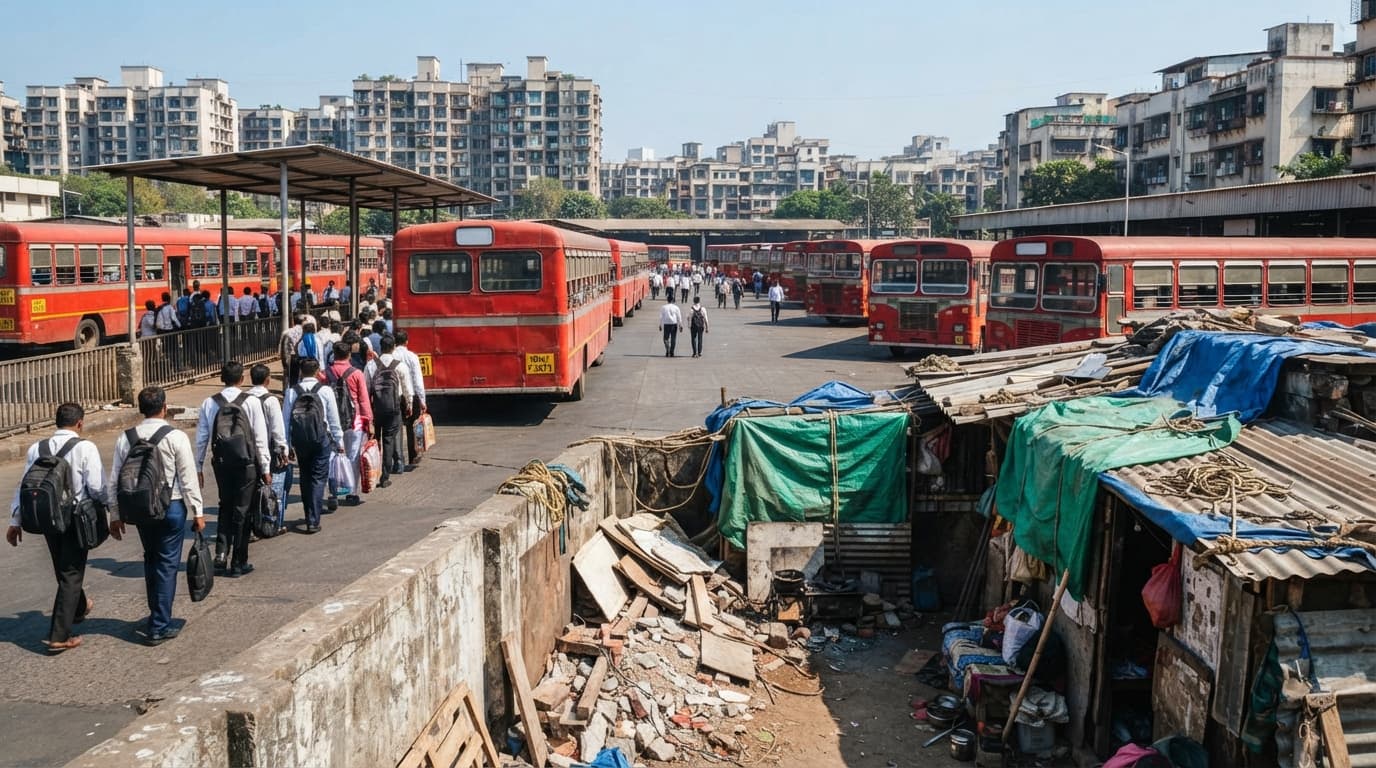
The Supreme Court on Tuesday froze the November salary of Brihanmumbai Municipal Corporation Commissioner Ashwini Bhide and other officers tasked with clearing a Borivali plot reserved for a Brihanmumbai Electric Supply and Transport bus station, and initiated contempt of court proceedings by issuing a show-cause notice for continued non-compliance. A Bench of Chief Justice Surya Kant and Justices Joymalya Bagchi and V. Mohana rejected the corporation's request for 30 more days and imposed costs of Rs 5 lakh on it.
The plot is government land earmarked for transport infrastructure in Mumbai's northern suburbs. The Bench said it could not remain under unauthorised occupation once clearance directions had been issued. Continued failure, it indicated, left no option but coercive steps against the officers concerned.
In practice, the November salary of the Commissioner and other officers identified as responsible for the clearance will stay frozen until further orders. No personal fine was fixed at this stage. The freeze works as pressure to secure compliance, not as final punishment.
The Rs 5 lakh costs were imposed on the Brihanmumbai Municipal Corporation itself. In execution matters such costs are paid by the body and stand apart from salary action against individual officers. With the plea for another 30 days refused, the corporation must now show work on the ground rather than seek more time.
BEST bus station land in Borivali
Borivali in north Mumbai is a dense interchange for suburban rail, road transport and feeder bus services. Land kept for a BEST bus station there is meant for direct public use. While it stays occupied without authority, depot space, waiting areas and crew facilities cannot come up as planned, and commuters crowd nearby boarding points.
Civic officers were expected to identify the occupiers, follow due process for eviction, take police help where needed and hand over clear land. That sequence, the order records, was not completed despite earlier directions. The Bench has now moved from monitoring compliance to enforcing it.
Under encroachment law, municipal bodies in Maharashtra must protect streets, open spaces and reservations shown for public purposes. Field staff report unauthorised construction, issue notices, hear objections and carry out removal with other departments. Courts give occupiers reasonable time to be heard, but long delay on reserved transport land brings intervention.
Title, reservation and rival claims over urban plots are tested under encroachment land law and the related municipal and revenue provisions that define government land, who can allot or lease it and what procedure must precede eviction. No fresh title issue was decided here. The order enforces directions already passed for a defined project site.
The line drawn by encroachment property law in India is between private boundary fights and occupation of public land meant for roads, utilities, schools or transport. Private disputes go by civil suit and measurement. Occupation of reserved civic land draws summary removal powers, with notice and hearing, and courts keep oversight to check misuse while ensuring projects are not stalled indefinitely.
Contempt of court show-cause issued
A show-cause notice in such a matter asks the officer to explain why action for wilful disobedience should not follow. It is not a final finding of guilt. The Commissioner and the other officers can place records before the Court, including steps taken, obstacles faced, help sought from police or revenue authorities and timelines for the rest of the work.
In court practice lawyers sometimes use the shorthand court of contempt act for the Contempt of Courts Act, 1971, which sets out procedure, defences and punishment alongside the Supreme Court's constitutional power to punish disobedience of its orders. The Court can accept the explanation, discharge the notice, grant time with conditions, impose fine or imprisonment, or pass further directions to get the land cleared.
As an interim measure, the salary freeze stands apart from that final punishment. Courts have used stoppage of salary, personal presence of senior officers and daily progress reports to fix responsibility on named officers and not only on the institution. The amount is not forfeited now. Release will depend on further orders after the replies are assessed.
The refusal of 30 more days says much about the Bench's view of the pace so far. Short extensions are common where records show part clearance, teams on site or resistance on the ground. Refusal here points to dissatisfaction with the reasons given for delay. The costs order carries the same message and compensates for prolonged litigation.
Costs and salary freeze explained
For BEST and Borivali passengers, the test is when clear possession allows work to start. A bus station needs levelled land, access roads, drainage, lighting, ticketing space and safe entry and exit for buses. Encroachments hold up survey, soil testing and tendering. Till handover, the transport body cannot fix dates for new bays or for shifting halts off congested roads.
Those living or working on the site face an uncertain wait. Eviction from government land needs notice and a chance to show allotment letters, leases or rehabilitation claims where policy allows. The order does not take away those safeguards. It presses the corporation to finish the process lawfully and fast, and to bring proof when it answers the notice.
The case will come back before the same Bench after the officers file replies. The Court will then decide whether the explanation is accepted, whether the salary freeze stays or is lifted, whether further orders on costs are needed and what fixed timeline will govern handover of the Borivali plot.
Comments
Sign in to read the discussion and share your thoughts.
Latest from LawWorld
News
View all- Supreme Court Seeks Centre, ECI Reply On Plea Against Immunity For CEC And ECs4 Nov 2026
- Supreme Court Directs MP Speaker To Decide Bina MLA Disqualification Plea In Two Months4 Nov 2026
- Supreme Court Orders Special Cell To Monitor Child Labour Law Enforcement4 Nov 2026
- Bail Cannot Rest On Judge's Personal Notions Of Morality, Rules Supreme Court4 Nov 2026
- Supreme Court Refers Two-Child Norm Penalties To Larger Bench As Outdated4 Nov 2026