
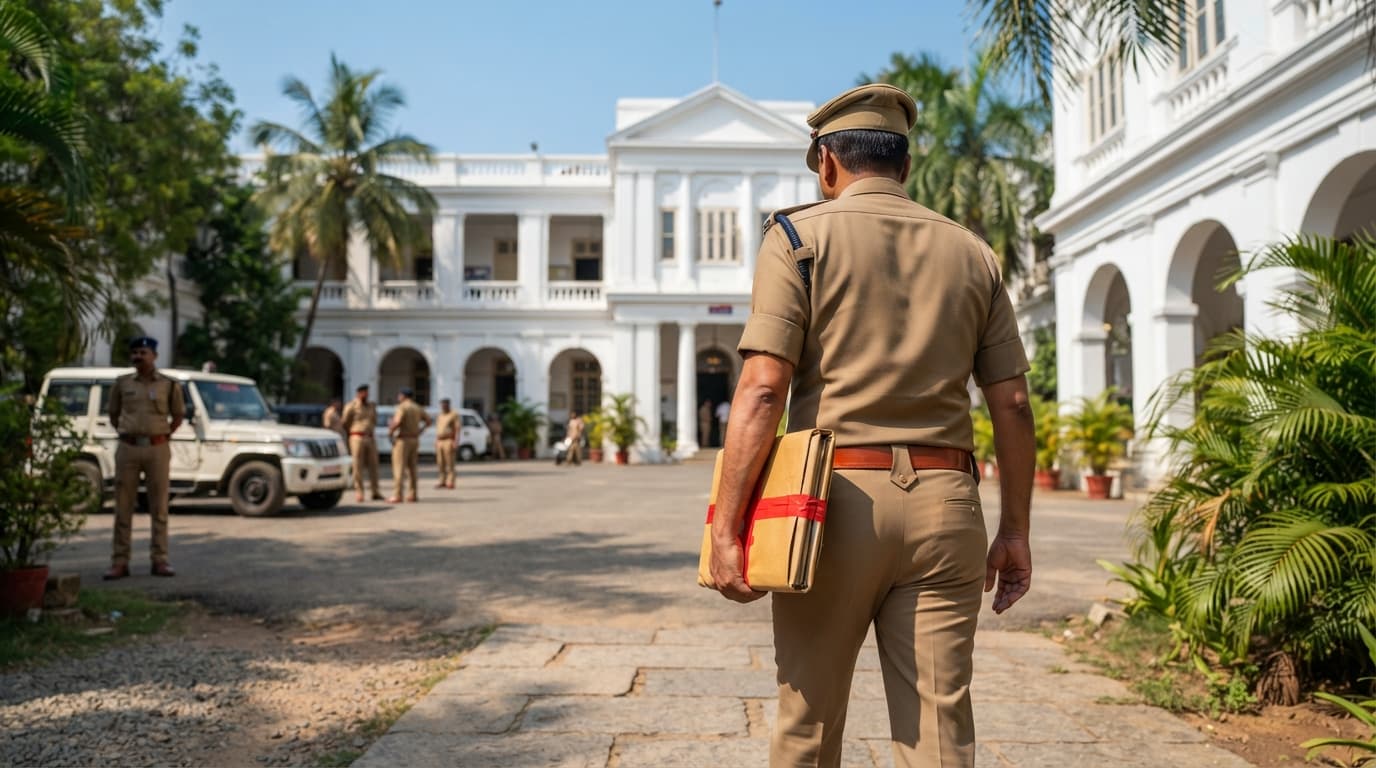
The Supreme High Court of India on November 2, 2026 accepted the unconditional apology tendered by senior IPS officer A. Arun and ordered expungement of the adverse remarks passed against him by the Madras High Court. The remarks related to a detention order issued during his tenure as Commissioner of Police, Greater Chennai. A bench of Justices Vikram Nath, R. Mahadevan and Aparesh Kumar Singh passed the order in the criminal appeal titled A. Arun v. Varsha Sharma and Others.
Under the order, the remarks recorded against the officer in the High Court judgment shall stand expunged. They will no longer form part of the judicial record for any purpose concerning his conduct, assessment or service career. The Court said the relief was granted in view of the apology on record and the assurance of care in future, and not on a finding that the detention order had conformed fully to law.
Accepting the apology, the bench warned that it was no substitute for the care expected of a detaining authority. The powers in question directly affect personal liberty. That warning forms part of the judgment and will remain as guidance for the officer and for other authorities exercising powers under preventive detention laws.
Arun had passed the detention order as Commissioner of Police, Greater Chennai, under Section 3(1) of the Tamil Nadu Prevention of Dangerous Activities of Bootleggers, Cyber Law Offenders, Drug Offenders, Forest Offenders, Goondas, Immoral Traffic Offenders, Sand Offenders, Sexual Offenders, Slum-Grabbers and Video Pirates Act, 1982. That provision empowers the designated authority to order detention of certain categories of persons with a view to preventing them from acting in a manner prejudicial to public order or to the maintenance of public supplies and services, subject to the safeguards in the Constitution and the statute.
An order under the 1982 Act rests on the subjective satisfaction of the detaining authority. The authority must act on the material placed before it, record the grounds of detention, communicate those grounds to the detenu within the statutory time, and forward the order and the supporting record to the government and to the Advisory Board for review. Failure at any of these stages can lead to quashing of the detention by the High Court in habeas corpus proceedings or by the Supreme Court in appeal.
Before the Madras High Court, the detention order came up for examination. In the course of its judgment the High Court made adverse observations against Arun in his capacity as the detaining authority. The Supreme Court order does not set out the full text of those observations. What is clear is that the High Court viewed the manner in which the detention power had been exercised as calling for comment on the conduct of the authority, and recorded those comments as part of its reasons.
Arun then filed criminal appeal before the Supreme Court. Listed as A. Arun v. Varsha Sharma and Others, the matter was taken up on November 2, 2026 by the three-judge bench led by Justice Vikram Nath. The cause list entry had appeared in the regular course on the Supreme Court of India display board with other criminal appeals fixed for pronouncement and hearing that day. The bench delivered judgment after hearing counsel for the appellant officer and for the respondents.
Counsel for the officer did not seek to defend every aspect of the detention order on merits. Instead he tendered an unconditional apology for the lapses that had drawn criticism from the High Court. Described in the judgment as unqualified and without reservation, it expressed regret for the action that led to the remarks and gave an assurance of greater care in future while dealing with matters involving liberty of citizens.
The bench held that, in the facts of this case, the balance lay in favour of removing the remarks so they do not continue to attach to the officer's name and record. It ordered consequential deletion of the adverse passages from the High Court judgment insofar as they relate to the personal conduct of the appellant.
Alongside that relief, the judges said authorities vested with the power to detain must act with a high degree of care, application of mind and adherence to procedure. Preventive detention permits detention without trial for a limited period on the basis of anticipated future conduct. For that reason, the Constitution under Article 22 and the law laid down by courts insist on strict compliance with procedural safeguards and a real and proximate link between past conduct and the need for prevention.
Why the Supreme High Court of India intervened
Expungement of adverse remarks is a discretionary relief that superior courts grant sparingly. The practice in India is that remarks casting aspersions on the conduct, integrity or competence of a judicial officer, administrative officer or police officer should not be made without giving the person a chance to explain. They must be confined to what is strictly necessary for deciding the case and must be based on material on record. Where remarks are unnecessary for the decision, couched in harsh language, or made without hearing the person affected, the Supreme Court has in many matters ordered their removal.
Such criticism in a reported judgment can enter confidential rolls, affect promotion and posting decisions, and colour future assessments by departmental authorities. For a member of the Indian Police Service holding a field posting as Commissioner of Police of a large metropolitan city, the effect lasts well beyond the particular detention case. Courts weigh the need to comment on institutional failure against the fairness owed to the individual officer.
In this case the bench weighed those factors with the apology. An unconditional apology is treated as mitigation. It is not a defence on merits and does not by itself establish that the original order was lawful. Courts look at whether the apology is prompt, sincere and unconditional, whether any improper assertion stands withdrawn, and whether there is an assurance against repetition. The apology affidavit here, as with others kept in the case files of the Supreme Court 0f India in such expungement pleas, was placed before the bench with the language and necessity of the remarks under challenge.
The caution in the judgment keeps that distinction intact. By stating that apology cannot replace due care, the bench separated the personal relief given to the officer from the standard expected of the office. Each detention proposal must be examined independently, the sponsoring authority's dossier must be checked, alternatives to preventive detention must be considered, past cases and bail orders must be placed and discussed, and the grounds must be set out in clear language that allows the detenu to make an effective representation at the earliest opportunity.
For Greater Chennai policing, the ruling closes a pending dispute involving a former Commissioner. Arun, a senior IPS officer of the Tamil Nadu cadre, had issued the detention order while heading the city police. Commissioners of Police in Chennai are among the authorities specially empowered under the 1982 Act to pass detention orders within their jurisdiction. The orders are subject to approval by the State Government and to the opinion of the Advisory Board, and are often challenged before the Madras High Court through habeas corpus petitions filed by family members of detenus.
The pattern here is familiar to lawyers who practise in preventive detention matters. A detention order is challenged, the High Court examines delay in consideration of the representation, non-application of mind, reliance on stale or irrelevant material, or non-supply of relied-upon documents, and in some cases adds criticism of the detaining authority. The State may pursue the main challenge to quashing of detention. The officer may move independently to protect his record. The present appeal by the officer himself followed that second course.
The November 2 judgment has a limited and specific effect. The adverse remarks against Arun in the Madras High Court judgment stand removed and cannot be used against him in departmental or other proceedings. The apology tendered by him stands accepted and forms part of the Supreme Court record. The caution recorded by the bench remains as a direction to him to exercise greater care in future detention matters. No further hearing in this appeal remains before the three-judge bench, and the registry will communicate the order to the Madras High Court for necessary action on its records.
Comments
Sign in to read the discussion and share your thoughts.
Latest from LawWorld
News
View all- Supreme Court Seeks Centre, ECI Reply On Plea Against Immunity For CEC And ECs4 Nov 2026
- Supreme Court Directs MP Speaker To Decide Bina MLA Disqualification Plea In Two Months4 Nov 2026
- Supreme Court Orders Special Cell To Monitor Child Labour Law Enforcement4 Nov 2026
- Bail Cannot Rest On Judge's Personal Notions Of Morality, Rules Supreme Court4 Nov 2026
- Supreme Court Refers Two-Child Norm Penalties To Larger Bench As Outdated4 Nov 2026