
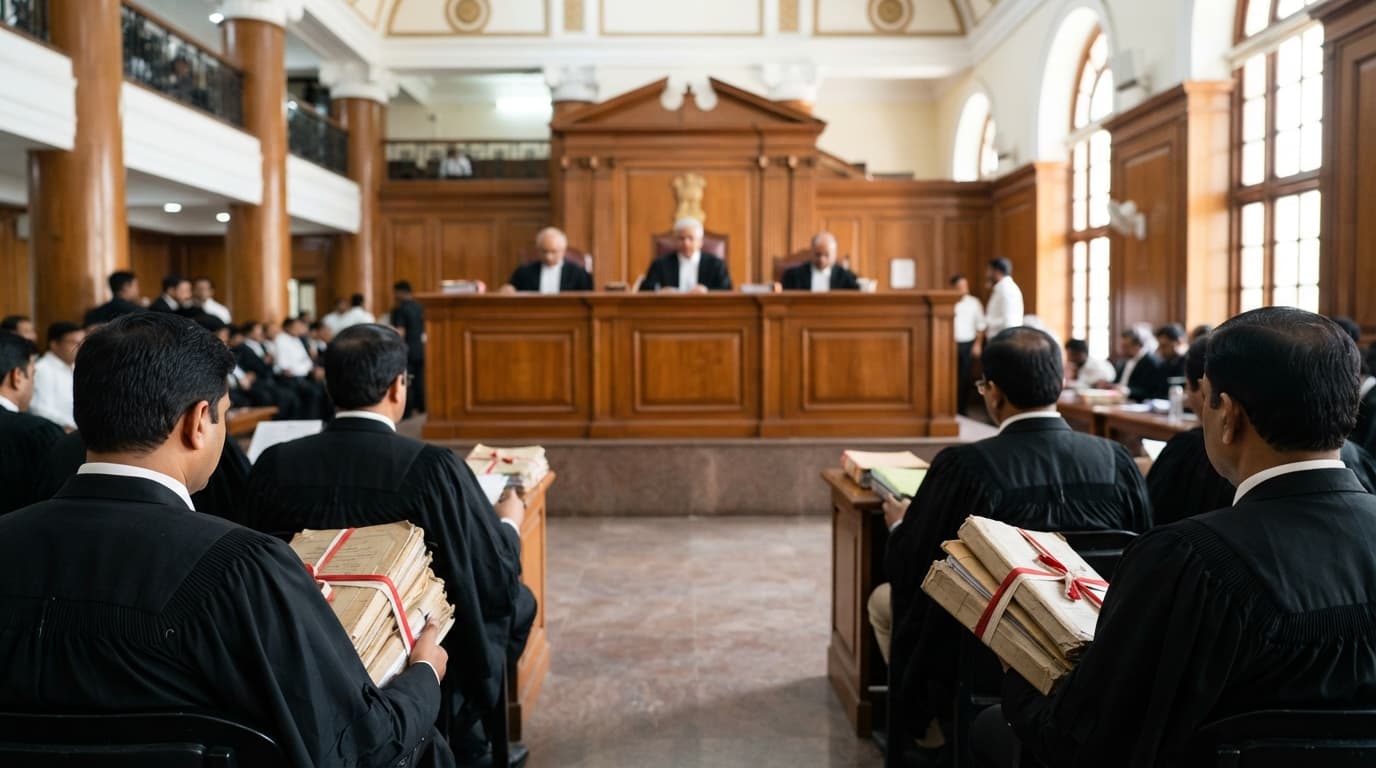
New Delhi: The Supreme Court of India has dismissed the special leave petition filed by the State of Bihar and others against Deo Kumar Singh and others after noting a delay of 728 days in filing, imposing costs of Rs 20,000 on the State. The petition was disposed of at the threshold on the ground of delay, without entering into the merits of the underlying dispute.
The case was listed as State of Bihar and Others against Deo Kumar Singh and Others. The Court declined to condone the delay and dismissed the petition. No reasons on the merits of the dispute were recorded, and no finding on the underlying claim or defence was returned. The respondents, who had faced a fresh round of litigation before the top court, retain the benefit of the earlier adjudication that the State had sought to challenge.
A delay of 728 days is nearly two years beyond the time allowed for approaching the Supreme Court. The Court paired that finding with costs of Rs 20,000. The sum is modest in itself, but it was imposed on a state government and linked expressly to delay rather than to the merits.
Under the Rules, petitions must be filed within the prescribed period. Where there is delay, the petitioner must seek condonation of delay and explain each stage with dates, records and reasons. The Court then decides whether the explanation discloses sufficient cause. If it does not, the petition is not heard on merits. That is what happened here.
Why the special leave petition failed
The Court's response fits a consistent line of orders where government petitions filed after long gaps have been turned away. Judges have repeatedly said that the State, with its legal cells, standing counsel and access to records, is expected to act with greater promptness than an individual litigant who may struggle to obtain advice or papers. Administrative churn, change of officers or movement of files between departments is not treated as an automatic excuse.
To obtain relief, a petitioner who is late must place material before the Court. That usually means a chronological account supported by an affidavit: when the impugned judgment was received, when legal opinion was sought, when sanction was granted, when papers were sent to counsel in Delhi and when they were filed. Vague statements about procedural formalities or inter-departmental consultation, without dates and documents, do not satisfy the test. The dismissal in the Bihar matter signals that the explanation offered did not meet that standard.
The figure of 728 days mattered. Courts draw a distinction between a short delay of days or weeks, which can often be explained by copying delays or counsel's schedule, and a delay running into months or years. As delay lengthens, the explanation expected rises. A delay of nearly two years requires a day-to-day or at least stage-by-stage account. Absence of such an account often leads to refusal, even where the State argues that the issue involves public importance or public funds.
State litigation faces strict timelines
Government litigation in India is voluminous. The State of Bihar, like other states, contests service matters, land disputes, contracts, tax claims and welfare schemes across multiple forums. The Supreme Court has in several administrative directions and judgments asked governments to reduce unnecessary appeals, to take timely decisions on whether to challenge an order and to fix responsibility within departments. Costs orders, even for relatively small sums, are part of that toolkit. They mark the Court's disapproval and create a record that can be placed before senior officers.
Costs of Rs 20,000 in this matter will be borne by the public exchequer. In practice, such amounts are deposited as directed by the order or collected from the department concerned, and compliance is reported to the Court. While the sum will not affect the state budget, it requires file work, approvals and entries that draw attention inside the secretariat. For the officers who handled the file, it is a tangible consequence of late action. For the respondents, it offers some recompense for being drawn into proceedings filed well out of time.
Lawyers for the State often point to genuine constraints. Files move through districts, legal opinions are sought from law departments, and sanctions pass through finance and administrative approvals. Counsel in Patna and Delhi must coordinate, translations must be prepared and certified copies obtained. Each step takes time. Courts accept that the machinery of the State moves slowly, but they have held that this cannot stretch into years without documentation. The expectation is that departments will track limitation from the date of the judgment under challenge and build a calendar around it.
What dismissal means for respondents
For Deo Kumar Singh and the other respondents, the dismissal brings the Supreme Court phase to a close. The challenge filed by the State does not survive, and the prior decision that was sought to be disturbed remains operative between the parties. They will not need to address arguments on merits before the top court in this petition. Any further step by the State in the same cause would have to be through a separate remedy permissible in law, subject to its own maintainability and limitation.
Trial and High Court lawyers in Bihar will read the order as a practical prompt. Diaries must capture the date of judgment, the date of application for certified copy and the last date for filing. Departments should designate an officer to record reasons for each week of delay and preserve correspondence. Where delay is unavoidable, an application for condonation should be filed promptly with a candid explanation rather than a general plea about official process.
Compliance with the costs direction will close the file before the Supreme Court. The department concerned will need to process the payment of Rs 20,000 and retain proof of deposit for its records and for any audit query. The respondents can thereafter proceed on the basis that the State's petition stands dismissed for delay.
Comments
Sign in to read the discussion and share your thoughts.
Latest from LawWorld
News
View all- Supreme Court Seeks Centre, ECI Reply On Plea Against Immunity For CEC And ECs4 Nov 2026
- Supreme Court Directs MP Speaker To Decide Bina MLA Disqualification Plea In Two Months4 Nov 2026
- Supreme Court Orders Special Cell To Monitor Child Labour Law Enforcement4 Nov 2026
- Bail Cannot Rest On Judge's Personal Notions Of Morality, Rules Supreme Court4 Nov 2026
- Supreme Court Refers Two-Child Norm Penalties To Larger Bench As Outdated4 Nov 2026