
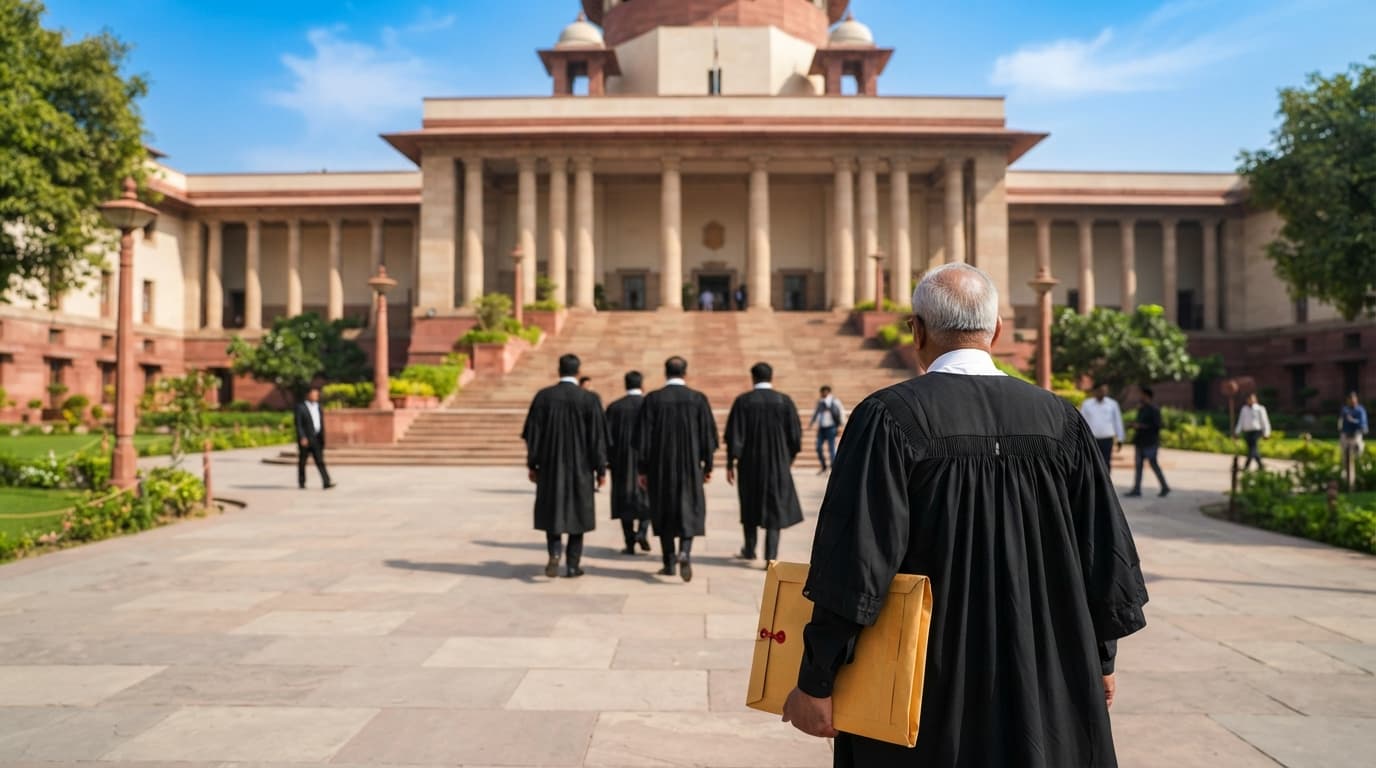
The Supreme Court on Tuesday, November 3, adjourned to November 5 the hearing on former Tehelka editor Tarun Tejpal's petition challenging the Bombay High Court judgment that convicted him and imposed a 10-year prison term in the 2013 sexual assault matter, including his request for interim bail to join his family for Deepavali festivities. A Bench of Justices M.M. Sundresh and Prasanna B. Varale deferred both the appeal against conviction and the temporary release plea after the Goa government sought more time. The order sets up a short, focused hearing on Wednesday next week on three linked questions: leave and admission of Tejpal's appeal, his request for temporary liberty during the festival period, and the State's separate plea for a heavier sentence.
Solicitor General Tushar Mehta, appearing for the Goa government, asked the Bench for an adjournment when the matters were called up for hearing. The Bench accepted the request and fixed November 5 as the next date. No detailed hearing took place on the merits of either the conviction challenge or the request for temporary release. The Goa government told the Court that it opposes any interim relief at this stage. The brief hearing therefore dealt only with scheduling, leaving the substantive arguments on conviction, sentence and temporary release to be addressed together on the next date.
Tejpal has approached the Supreme Court against the Bombay High Court's decision that found him guilty and sentenced him to undergo 10 years' imprisonment. The incident dates to 2013 and relates to allegations made by a former colleague. The High Court judgment reversed the earlier order of acquittal passed by the trial court in Goa, which had cleared him after a prolonged trial. Before the Supreme Court, Tejpal seeks to set aside the conviction and sentence. The Court has yet to decide on admission of the appeal, suspension of sentence pending appeal, and the conditions, if any, on which any liberty could be granted while the appeal remains pending.
Hearing deferred after State sought time
The deferral came at the start of what was expected to be an important procedural hearing. The Bench was to consider the paper work for admission of Tejpal's special leave petition or appeal, the application for exemption or suspension of surrender, and the separate application for festival-period release. Instead, after Mehta sought an adjournment on behalf of the State, the Bench posted the entire batch to November 5. Such short adjournments are common when the respondent State needs instructions or when counsel for one side is unavailable, and they do not indicate any view on the merits. For lawyers tracking sexual assault case law, the practical point is that the record will remain as it stands under the High Court judgment until the Supreme Court passes a specific order on stay, suspension or bail.
The background to the appeal requires an understanding of how appellate courts deal with convictions under the criminal law dealing with sexual offences. Under sexual assault law in India, trial courts record evidence, assess the credibility of witnesses and return findings on guilt. High Courts hearing appeals can re-appreciate evidence and, where the law permits, reverse acquittals and impose sentence. When the matter reaches the Supreme Court, the focus shifts to whether the High Court applied the correct legal tests, whether the evidence was read fairly, and whether the sentence imposed fits the provisions invoked. Discussion of the sexual assault definition by law in this case will therefore turn on the sections applied by the High Court, the punishment prescribed for those sections, and the reasons given for selecting a 10-year term rather than a lesser or greater punishment.
Interim bail plea for Deepavali opposed
Tejpal's request for temporary release is framed as a festival-period plea. He has asked the Court to grant him liberty for a short period so that he can join his family for Deepavali. Such requests are dealt with under the Court's power to grant interim relief pending the hearing of the main appeal, distinct from regular bail after conviction or suspension of sentence during the pendency of the appeal. The Court will have to weigh the personal ground cited, the short duration sought, the stage of the appeal proceedings, and whether conditions can address any concern about availability for surrender after the festival. The Goa government has opposed the request. Its opposition, conveyed through the Solicitor General, means the Bench will hear both sides on November 5 before deciding whether any short release is justified or whether Tejpal should remain in custody while the appeal is considered.
Courts in India often deal with festival pleas by examining past custody, compliance with earlier orders, and assurance of return. They may impose conditions such as reporting to a police station, limits on travel, and a fixed date for surrender. If the Bench is persuaded that Tejpal's presence with family for Deepavali can be allowed without affecting the appeal, it could grant liberty for a limited window with strict terms. If not, it could decline relief and list the main appeal for fuller hearing. Either way, the November 5 order will give the first indication of the Court's approach to custody while the challenge is pending.
State seeks life term, consecutive sentences
The Goa government has filed its own appeal. It seeks enhancement of the 10-year sentence to life imprisonment and has questioned the High Court's direction that the sentences for two offences run concurrently. Concurrence means the longer term absorbs the shorter, so the person serves 10 years in total. If the sentences were to run consecutively, the total period would be longer, subject to limits set by law. The State's position is that the facts found proved call for the maximum punishment and separate counting of each offence. Tejpal disputes the conviction itself.
Legal readers often compare domestic outcomes with approaches elsewhere, which explains interest in sexual assault uk law, sexual assault georgia law and sexual assault law philippines. Those systems have their own statutes and sentencing structures, and each has seen debate over sexual assault law reform in recent years. The comparison only shows different legislative choices. For Tejpal's case, the Supreme Court will apply Indian criminal law as it stood at the time of the 2013 incident, with the procedural law on appeals and enhancement.
On November 5, the Bench is expected to hear counsel for Tejpal and the Solicitor General for Goa, first on the festival release request and then on the schedule for pleadings in the two appeals. The Court could pass a short order on temporary liberty the same day and fix separate dates for fuller hearing. Until then, the High Court's conviction and 10-year sentence continue to operate.
Comments
Sign in to read the discussion and share your thoughts.
Latest from LawWorld
News
View all- Supreme Court Seeks Centre, ECI Reply On Plea Against Immunity For CEC And ECs4 Nov 2026
- Supreme Court Directs MP Speaker To Decide Bina MLA Disqualification Plea In Two Months4 Nov 2026
- Supreme Court Orders Special Cell To Monitor Child Labour Law Enforcement4 Nov 2026
- Bail Cannot Rest On Judge's Personal Notions Of Morality, Rules Supreme Court4 Nov 2026
- Supreme Court Refers Two-Child Norm Penalties To Larger Bench As Outdated4 Nov 2026