
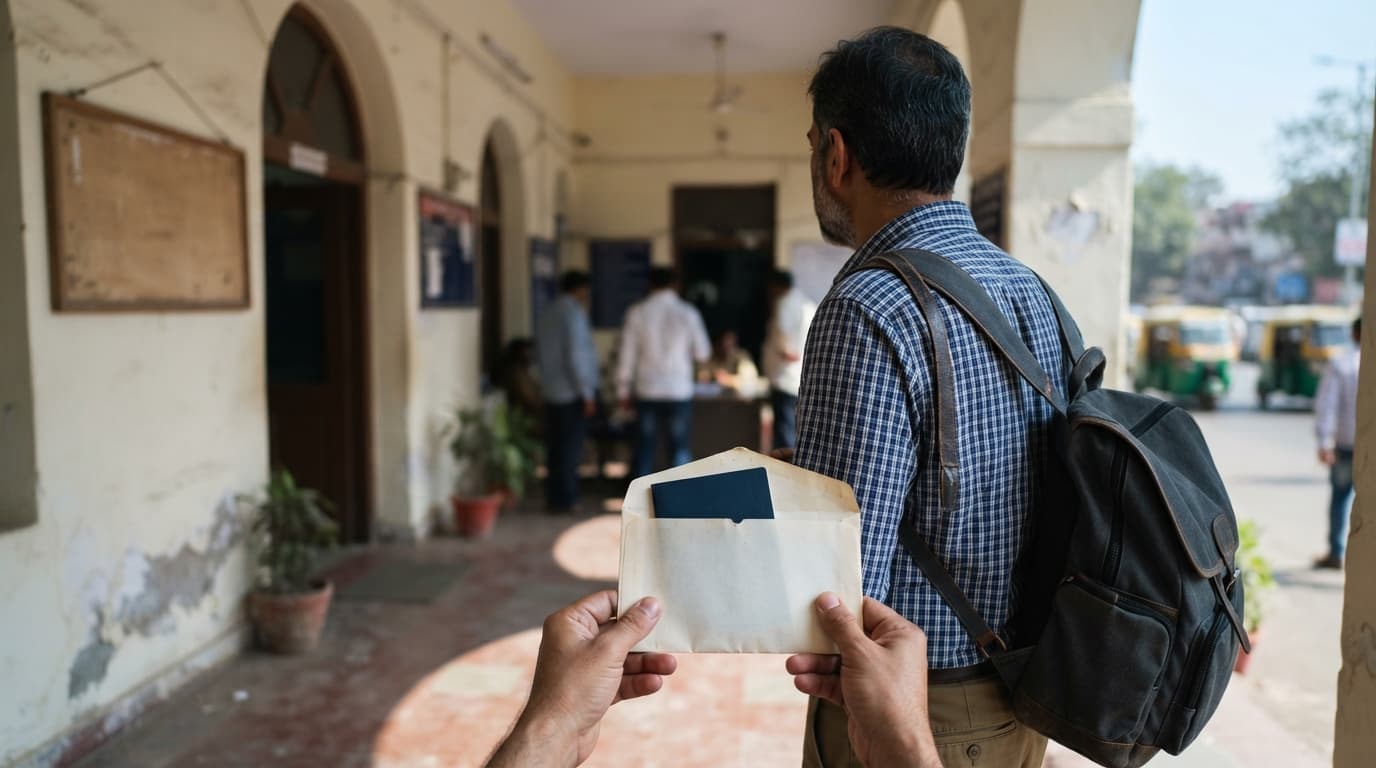
New Delhi: The Supreme Court on October 27 put off to November 2 the hearing on an application filed by Kerala-based journalist Siddique Kappan seeking release of his passport, which remains deposited as a condition of his bail in the Hathras conspiracy case. A Bench of Justices P.S. Narasimha and Alok Aradhe adjourned the matter after counsel for the State of Uttar Pradesh said the application had been served that morning and time was needed to take instructions.
The short adjournment means the passport will continue to remain in deposit for at least another week. The Court did not make any observation on the merits of the request for release and did not alter any of the existing bail conditions. The matter will now come up for consideration after the State has had an opportunity to respond.
Standing Counsel for Uttar Pradesh Ruchira Goel told the Bench that the application had been received that morning. She sought a brief adjournment to obtain instructions from the authorities concerned and to place the State's position on record. The Bench accepted the request and fixed November 2 as the next date of hearing.
Kappan was present through his counsel, who did not oppose a short deferral. No interim direction for release of the travel document was passed on October 27. In such miscellaneous applications arising from bail orders, the Supreme Court ordinarily hears the State before passing any order varying or easing a condition imposed at the time of grant of bail.
State seeks time for instructions
The request for time to seek instructions is a routine part of criminal proceedings before the Supreme Court, particularly where the State is the prosecuting authority. Standing Counsel act on the basis of written instructions from the government and the investigating agencies. When a fresh application is served shortly before the hearing, counsel often ask for a short date to confirm facts, check records and obtain a considered stand.
In this case, the Bench was informed that service had been effected on the morning of the hearing itself. The Court agreed to list the application on November 2, giving the State about six days to prepare. The order passed on October 27 was limited to adjournment. It did not record any concession or objection on the question whether the passport should be returned.
Adjournments of this kind do not decide rights. They preserve the existing position until both sides are heard. For Kappan, the practical result is that his ability to use the passport remains on hold. For the State, the additional time allows it to verify the status of the trial, the conditions imposed earlier and whether any objection to release exists.
The Supreme Court's daily lists often include a large number of bail-related applications. Where liberty and conditions of release are involved, the Court generally insists that the prosecution be given a fair opportunity to assist. A deferral by a few days, as granted here, is consistent with that practice and does not indicate how the Bench will view the merits next week.
Passport held since bail in 2022
Kappan's passport was deposited as part of the conditions attached to his release on bail in the case in which he was booked under the Unlawful Activities (Prevention) Act for alleged conspiracy to incite riots in connection with the Hathras matter. Deposit of a passport is commonly imposed to ensure that an accused remains available for investigation and trial and does not leave the country without permission of the court.
He was arrested on October 6, 2020, while he was on his way to report on a gangrape-murder case at Hathras. The arrest led to proceedings under the Unlawful Activities (Prevention) Act on the allegation of conspiracy. He remained in custody thereafter while his applications for release were considered by different courts.
The Supreme Court granted him bail on September 9, 2022. The order of bail was accompanied by conditions intended to secure his presence and to allow monitoring during the period immediately after release. Among those conditions were a requirement that he remain in Delhi for six months and that he report to the Nizamuddin police station every week. The deposit of the passport formed part of the same set of restraints.
Bail conditions of this type are imposed at the stage when the court releases an accused person pending trial. They do not amount to a finding of guilt or innocence. Their purpose is to balance personal liberty with the needs of investigation and trial, including prevention of flight, tampering with evidence and interference with witnesses. Courts retain the power to alter, relax or tighten such conditions on a later application if circumstances change.
After the initial six-month period and the weekly reporting requirement, an accused may seek relaxation where compliance has been satisfactory or where continued restraint is no longer needed. An application for release of a passport is one such request. The court then examines the stage of the trial, the conduct of the accused, the need for continued custody of the document and any objection raised by the prosecution.
In Kappan's case, the application now before the Supreme Court seeks release of the passport that has remained deposited since bail was granted. The Bench has not yet heard detailed arguments on why release is sought or why it should be opposed. Those submissions are expected when the matter is taken up on November 2 after the State files its response.
What November 2 hearing will address
On the next date, the Bench is likely to first take note of the State's stand. The Court will ask whether Uttar Pradesh opposes the return of the passport, seeks its continued deposit, or is willing to agree to release subject to safeguards. If the State seeks to file a written reply, the Court will decide whether further time is needed or whether oral submissions will suffice for disposal.
Kappan's counsel will then be expected to explain the basis for the request. In applications of this nature, the applicant generally places before the court facts relating to compliance with earlier conditions, the present stage of the trial and the practical need for the passport. The prosecution, in turn, places before the court any concern relating to flight risk, pendency of proceedings or breach of conditions.
The Bench may consider several practical options. It may order outright release of the passport, continue its deposit, permit release for a limited period or allow renewal or travel subject to prior permission of the trial court. Any of these courses would depend on the materials placed before the Bench and the submissions made by both sides. No indication was given on October 27 as to which course the Court favours.
The hearing will take place in the context of bail-condition law that applies to all undertrial prisoners, including those facing charges under special statutes. Conditions must have a link with securing presence at trial and must not operate as an extra punishment. At the same time, courts give weight to the nature of the allegations, the stage of proceedings and the need to ensure that the trial is not hampered.
For journalists and other professionals whose work may require travel, retention of a passport can have a direct bearing on movement. Courts dealing with such applications often examine whether the document is still needed to secure presence or whether other safeguards, such as reporting requirements or permission to travel, can serve the same purpose. The Supreme Court has in the past varied bail conditions where continued rigour was no longer shown to be necessary, while retaining safeguards where risk remained.
In cases under the Unlawful Activities (Prevention) Act, courts proceed with care because the statute contains stringent provisions relating to bail and trial. An undertrial seeking relaxation of a condition must still satisfy the court that the change will not affect the trial. The prosecution is given full opportunity to point to relevant facts. The decision on November 2 will therefore turn on the specific record of this case rather than on general principles alone.
Until then, all existing conditions remain in force. Kappan continues on bail on the same terms as before. The passport remains deposited. The State is expected to come back with instructions, and the Bench of Justices Narasimha and Aradhe will hear the application afresh on November 2.
Comments
Sign in to read the discussion and share your thoughts.
Latest from LawWorld
News
View all- Supreme Court Seeks Centre, ECI Reply On Plea Against Immunity For CEC And ECs4 Nov 2026
- Supreme Court Directs MP Speaker To Decide Bina MLA Disqualification Plea In Two Months4 Nov 2026
- Supreme Court Orders Special Cell To Monitor Child Labour Law Enforcement4 Nov 2026
- Bail Cannot Rest On Judge's Personal Notions Of Morality, Rules Supreme Court4 Nov 2026
- Supreme Court Refers Two-Child Norm Penalties To Larger Bench As Outdated4 Nov 2026