
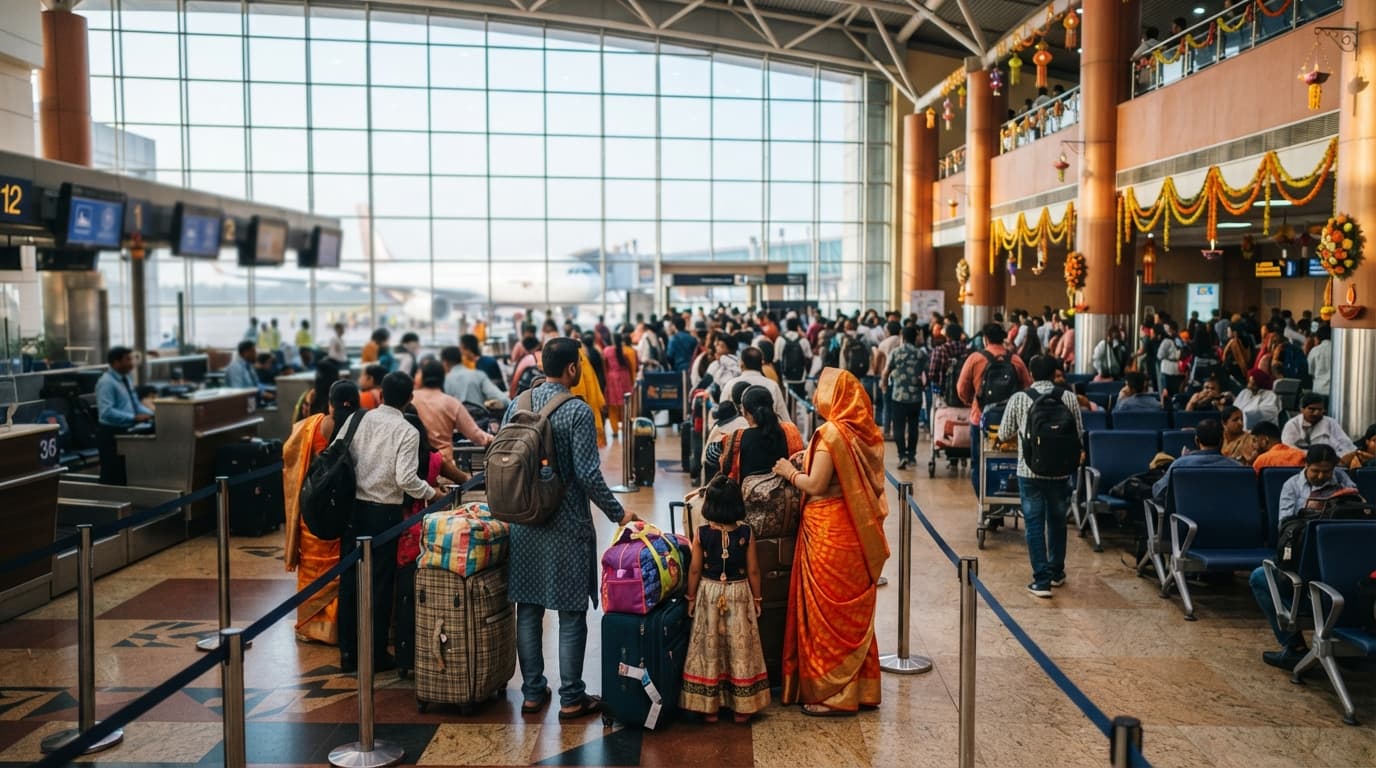
The Supreme High Court of India on November 2, 2026, refused an urgent hearing to a plea that cited a reported 700 percent surge in domestic airfares during the Diwali period. The bench declined to list the matter out of turn. Those who found the fares unaffordable could avoid air travel, it said. The refusal did not decide the merits of the pricing complaint and left airline pricing to market forces and the existing regulatory framework.
Counsel had mentioned the matter seeking early listing on the ground that fares had risen sharply in the days leading to Diwali. Delay, it was argued, would render any relief ineffective for festive-season passengers. The bench was not persuaded. It said the plea would follow the ordinary course of listing.
The observation about avoiding air travel came during the mentioning in open court. No notice was issued on the plea at this stage. The Court did not call for a response from the airlines or from the authorities concerned with civil aviation, and it laid down no rule on how festive-season pricing should be fixed or monitored.
There will be no quick judicial direction on Diwali fares this week. Passengers who have already booked at high prices get no relief from this mentioning. Those still planning travel must choose between paying current fares, changing dates, using other modes of transport, or cancelling.
Supreme High Court of India refuses urgency
A refusal of urgent listing is a procedural step, distinct from dismissal of the petition itself. It means the case will not jump the queue. The file stays in the system, is verified and numbered where required, and is placed in the regular list as per procedure.
Festival pleas often seek priority listing because the travel window is short. Diwali movement is concentrated over a few days. A hearing after the festival would have little practical use for a passenger seeking a cheaper ticket for that festival.
The Court decides such requests on discretion. It looks at whether the issue involves liberty, demolition, eviction, examination dates, or other time-bound harm that cannot be undone. Price grievances, even when they affect a large number of people, are treated differently. The loss is seen as monetary, alternatives may exist, or the regulator can be approached first.
That reasoning seems to have weighed here. The remark about the option of not flying was brief. It was not a finding on whether the 700 percent figure was accurate for all routes or specific sectors, nor a ruling on whether such pricing, if proved, would be lawful.
Once the registry processes the matter, its listing status can be tracked in the usual manner. Lawyers and litigants check the cause list and the Supreme Court of India display board outside the courtrooms for the serial number and hall. If listed in due course, the Court will decide whether to issue notice, seek replies, or close the case.
How urgent mentioning works in Court
In the morning session, counsel mention fresh or pending matters for hearing the same day or the next day. The request is short. Counsel state the urgency in a few sentences, and the Court grants listing, fixes a later date, or refuses urgency with a brief reason.
The bench does not hear detailed arguments at this stage and does not examine documents in depth. It does not test the evidence behind the percentages or graphs in the petition. The question is narrow: does this case need to be heard now, ahead of cases already waiting.
Pendency shapes these decisions. The Court receives mentioning requests every working day across diverse subjects, from service disputes to environmental orders. Granting urgency in one pricing matter can lead to similar requests in other sectors where prices rise before festivals or holidays. The immediate claim has to be balanced against the rest of the board.
The plea filed before the Supreme Court 0f India sought an early hearing on the festive fare issue. The research material does not disclose the names of the petitioners, the respondents named, the routes cited, or the exact relief prayed for. The only confirmed facts are the date of the mentioning, the reported 700 percent figure, the refusal of urgency, and the observation on avoiding air travel.
Several questions therefore remain open. The petition itself may contain prayers for fare caps, disclosure of pricing algorithms, or directions to the regulator. Until the petition is listed and the order is available, those prayers cannot be described with certainty.
Festive fares and pricing oversight
Diwali is one of the busiest air travel periods in India. Workers return home, students travel, and families plan trips around a short holiday window. Demand rises sharply on major metro routes and on connections to smaller cities with limited direct flights. Airlines use dynamic pricing, so fares move with demand, seats left, time of booking, and competition on the route.
Passengers often see a wide range for the same sector within a single day. A ticket bought weeks in advance may cost far less than one bought two days before the festival. When demand peaks, the lowest buckets sell first and only higher buckets remain. That mechanism can produce very high last-minute fares on certain flights, even if the average fare for the month is lower.
The central complaint in festive pricing debates is whether this system allows excessive or opaque mark-ups when travellers have little choice. Passenger groups say families must travel on fixed dates and cannot shift plans. Airlines respond that pricing reflects costs, load factors and commercial freedom, and early planners get cheaper options.
In India, domestic airfares are largely market-driven. The authorities monitor fares and can intervene in specific situations, but there is no standing system of government-fixed fares for all flights through the year. Transparency requirements, refund rules and grievance channels form the main layer of passenger protection. Whether that framework is sufficient during peak festivals is a recurring policy question.
The present mentioning did not change that framework. No interim cap was imposed. No direction was issued to publish fare charts or to justify the reported hike. Airlines remain free to price seats under current rules unless the regulator or the government takes a separate step.
For lawyers advising clients, the practical lesson is narrow. A pricing grievance tied to a festival will face a high threshold for urgent hearing in the Supreme Court. A petitioner will need more than a sharp rise cited in percentage terms. Route-wise data, screenshots of fares over time, comparison with lean-season prices, and proof of approaching the regulator first may carry more weight when the matter is eventually heard.
Consumer remedies outside the Supreme Court remain available. Passengers can complain to the airline, use the central grievance portals for civil aviation, or approach consumer commissions for individual disputes supported by tickets and receipts. Those forums decide on evidence for a specific transaction, not on general claims about market-wide hikes.
Public interest petitions on pricing face an additional hurdle. Courts often ask why the petitioner has come directly instead of going to the sector regulator. They also ask what precise, workable direction is sought. A request to simply bring down fares is difficult to enforce across hundreds of daily flights with changing inventory. A request for disclosure, audit or reasoned pricing bands is more specific but still needs detailed study.
The brief remark about avoiding air travel reflects a view that air travel, unlike essential services, offers alternatives such as rail and road transport. Critics may say those alternatives are full during Diwali or take much longer on some routes. The Court did not address those points during the mentioning, and the remark does not prevent the petitioners from pressing them later.
As of now, the petition awaits its turn in the normal listing process. If listed, the bench will decide whether the case needs a response from the authorities and the carriers. If not listed before the festival, the urgency will fade even if the legal question on festive pricing remains.
Comments
Sign in to read the discussion and share your thoughts.
Latest from LawWorld
News
View all- Supreme Court Seeks Centre, ECI Reply On Plea Against Immunity For CEC And ECs4 Nov 2026
- Supreme Court Directs MP Speaker To Decide Bina MLA Disqualification Plea In Two Months4 Nov 2026
- Supreme Court Orders Special Cell To Monitor Child Labour Law Enforcement4 Nov 2026
- Bail Cannot Rest On Judge's Personal Notions Of Morality, Rules Supreme Court4 Nov 2026
- Supreme Court Refers Two-Child Norm Penalties To Larger Bench As Outdated4 Nov 2026