
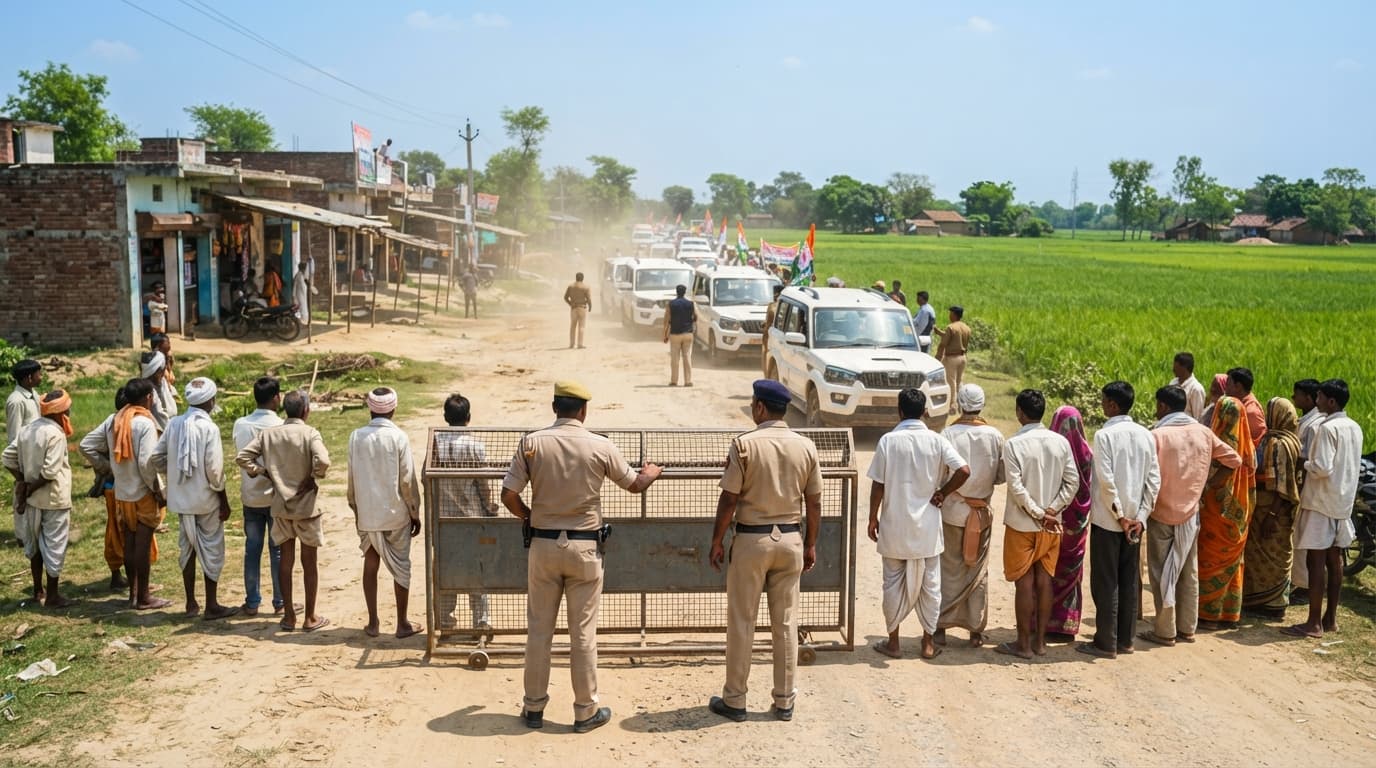
The Supreme Court on October 30, 2026 cancelled the bail granted to Mokama MLA Anant Kumar Singh in the murder case of Dularchand Yadav and ordered him to surrender on or before December 1, 2026. A bench of Justice M.M. Sundresh and Justice P.B. Varale set aside the Patna High Court order dated March 19, 2026 that had released Singh after four months in judicial custody. The decision on bail in Supreme Court came on an appeal filed by Niraj Kumar, the grandson of the deceased, over an armed confrontation in Mokama on October 30, 2025 during the Bihar Assembly election campaign.
State records placed before the bench referred to 62 pending criminal cases against the MLA, including charges of murder, attempt to murder, kidnapping and offences under the Arms Act. The bench said the High Court had failed to give due weight to the gravity of the offence and to that record. Such material, it said, could not have been overlooked while granting bail after a relatively short period inside. It made clear the order does not decide guilt, which the trial court will determine on evidence.
Why bail in Supreme Court failed
Perversity was the core of the reasoning. Four months in custody, the bench said, did not by itself justify release in a case involving a death in an alleged armed political clash. Bail in a murder prosecution calls for a close look at the nature of the accusation, the role attributed to the accused, how the violence occurred, and whether the record points to repeated involvement in serious crime.
In its view, the High Court order of March 19, 2026 had not carried out that exercise. It ignored relevant factors and gave weight to custody alone. The Court has treated such omission as a ground for interference, distinct from a mere difference of opinion on the same facts. The distinction matters under bail law in India, where cancellation is a stricter test than initial grant but remains available when the order cannot be sustained.
Four months custody, 62 cases
Singh had spent four months in judicial custody before the High Court granted bail in March. That period, along with the stage of investigation and trial, had evidently favoured release. The Supreme Court disagreed. Length of custody is one factor, it said. It cannot override the gravity of a killing said to have followed an armed confrontation in a public place during an election campaign.
Dularchand Yadav was killed in Mokama on October 30, 2025. The prosecution links the death to an armed political confrontation connected to the Bihar Assembly election campaign. The defence version and the full chain of events will be tested only at trial, with witnesses and forensic material. The Supreme Court gave no finding on who fired, who ordered the violence, or what motive operated.
Niraj Kumar, the grandson of Dularchand Yadav, brought the appeal. Close relatives of a victim can move the higher court against a bail order, particularly where they allege that relevant considerations were missed. The bench entertained the appeal on that footing and examined the High Court order on merits. It heard the State, the accused and the complainant before passing the cancellation order.
Counsel for Singh had argued for continuation of bail on grounds of custody, cooperation with investigation, and the right to face trial as an undertrial. Allegation is not proof, they said. The Court rejected the plea. The proper course, it held, was surrender within the time fixed, followed by trial according to law, with liberty to seek other remedies under the Code at the appropriate stage if circumstances change.
Surrender order leaves trial untouched
The direction gives a little over a month for compliance. Singh must present himself before the authorities concerned and return to custody. The order fixes no specific prison or police procedure beyond surrender. The mechanics were left to the trial court and jail authorities. Failure to surrender by the date would expose him to coercive steps to take him into custody.
An express safeguard was added. Cancellation does not determine guilt. The trial court will decide the murder charge on evidence, uninfluenced by observations made only for bail. That separation is routine. Bail orders deal in probabilities and risks, while conviction depends on proof beyond reasonable doubt.
For Mokama, the immediate effect is political as well as legal. Singh continues as MLA unless disqualified under law by a conviction attracting disqualification, which has not occurred. Cancellation of bail by itself does not vacate a seat. It restricts movement, campaign work and assembly attendance while in custody, subject to jail rules and court permission for production and medical needs.
Bail cancellation and wider debate
The ruling will be read alongside the latest judgement of Supreme Court on bail 2025 that practitioners have been tracking on custody, gravity and antecedents. Many trial courts cite those orders when weighing release in serious offences. This order fits that pattern. It says custody of a few months does not create an automatic claim to bail where a killing and a long record of serious cases are involved.
A common doubt is captured in the search phrase bail once granted cannot be cancelled Supreme Court. The position stated by the courts is different. Bail once granted can be cancelled, though on narrower grounds than refusal at the first instance. Cancellation follows where the grant is perverse, ignores material factors, is obtained by suppression, or where liberty is misused by tampering, threats to witnesses, flight or repeat offences. The present order falls in the first category.
The case also stands apart from the line covered by latest Supreme Court judgements on anticipatory bail. Anticipatory bail concerns pre-arrest protection, often with conditions on cooperation and availability for investigation. Regular bail after arrest turns on a different balance, including progress of investigation, filing of the chargesheet and prospects of a speedy trial. The two streams should not be mixed.
That is why practitioners refer to Supreme Court guidelines on bail after chargesheet. Filing of the chargesheet neither entitles an accused to bail by itself nor bars it. Courts look at whether further custody is needed, whether a prima facie case is disclosed, the severity of punishment, the risk of tampering, and the time trial is likely to take. Here the Court gave primacy to gravity and antecedents over four months already spent inside.
Questions around anticipatory bail without FIR Supreme Court judgement arise in a separate context, where apprehension of arrest is claimed before a case is registered. That doctrine had no direct application here, where an FIR and a murder prosecution with custody already existed. The contrast only shows that tests change with the stage. Pre-registration, pre-arrest, post-arrest, post-chargesheet and post-conviction stages each carry different considerations.
Those searching for the latest judgement of Supreme Court on 302 IPC bail often look at how courts treat gravity in murder cases. Under the Indian Penal Code murder attracted Section 302, now prosecuted under the successor provision of the Bharatiya Nyaya Sanhita in new cases, but courts apply the same lens. A death by armed violence in a public, election-related clash is treated as grave, and antecedents involving murder, attempt to murder, kidnapping and arms offences weigh heavily against release.
What happens next is fixed. Singh must surrender by December 1, 2026. The Sessions Court in charge of the Mokama case will resume the trial process, secure witnesses and decide the charge on evidence. The complainant family, led by Niraj Kumar, will participate as witnesses and through the prosecution.
Comments
Sign in to read the discussion and share your thoughts.
Latest from LawWorld
News
View all- Supreme Court Seeks Centre, ECI Reply On Plea Against Immunity For CEC And ECs4 Nov 2026
- Supreme Court Directs MP Speaker To Decide Bina MLA Disqualification Plea In Two Months4 Nov 2026
- Supreme Court Orders Special Cell To Monitor Child Labour Law Enforcement4 Nov 2026
- Bail Cannot Rest On Judge's Personal Notions Of Morality, Rules Supreme Court4 Nov 2026
- Supreme Court Refers Two-Child Norm Penalties To Larger Bench As Outdated4 Nov 2026