
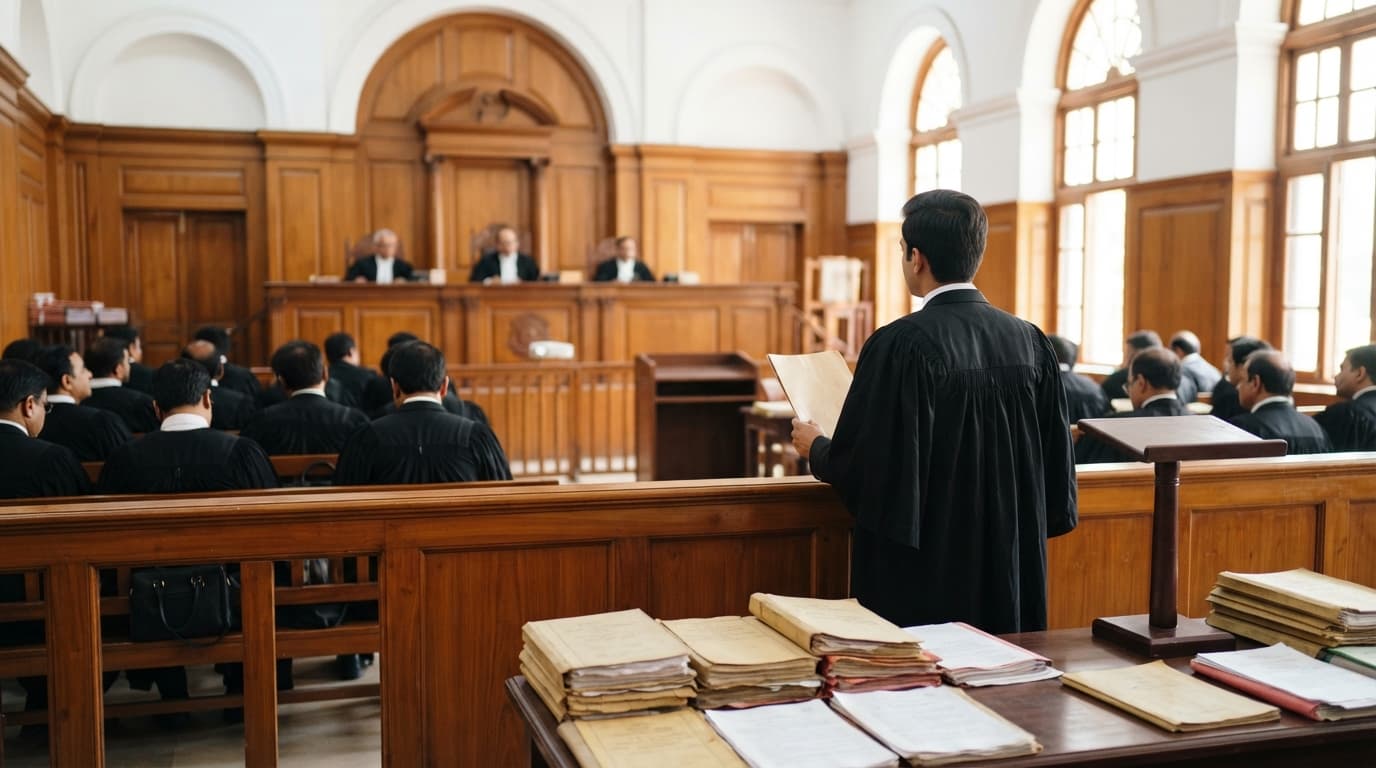
The Supreme Court has barred Senior Counsel from making oral mentions before any court from November 2, 2026. The change to daily Supreme Court listing shifts urgency requests to junior members of the Bar.
By circular dated October 27, 2026, the court said young and junior counsel will make oral mentions for urgent matters instead of Seniors. The direction applies across courts and takes effect from the first working Monday after the circular.
That circular restates what the court had said before. A circular dated November 29, 2025, had also restricted mentioning and set out how urgent fresh, after-notice and regular hearing matters were to be mentioned. The latest direction repeats that restriction and fixes November 2 as the date the bar on Seniors starts.
Mentioning is a short oral request made at the start of the day for urgent listing, early hearing, deferment or related directions. It is different from regular arguments on merits. Counsel states the urgency in a few sentences and seeks an order on listing. The Bench then decides whether to list the case, fix a date, or refuse the request. In Delhi, those few minutes can decide whether a fresh petition is heard that week or waits its turn.
October 27 circular bars seniors
The October 27 circular is short and categorical. Senior Counsel will not be permitted to make oral mentions before any court from November 2, 2026. Young and junior counsel will make them instead. The word “any” matters. The bar is not confined to the court of the Chief Justice of India or to particular roster Benches. It will operate before every Bench that takes mentions.
Categories of matters that can be mentioned stay the same. The earlier circular of November 29, 2025, had laid down the procedure for mentioning urgent fresh, after-notice and regular hearing matters. That framework continues. What changes is who may stand up. After November 2, a Senior who rises to mention a fresh admission matter, an after-notice case where notice has issued but pleadings are incomplete, or a regular hearing matter seeking out-of-turn hearing, will not be allowed to do so.
At the mentioning stage, Registry staff who manage listing will enforce the direction. Counsel who have briefed a Senior for a mention will need to depute the arguing junior, the advocate-on-record, or another junior present in court. The change does not remove the Senior from the case. It only keeps the Senior from the act of mentioning. Once the matter is listed and called for hearing, Seniors can still argue as before.
Paper requirements for offices handling Supreme Court work remain unchanged. A mention still needs the case papers, the letter for urgent listing where required, and the listing proforma Supreme Court of India prescribes for fresh and miscellaneous matters to be complete and ready with the Registry. The court has not done away with written requests. The oral mention supplements the written request and explains urgency in open court. Juniors who will now mention will need full instructions, dates, prior orders and the exact relief sought on listing.
What changes in Supreme Court listing
In the Supreme Court, the day starts with mentions. Courts assemble, counsel seek permission to mention, and Benches run through requests before taking up the board. Seniors often dominated that slot. Litigants felt reassured when a known Senior stood up for urgency. Juniors stood behind with files and notes while the Senior made the two-minute submission. From November 2, that picture will reverse.
Short, factual mentions work best. Benches want to know what the case is, why it cannot wait, what prejudice will follow if it is not listed early, and what date is sought. Juniors who prepare that four-point note and answer questions directly tend to get a hearing. Long submissions on merits at this stage waste time and irritate courts. Seniors knew this from experience. Juniors will now have to learn it fast, and Seniors will have to train them.
Briefing patterns in chambers will have to adjust. An advocate-on-record who engages a Senior for a new special leave petition or writ petition will still keep that Senior for admission arguments. But on mentioning day, the brief will go to the junior who appears. That junior must have authority to accept a date, agree to file a short note, or agree to serve the other side. If the junior asks for time to take instructions, the Bench may pass over the matter. Offices will need to ensure the mentioning counsel is fully briefed and reachable by the Senior and instructing counsel by phone before the court assembles.
Outstation litigants and counsel face a separate adjustment. Many clients travel to Delhi only when a Senior is to appear. They will now see a junior making the mention. That does not lower the importance of the matter. The court decides urgency on facts, not on designation. Firms will need to tell clients this in advance so expectations are clear on the first mentioning day after the cut-off.
In the corridors, the staff and junior advocates who manage mentioning slips and coordination will see more new faces. Juniors who have never mentioned before a particular Bench will need to learn its practice. Some Benches allow mentions only at a fixed time. Some ask counsel to mention after the miscellaneous board. Some insist on prior intimation to the other side in after-notice matters. Those habits vary from court to court and day to day. Juniors will need to check the daily procedure, reach early, and coordinate with the court master.
Why juniors get the slot
The court has linked the change to opportunity for younger members of the Bar. Mentioning is often the first speaking role a junior gets in court. It builds court craft. Counsel learns how to address a Bench, frame urgency without exaggeration, concede a fair date, and handle a Bench pressed for time. A two-minute mention teaches brevity better than a long moot.
Until now, Seniors had come to dominate mentions though mentioning does not need designation. A junior who drafted the petition, read the annexures and knows the dates is often better placed to answer a Bench query on urgency than a Senior briefed minutes before court. By keeping Seniors out of the slot, the court pushes work to the counsel who knows the file and gives that counsel visible court time.
The repeat direction suggests the November 29, 2025, order was not fully followed. That circular had also restricted mentioning and laid down procedures for urgent fresh, after-notice and regular hearing matters. A fresh circular within a year shows mentions by Seniors continued. A clear start date of November 2, 2026, and language covering any court leaves little room for exception. Counsel who appear daily expect Benches to enforce it strictly in the first week to set the pattern.
Offices are already discussing practical questions. One is whether a Senior who holds a power of attorney or appears as party-in-person in a different capacity can mention. The circular speaks to Senior Counsel as a designated status, and the bar is on oral mentions by Seniors. Another is whether a Senior can stand with the junior during the mention and prompt. Benches have in the past asked Seniors to sit down when a mention is reserved for juniors. With a written circular now in force, most Benches are likely to ask the junior to speak alone.
Hardship cases raise a third question. If a junior is unwell or stuck in another court, will a Senior be allowed to mention to avoid loss of remedy, such as demolition, dispossession or arrest scheduled for the same day. The circular as described provides no exception. In such cases the office will need to arrange another junior or the advocate-on-record to mention, rather than rely on the Senior. Firms with thin Delhi presence will need to tie up with local juniors for mentioning cover from November.
Preparation in the next few days will matter. Seniors who want mentions to succeed will need to rehearse juniors on exact words. The junior should state the case number and item, the category, the precise urgency, and the listing request. The junior should also disclose prior mentioning history and interim orders fairly. Benches check the file and remember repeat mentions. A candid mention that admits delay and explains it gets a better response than an inflated plea of extreme urgency in every case.
Registry work remains the backbone. Written requests, defects, service proof, and caveats still decide whether a mention turns into a listed case. A junior who mentions without completing Registry formalities will get an order that cannot be implemented. Offices should pair the junior who mentions with a clerk or colleague who tracks the file with the listing branch the same day. That coordination decides whether a matter mentioned on Monday appears on the board on Friday.
From November 2, Benches will watch who rises to mention. Seniors will need to stay seated. Juniors will need to stand, state the matter, and seek orders. There may be brief confusion in crowded courtrooms, but the instruction is plain and the date is fixed. Matters needing urgent listing in the week starting November 2 should be readied now with a junior named for the mention and full papers with the Registry.
Comments
Sign in to read the discussion and share your thoughts.
Latest from LawWorld
News
View all- Supreme Court Seeks Centre, ECI Reply On Plea Against Immunity For CEC And ECs4 Nov 2026
- Supreme Court Directs MP Speaker To Decide Bina MLA Disqualification Plea In Two Months4 Nov 2026
- Supreme Court Orders Special Cell To Monitor Child Labour Law Enforcement4 Nov 2026
- Bail Cannot Rest On Judge's Personal Notions Of Morality, Rules Supreme Court4 Nov 2026
- Supreme Court Refers Two-Child Norm Penalties To Larger Bench As Outdated4 Nov 2026