
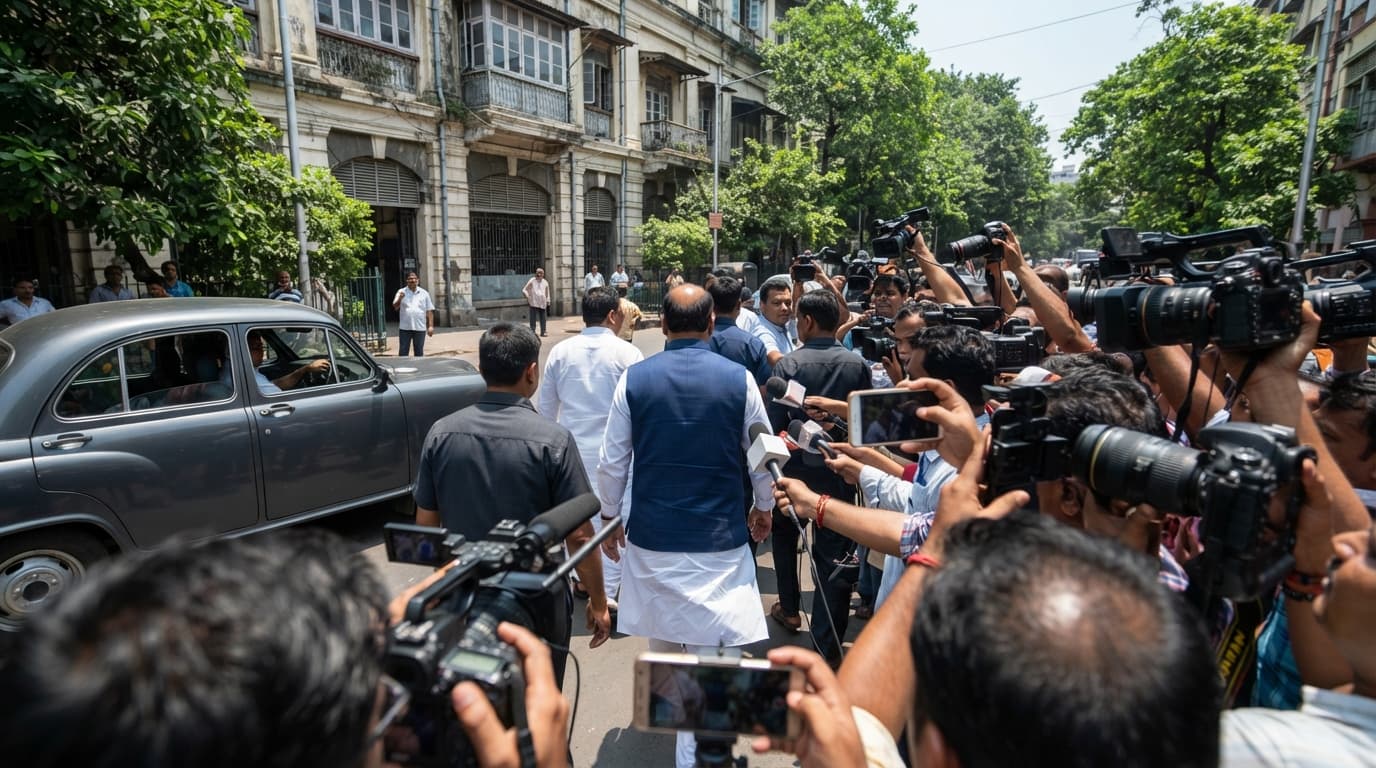
New Delhi, November 3, 2026: The Supreme Court on Tuesday asked the Calcutta High Court to take up the pending plea by Lok Sabha MP Abhishek Banerjee against media trial linked to investigations and cases against him. A Bench of Chief Justice Surya Kant and Justices Joymalya Bagchi and V. Mohana said Banerjee could mention the matter when the High Court reopens on November 16 after the Durga Puja and Diwali break. Counsel had said the petition was heard only once despite repeated mentions.
Nothing in the order touches the merits. It deals with procedure and timing. Banerjee's lawyers can bring the case before the designated Bench of the Calcutta High Court on November 16 and seek an early date. The order was passed on November 3, when the High Court was in recess for the festival period.
No date for disposal was fixed, and no restraint order was issued. The Supreme Court left those questions for the High Court to examine. The petition remains pending at Calcutta. The next step is a mention on the reopening day with a request for listing and hearing.
According to counsel, the delay had allowed a continuing violation to persist. Information said to be personal was still reaching the press while the plea for protection waited. The argument was that each day of inaction extended the harm complained of.
Banerjee wants investigating agencies stopped from sharing his personal information with media outlets. He has alleged selective leaks by the investigating officer. He has said those disclosures are tarnishing his image while investigations and related cases are pending. The relief sought is preventive. He wants limits on what can be shared, when, and by whom during investigation.
High Court to hear media trial plea
Vacation Benches take up only urgent matters, and regular petitions ordinarily wait for the normal roster to resume. The Bench recorded that the High Court had heard the matter once. It did not go into why further hearings had not taken place. Counsel sought intervention on the ground that the gap had become unreasonable in the facts of this case.
Where a petition under Article 226 is already pending before a High Court, the Supreme Court often asks that court to hear it first. That is what happened here. The court did not transfer the case to itself. It did not direct any outcome. It asked the High Court to consider the plea after reopening.
November 16 is now the date to watch. The legal team will need to mention the matter that morning and press for listing. The High Court will then decide whether to issue notice, call for a response from the agencies, consider interim protection, or post the case for detailed arguments. Much will turn on how urgency is viewed after the break and what material is placed on record about recent disclosures.
One hearing despite repeated mentions
In High Court practice, a mention is an oral request made at the start of the day for out-of-turn listing or early hearing. The court may accept or decline it based on urgency, workload, and availability of the Bench concerned. A mention that does not succeed is not a rejection on merits. The case stays in queue.
His legal team linked the delay to continuing harm. The contention was that the alleged leaks did not stop while the petition waited. Published material, petitioners in such cases often say, cannot be fully recalled even if relief comes later. Whether that argument is accepted will depend on evidence about what was published, when, and from what source. The Supreme Court recorded no finding on those questions.
So far, no agency has been held to have leaked material. The allegation of selective leaks by the investigating officer remains an allegation. A court examining the plea would normally ask for specifics, including dates of publication, the nature of the personal information said to have been disclosed, and the basis for linking the disclosure to the investigation. It would also hear the agencies before imposing any restraint on communication with the press.
Restraint sought on selective leaks
The restraint sought is aimed at investigating agencies, not at newspapers or channels. That framing matters. Courts draw a line between reporting on proceedings that are already public and disclosure of material collected during investigation that has not been placed before a court. The first raises questions of fair and accurate reporting. The second raises questions about the conduct of the investigation and the rights of the person under inquiry.
Banerjee has described his grievance as a trial by media, where selective disclosure creates a public impression of guilt before any court has examined the evidence. Indian courts have said investigation must be fair and publicity must not prejudice defence rights or the course of trial. At the same time, courts have protected the freedom of the press to report on matters of public interest, including action against public figures, subject to accuracy and limits imposed by law.
Public interest is not in dispute here. An elected representative and Lok Sabha MP is a public figure, and action by public agencies against such a person attracts legitimate attention. Yet public interest in the fact of an investigation is different from disclosure of personal details, documents, or claimed statements that have not been tested. The petition asks the court to enforce that distinction through directions to the agencies.
That claim is different from commercial disputes about platforms and audiences. The plea does not concern product liability claims of the kind raised in a social media addiction trial, where plaintiffs question design features said to encourage excessive use. It concerns the narrower question of whether material gathered by investigators should reach newsrooms before it reaches a court file, and what remedy is available if it does.
If it finds ground to step in, the High Court has several tools. It can direct agencies to keep investigation records confidential, require affidavits on handling of sensitive information, regulate the timing and content of press briefings, or warn against disclosure of personal data unrelated to the probe. Any such order would need to be precise. A broad bar on all reporting would raise separate questions under freedom of speech. A targeted order focused on agency disclosures would stand on different footing.
What happens on and after November 16 will set the course. If the High Court grants an early hearing, both sides will file papers and the court can consider interim relief. If the agencies deny any leak, the court may ask for records or a factual check. If interim protection is declined, the main petition will still proceed in the ordinary course.
For now, the position on the merits is unchanged. No restraint has been issued against any agency. No finding has been made that a leak took place. No view has been expressed on whether the publications complained of affected any investigation or trial. The only direction in force is that Banerjee may mention his pending case when the Calcutta High Court reopens on November 16 and ask that it be heard.
Comments
Sign in to read the discussion and share your thoughts.
Latest from LawWorld
News
View all- Supreme Court Seeks Centre, ECI Reply On Plea Against Immunity For CEC And ECs4 Nov 2026
- Supreme Court Directs MP Speaker To Decide Bina MLA Disqualification Plea In Two Months4 Nov 2026
- Supreme Court Orders Special Cell To Monitor Child Labour Law Enforcement4 Nov 2026
- Bail Cannot Rest On Judge's Personal Notions Of Morality, Rules Supreme Court4 Nov 2026
- Supreme Court Refers Two-Child Norm Penalties To Larger Bench As Outdated4 Nov 2026