
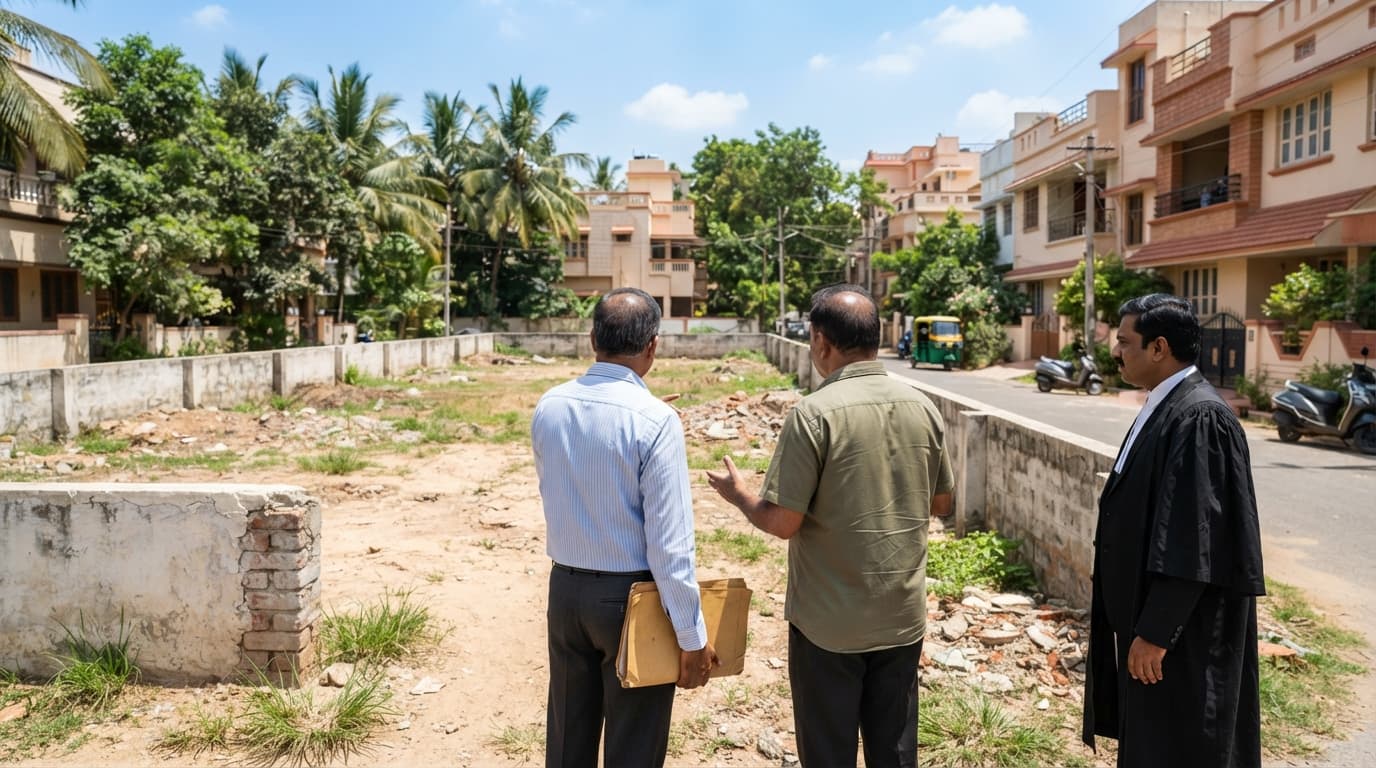
Bengaluru: A Division Bench of the Karnataka High Court has ruled that cancellation of sale deed in respect of a Bangalore Development Authority site cannot be ordered in a writ petition and must be sought through a civil suit. The Bench of Justices Anu Sivaraman and Venkatesh Naik T gave the ruling on October 1, 2026, in Writ Appeal No. 1308 of 2023 over a site in RMV 2nd Stage Further Extension. It set aside a single judge's order that had cancelled a registered BDA sale deed of 2016.
The site had first been allotted to one person in 2000. Sixteen years later, the BDA conveyed the same site under a registered sale deed to another claimant. The single judge had cancelled the 2016 deed. In appeal, the Division Bench said that relief fell outside proceedings under Article 226 of the Constitution. It told the BDA to refund the sale consideration taken from the 2000 allottee with 12 percent annual interest and left him free to file a civil suit.
Under the order, only a civil court can cancel a registered instrument under Section 31 of the Specific Relief Act, 1963. That provision alone, the court said, allows a court to adjudge a written instrument void or voidable and to order its cancellation. Title to immovable property, where it is disputed, belongs to that forum.
For buyers, allottees and development authorities in Bengaluru, the procedure is now restated. Where the same site appears to have been dealt with in favour of two persons at different times, the registered deed stays on the record. It remains until a competent civil court passes a decree. The writ court will not step into that role even if the facts appear to favour the earlier allottee.
Double allotment at RMV Extension
Records placed before the court showed the RMV 2nd Stage Further Extension site was first allotted in 2000. In 2016, the BDA executed a registered sale deed for the same site in favour of another person. The 2000 allottee moved the writ court. The single judge examined the rival claims and cancelled the 2016 sale deed.
No finding on better title was returned by the Division Bench. It asked only whether the single judge could have granted that relief at all. Disputed questions of allotment, possession, payment, breach of conditions and priority between two claimants cannot be decided on affidavits, the court said. They need pleadings, issues, oral and documentary evidence, cross-examination and a decree after trial.
Files maintained by the BDA as allotting authority run across several years. They include allotment files, payment records, possession certificates and sale-deed registers. When two sets of papers are produced for the same site, the parties must prove their documents before the civil court. A writ court cannot compare the two files and declare one deed void.
Under this view, a writ court can test whether a public authority acted without authority, in breach of statute or in violation of natural justice. It can direct the authority to consider a representation, to refund money collected without authority or to act in accordance with law. The settled limits of writ jurisdiction do not allow it to declare title or to cancel a registered conveyance that creates rights for a third party who does not merely hold under the Authority.
In BDA matters, lawyers said, the distinction is practical. An allotment letter is an executive act of the Authority. A sale deed is a registered conveyance under the Registration Act, 1908. Once registered, it operates as a public record of transfer. Banks, third parties and later buyers act on it. Parliament has therefore provided a specific remedy for its cancellation, with safeguards for all persons affected by the decree.
Why cancellation of sale deed needs civil trial
Section 31 of the Specific Relief Act, 1963, says any person against whom a written instrument is void or voidable, and who has reasonable apprehension that it may cause serious injury if left outstanding, may sue to have it adjudged void or voidable. The court may then order cancellation and require delivery of the instrument.
According to the Bench, that remedy belongs to the civil court. The provision uses the word sue. The suit must be filed within limitation, court fee must be paid on the value of the relief, necessary parties must be joined and the claim must be proved by evidence. The decree, if granted, is then presented for registration and the records are corrected. A writ order does not follow that chain.
The purchaser under the 2016 sale deed had paid consideration to the BDA and taken a registered document. To cancel that document without trial would extinguish a vested civil right without the full chance to lead evidence that a suit gives. That chance, the Bench said, cannot be compressed into writ pleadings.
Constitutional courts have taken the same line in other cases on registered instruments of development authorities, housing boards and municipal bodies. Fraud, impersonation, double allotment or breach of lease conditions have been left for suit. Interim protection, refund or status quo can be granted in the writ, but final adjudication of title stays with the civil court.
On that basis the Bench set aside the direction cancelling the 2016 deed. It made clear the order does not decide whether the 2000 allotment or the 2016 sale deed is valid. That question is left open. Either side can raise all contentions in law before the civil court, including limitation, payment, possession and compliance with BDA rules.
Judges also said the BDA could not be asked to decide between the two claimants. The BDA is vendor and an interested party. It cannot sit as judge on the validity of its own registered conveyance. Only an independent civil court can grant a decree binding the Authority, the earlier allottee and the later purchaser.
Refund with 12 per cent interest
While declining to cancel the deed, the Bench granted money relief to the 2000 allottee. It directed the BDA to refund the sale consideration paid by him with interest at 12 percent per annum. The payment was treated as money held by a public authority which has not resulted in subsisting title so long as the 2016 deed stands.
Allotments made in 2000 involved payments made more than two decades ago. A refund of principal alone would not reflect the time value of money or the loss of a chance to seek another site. The court fixed 12 percent annual interest to compensate for the long retention of the amount by the Authority.
Liberty was given to the 2000 allottee to file a civil suit for cancellation and for further relief as may be maintainable in law, including alternative site, damages or declaration of title. Liberty of this kind preserves procedural rights. The suit will have to be filed before the court with pecuniary and territorial jurisdiction over the RMV 2nd Stage Further Extension property, with applicable court fee, impleading the BDA and the 2016 purchaser.
Until such a suit is filed and decreed, the position on the ground remains unchanged in law. The 2016 registered sale deed continues in the registration records. The BDA cannot treat it as cancelled under the single judge's order, which now stands set aside. Any mutation, khata or building sanction based on the 2016 deed will abide by the result of the civil suit.
The 2016 purchaser keeps the deed for now but faces a fresh suit in which the 2000 allottee can seek cancellation under Section 31. The 2000 allottee gets immediate refund with interest but must undergo a full civil trial to establish any claim over the site. The BDA carries the interest burden at once and remains a defendant to any future suit over the double dealing.
Comments
Sign in to read the discussion and share your thoughts.
Latest from LawWorld
News
View all- Supreme Court Seeks Centre, ECI Reply On Plea Against Immunity For CEC And ECs4 Nov 2026
- Supreme Court Directs MP Speaker To Decide Bina MLA Disqualification Plea In Two Months4 Nov 2026
- Supreme Court Orders Special Cell To Monitor Child Labour Law Enforcement4 Nov 2026
- Bail Cannot Rest On Judge's Personal Notions Of Morality, Rules Supreme Court4 Nov 2026
- Supreme Court Refers Two-Child Norm Penalties To Larger Bench As Outdated4 Nov 2026