
New Delhi, October 28, 2026: The Supreme Court on Tuesday disposed of a writ petition seeking a pre-loaded dropdown of recognised Other Backward Classes castes in the Census 2027 software, a procedural answer to questions around Caste Census India that leaves the design to the executive.
Chief Justice Surya Kant and Justice Joymalya Bagchi heard the petition filed by the OBC Federation of India. It asked for a direction to the authorities to put a dropdown of recognised OBC castes in the digital application and related tools for enumeration.
The Bench did not accept or reject the idea. It said the issue fell in the domain of policy.
By way of disposal, the Court gave the petitioner liberty to approach the Registrar General and Census Commissioner of India. The writ petition itself is to be treated as a representation, so the census authorities will consider the request while finalising the method for the population enumeration phase.
No view was expressed on the merits. No direction went to the Union government to adopt the dropdown or to refuse it. The order records no finding on the accuracy of open-text entries, the administrative feasibility of a pre-loaded list, or how self-enumeration will record caste responses.
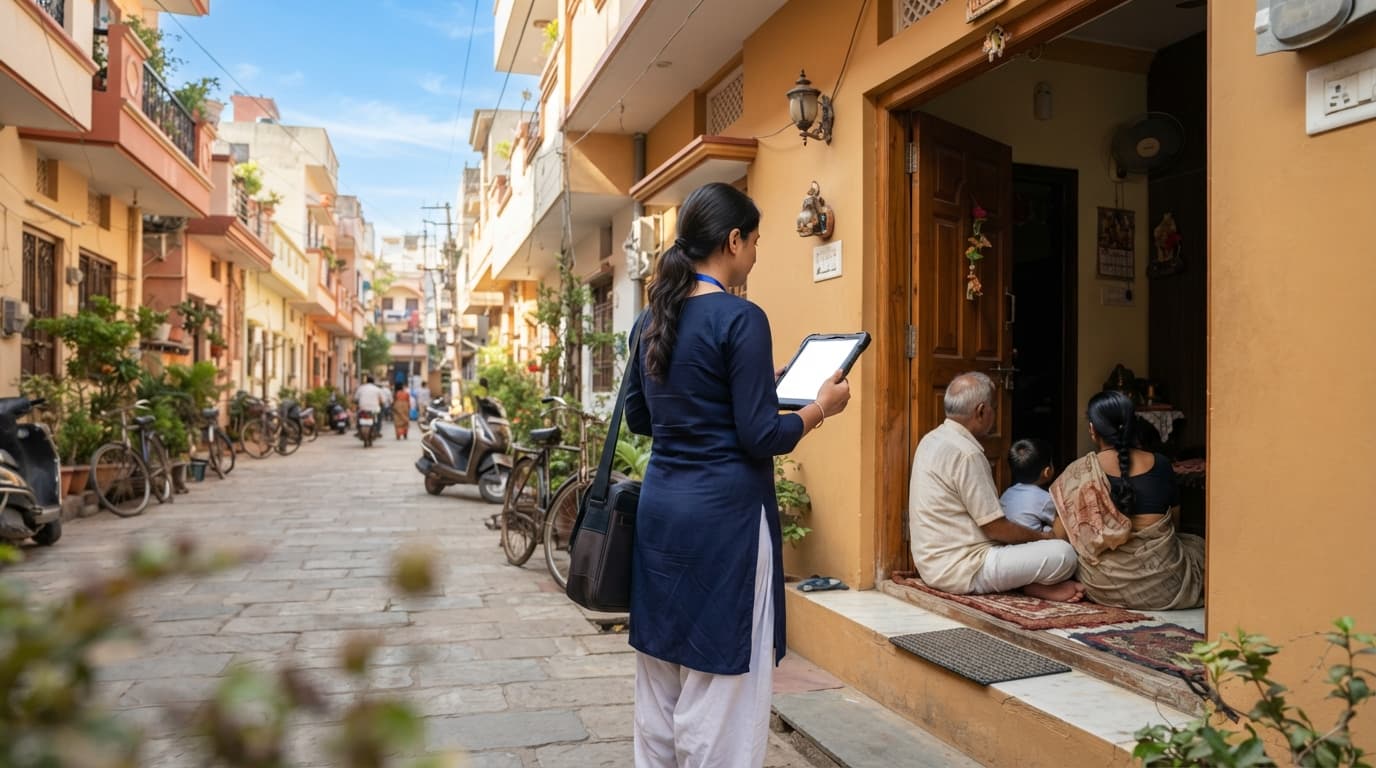
Census 2027 will be the first digital census since the 2011 exercise, with an option for self-enumeration. That shift to digital tools is the backdrop to the petition, which contended that a structured choice would help accurate recording.
Under the Census Act, 1948, the Union Home Ministry notified 40 questions for the population enumeration phase on August 14, 2026. Item 10 in that notification now includes caste, and the order notes this will be the first count across all groups since 1931 to include caste in this manner.
Caste Census India and Item 10
The 1931 Census of India caste wise tables are still cited as the last full all-group count, which is why the reference to caste in Item 10 has drawn close attention after the long gap.
In public debate the 2027 exercise is often described as the first caste-based census in India after that interval, with 1931 described as the last caste based census in India. The Court used neither label to decide a legal point. It recorded only that caste enumeration will occur after the interval since 1931 and that the first digital format adds self-enumeration as a new mode.
Anyone asking is caste census happening in India will find part of the answer in the notification itself. Caste is listed as Item 10 among the 40 questions for the population enumeration phase. Whether that item will be captured by open field, assisted entry by the enumerator, self-enumeration, or a structured dropdown was the precise point the petitioner wanted settled in advance.
The Bench declined to prescribe the form. Courts in writ jurisdiction often leave the design of forms and software to the authority entrusted by statute with the task. The order follows that course. It neither approved the present design nor ordered a change, and sent the suggestion to the Registrar General and Census Commissioner of India for consideration.
That authority handles planning, questionnaires, training of enumerators, data processing and publication. Treating the petition as a representation keeps the suggestion alive without turning it into a judicial mandate. The authority will now decide what weight to give it before enumeration begins.
Timing matters here. The questions were notified on August 14, 2026. Digital tools, training manuals and self-enumeration portals are still being prepared ahead of the field phase, so a representation at this stage lets the petitioner place technical reasons, state-wise list variations, and concerns about spellings and synonyms before the officials handling the design.
Why Dropdown Plea Reached Court
The OBC Federation of India said that without a standardised dropdown of recognised OBC castes, entries could vary widely across regions, languages and spellings. It sought a judicial direction to prevent such variation at the data-entry stage.
That claim was not tested. The Court did not examine whether variation would occur or whether a dropdown would solve it. It called for no data on pilot testing, software readiness or state-wise central lists, and it did not ask the Union to file a counter affidavit on feasibility. Disposal at the admission stage reflects the view that form design is primarily an executive choice.
Enumeration is often debated alongside reservation of OBC in education and public employment, but that wider debate was not before the Court for adjudication. The order contains no finding on eligibility, classification or inclusion of any community in any list.
The same applies to quotas. Debate over OBC reservation percentage continues in policy and litigation in other contexts, but the present order did not address percentages, quotas or criteria. The Bench limited itself to forum and process, leaving the operational suggestion to be raised with the census authority rather than through a writ on software design.
The Scheduled Caste population in India 2011 Census remains the most recent completed reference for that group in public discussion. The case did not compare those figures and recorded no population numbers. Its relevance lies only in marking 2011 as the last census before the move to a digital format with self-enumeration.
For lawyers, the relief is familiar and narrow. Liberty to approach the authority with the petition treated as a representation is a common course when a writ raises a policy or technical matter still under preparation. It preserves the right to be heard administratively without holding that a legal right was infringed.
No timeline was fixed for disposal of the representation and no direction was given to pass a reasoned order. The practical expectation is that the Registrar General and Census Commissioner of India will examine the suggestion before finalising enumeration instructions, on which the petitioner can file further material on central and state OBC lists, transliteration and experience from other large digital exercises.
The order does not bar a fresh approach if a concrete grievance arises later. Challenges after a final decision on questionnaire design or after provisional procedures are published would need to show a breach of statute, constitutional provision or binding notification, not only a preference for a different technical option.
For now there is no Supreme Court mandate for a caste dropdown in Census 2027, and no bar against it. The petition stands disposed of as a representation under the Census Act, 1948 and the notification dated August 14, 2026, and field staff and respondents will learn how Item 10 on caste will appear only when the manuals and self-enumeration interface are released.
Comments
Sign in to read the discussion and share your thoughts.
Latest from LawWorld
News
View all- Supreme Court Seeks Centre, ECI Reply On Plea Against Immunity For CEC And ECs4 Nov 2026
- Supreme Court Directs MP Speaker To Decide Bina MLA Disqualification Plea In Two Months4 Nov 2026
- Supreme Court Orders Special Cell To Monitor Child Labour Law Enforcement4 Nov 2026
- Bail Cannot Rest On Judge's Personal Notions Of Morality, Rules Supreme Court4 Nov 2026
- Supreme Court Refers Two-Child Norm Penalties To Larger Bench As Outdated4 Nov 2026