
The Karnataka High Court has settled the dispute title of property covering 44 acres in Survey No. 15, Sajje Palya, Yeshwanthpur hobli, Bengaluru, in favour of heir B.P. Mahendra. Justice M.I. Arun, sitting singly, dismissed the writ petition filed by H.N. Ashoka, authorised secretary of the Krishnappa Rangamma Education Trust. The court held the land had passed under Rangamma's will to B.M. Puttaswamy, that the 1978 trust deed involving the Vokkaligara Sangha was never implemented, and that the Sangha got no right under it.
Nearly four decades of litigation over high-value urban land on the northern edge of the city ended with that order. The writ failed. The heir's title stands. The Bengaluru Development Authority-approved layout remains. Revenue proceedings started at the instance of the Sangha stand cancelled.
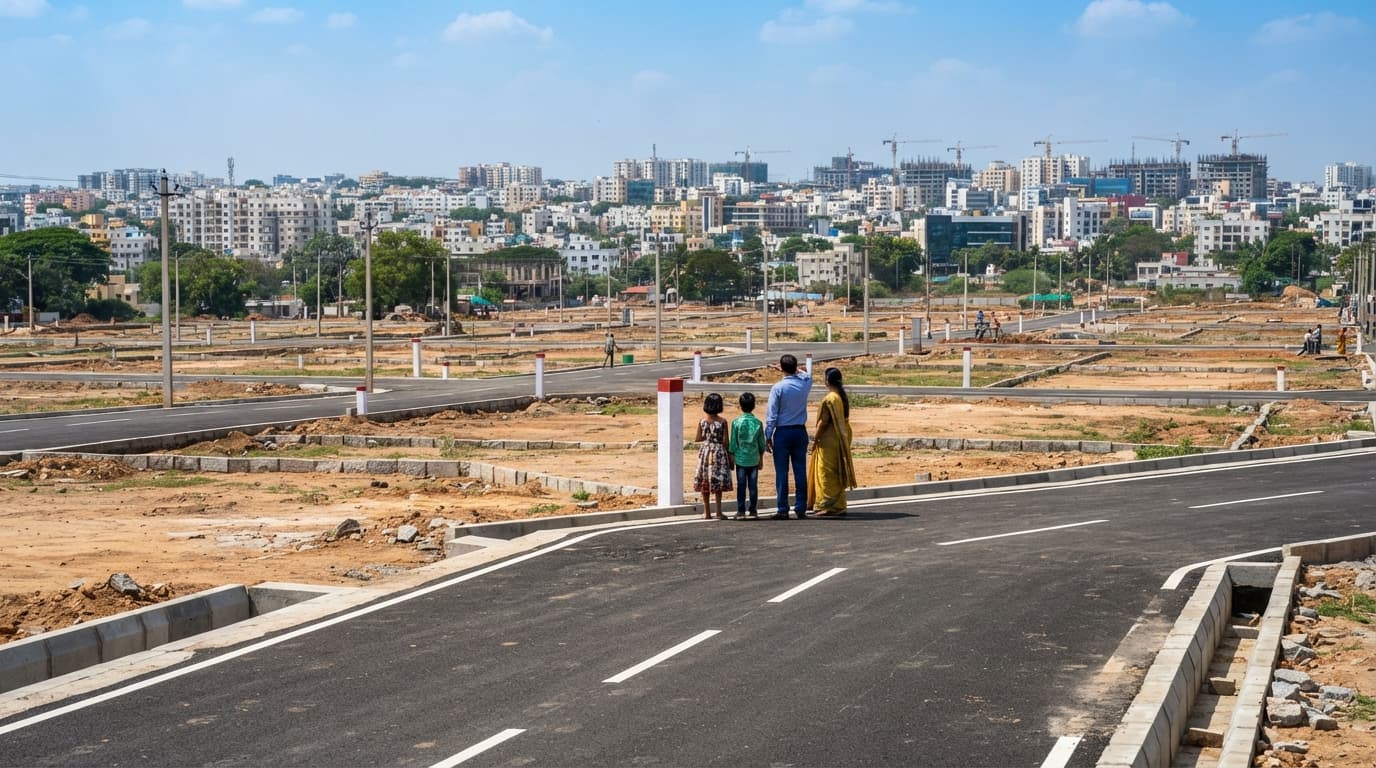
Survey No. 15 lies in Sajje Palya, within Yeshwanthpur hobli. It was once shown as agricultural holdings on the outskirts of Bengaluru. It now sits inside a dense urban belt where sanctioned roads, plot dimensions, drains and services decide use and value. Control of the survey number, and of the revenue records for it, was fought over for that reason.
As decided by the court, the chain began with Rangamma. She bequeathed the property to B.M. Puttaswamy by will. B.P. Mahendra claims as heir through that bequest. The Trust, through Ashoka, claimed under the 1978 trust deed involving the Vokkaligara Sangha. Justice Arun examined both claims and held the will had operated and the trust deed had not. An unimplemented deed could not displace title already passed under the will, the court said.
Ashoka had asked the court to disturb the position in favour of the heir and to accept the Trust's right linked to the Sangha. Justice Arun refused. Along with dismissing the petition, the court upheld the layout plan approved by the Bengaluru Development Authority and cancelled related revenue proceedings initiated by the organisation. The Trust got no relief. Mahendra lost nothing he had asserted.
Writ petitions of this kind are common in Karnataka, where revenue entries, survey records and orders of revenue officers are often challenged. A writ petition is not a title suit. The High Court still interferes where revenue action was taken without authority, without jurisdiction, or where the record was altered in a way the law does not allow. Dismissal here means the court found no ground to intervene for the petitioner. Mahendra needed no fresh grant. He needed the rival challenge to fail. It did.
Will Prevailed Over Unused Trust Deed
A will takes effect on the death of the testator and passes what the testator could lawfully give. A trust deed needs more. It must be executed according to law, the trust must be constituted, the property must vest in the trustees for the stated purpose, and the trust must then act. Paper alone does not shift ownership or management if those further steps are not taken. On this point the finding was short. The 1978 deed with the Vokkaligara Sangha was never implemented.
That finding decided the core contest. Once the court accepted that Rangamma's will had bequeathed the property to B.M. Puttaswamy, and that the later deed had not been worked out in fact, little room was left for a parallel claim to the same 44 acres. An heir who traces title through a bequest that has taken effect stands on a footing that a claimant under an unimplemented deed cannot match. The court upheld Mahendra's claim to the land in Survey No. 15 on that basis.
Old Bengaluru records often show this pattern. A will from an earlier generation is followed years later by deeds, agreements or trust papers referring to the same survey number. Revenue files fill with applications, objections, remand orders and fresh enquiries. Occupation on the ground changes. Layouts are proposed and approved. By final hearing the paper trail is thick, and the link between the original title and the present record has to be stated with care. This judgment does that work for Survey No. 15. It fixes the source of title in the will and takes the trust deed out of the chain.
Long association, correspondence or revenue proceedings did not give the Sangha organisation an independent interest, the court held. Starting proceedings does not create title. A party that seeks a mutation, asks for an entry, or asks an officer to act must still show a right the law will enforce. Where the underlying deed was never implemented, later proceedings built on it cannot survive. That is the effect of the cancellation.
Court Settles dispute title of property Claim
Revenue records in Karnataka record possession and assessment and, in practice, the name of the person shown as holder for revenue purposes. They do not by themselves decide ownership. Title turns on registered instruments, wills proved according to law, decrees of competent civil courts, and statutory vesting where a statute provides for it. A revenue officer can correct an entry, restore an entry, or refuse to change an entry. The officer does not confer ownership by making an entry. The order respects that divide. It cancelled the Sangha-initiated proceedings and left title where the will had placed it.
Keeping the BDA-approved layout intact matters as much on the ground as the finding on the will. A BDA-approved layout is a formed set of sites with sanctioned roads, dimensions and public spaces. Approval follows scrutiny of title, survey boundaries and planning standards. Once approved and acted upon, the layout governs development and allotment. Setting it aside after decades would disturb settled positions and force fresh planning and demarcation. The court did not do that.
The result is consistent. The heir holds the underlying title to the 44 acres in Survey No. 15. The layout formed with BDA approval continues to operate on that land. The revenue proceedings started by the Sangha, which pointed the other way, stand cancelled. No further enquiry on those proceedings is required. The Trust's writ stands dismissed.
Such old litigation usually travels through several forums. Parties move from the revenue officer to the appellate authority, then to the High Court in writ jurisdiction, and at times to the civil court for declaration. Interim orders hold the position in the meantime. Delay adds layers. Witnesses age, original records fade, survey maps are redrawn, and the city grows around the parcel. A final order that states plainly who holds title, what happens to the layout, and what happens to the revenue file lets the record-keeper act and lets the title holder deal with the property within planning law.
BDA Layout Stays, Revenue Entries Cancelled
For the Bengaluru Development Authority, the ruling removes uncertainty over a sanctioned layout in Yeshwanthpur hobli. The Authority sanctions layouts on ownership documents, survey records and development norms. Its sanction does not itself decide a private title contest, but its layouts cannot work if the underlying title stays open or if parallel revenue proceedings pull the record in opposite directions. By upholding the layout and setting aside the Sangha-initiated proceedings, the court aligned the planning position with the title position.
For Mahendra, the practical effect is protection of the 44-acre holding derived through Puttaswamy under Rangamma's will. He can rely on the judgment to resist further claims traceable to the 1978 deed and to seek correction of revenue records in line with the directions. For Ashoka and the Krishnappa Rangamma Education Trust, the dismissal means the claim linked to the Vokkaligara Sangha has been rejected by the single-judge bench. No right under the unimplemented deed survives the order. Any further challenge must be by appeal according to law and within limitation.
Revenue officers dealing with Sajje Palya and Survey No. 15 now have a clear instruction. The proceedings initiated by the Sangha stand cancelled. Entries or orders made in those proceedings cannot be used to deny the heir's title or to disturb the BDA-approved layout. Any fresh action must start from the position fixed by the judgment and follow the Karnataka Land Revenue Act and the rules on mutations, appeals and revisions. Officers cannot revive what the court has set aside.
Comments
Sign in to read the discussion and share your thoughts.
Latest from LawWorld
News
View all- Supreme Court Seeks Centre, ECI Reply On Plea Against Immunity For CEC And ECs4 Nov 2026
- Supreme Court Directs MP Speaker To Decide Bina MLA Disqualification Plea In Two Months4 Nov 2026
- Supreme Court Orders Special Cell To Monitor Child Labour Law Enforcement4 Nov 2026
- Bail Cannot Rest On Judge's Personal Notions Of Morality, Rules Supreme Court4 Nov 2026
- Supreme Court Refers Two-Child Norm Penalties To Larger Bench As Outdated4 Nov 2026