
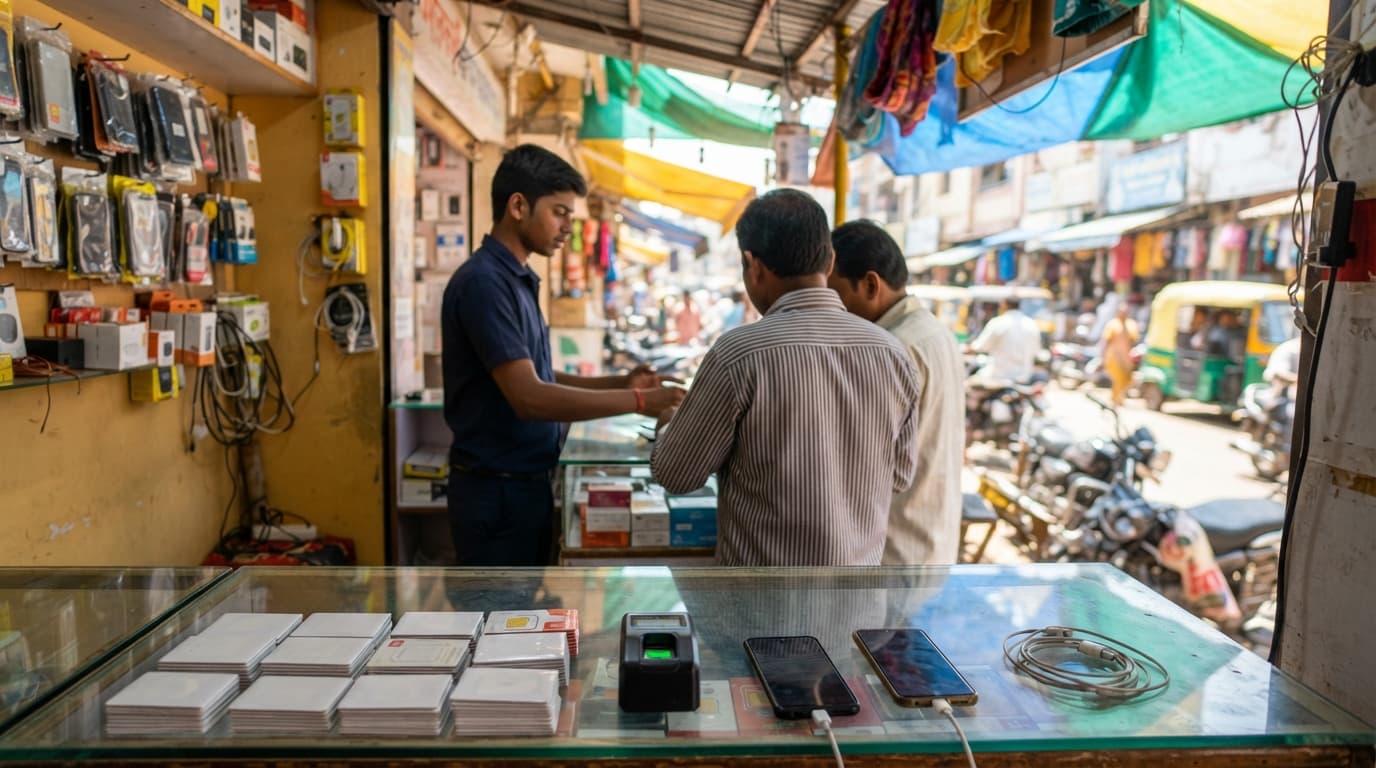
The Karnataka High Court has refused to stop criminal proceedings against a telecom promoter accused of activating mobile connections with customers' Aadhaar details, holding that alleged misuse amounting to identity theft of this kind cannot be decided without a full trial. Justice Suraj Govindaraj dismissed a petition seeking quashing of the case and at the same time directed the Director General of Police, Cyber Command, to take steps against unauthorised SIM activation across the State. The oral order was passed on September 29, 2026, and the matter has been posted to November 27, 2026 for a compliance report.
The petitioner, described in the proceedings as a Jio promoter, had approached the High Court under Section 482 of the Code of Criminal Procedure. He sought quashing of the criminal case registered against him on the ground that the allegations did not warrant a trial. The Court did not accept that plea. It said use of another person's Aadhaar particulars could have serious consequences and questions of intent and knowledge could be answered only after evidence is led.
Court keeps case alive for trial
Petitions under Section 482 ask the High Court to use its inherent powers to prevent abuse of process or to secure the ends of justice. The law on this power is narrow. The Court does not conduct a mini-trial on documents and rival claims. It examines whether the complaint and the material collected, taken at face value, disclose a case that needs to be tried. If they do, the case must go to trial where witnesses are examined, documents are proved and the accused gets a full opportunity to cross-examine and lead defence evidence.
That is the approach the Court took here. It declined to decide disputed questions of intent, knowledge and authorisation on papers alone. According to the order, whether the promoter had taken consent, whether he had misused details given for one purpose for another purpose, and whether he knew the activation was unauthorised are matters of fact. Those facts can be tested only when the prosecution leads its evidence and the defence tests it. Dismissing the petition keeps the prosecution in place without expressing any final view on guilt or innocence.
For the accused, the result is that the trial court proceedings will continue. He will have to face charges, seek bail or other interim relief as per law before the trial court if needed, and contest the case on merits. An order refusing quashing does not mean the Court has held him guilty. It means the allegations are serious enough to require proof and answer. The presumption of innocence continues until the prosecution proves its case beyond reasonable doubt.
Identity theft charge needs evidence
Aadhaar details occupy a distinct place in Indian identity documentation. A single set of particulars often links a person's name, address, photograph and biometric reference, and is routinely used for know-your-customer verification by telecom service providers. When a retailer or promoter collects those details for a genuine request, the customer parts with sensitive information on trust. The Court's observation that misuse of another's Aadhaar particulars could have serious consequences reflects that trust and the control the holder loses once the details leave his hands.
An unauthorised connection issued in someone else's name can be misused in several ways. Calls, messages and data linked to that number appear, in records, to belong to the person whose identity was used. One-time passwords for bank transactions, payment wallets, email resets and social media accounts are often sent to the registered mobile number. If the actual user of the number is a different person, the identity holder may face police inquiries, financial loss or loss of access to his own accounts before he learns that a connection exists in his name. The full extent of harm in any given case depends on how the number was used, and that is why courts insist on evidence.
Concerns of this type sit at the centre of sim card fraud cases seen by police and courts in recent years. Investigators have repeatedly said that numbers obtained through forged or diverted customer documents are later used for cheating calls, fake customer-care frauds and online scams. The prosecution in the present case will need to prove, with records from the telecom company, the application forms, biometric or OTP logs and the statements of customers, what exactly happened. The defence will have the right to dispute those records and to show consent, clerical error or absence of dishonest intent.
DGP told to enforce with safeguards
Along with refusing relief to the petitioner, the Court issued a broader direction to the police. It asked the DGP, Cyber Command, to take action against unauthorised SIM activation. The direction is aimed at the practice itself, not only at one promoter or one company. It requires the police machinery that deals with cyber-enabled offences to look at how connections are being activated without proper authorisation and to enforce the law.
The order places clear limits on that enforcement. The Court said the crackdown must comply with telecom, data protection and disclosure laws and must not lead to indiscriminate surveillance. Those three safeguards matter. Telecom law governs how subscriber data can be sought from service providers and under what authorisation. Data protection law governs how personal information can be collected, stored and shared by authorities. Disclosure law governs what the police must reveal to the accused and to the court when they rely on electronic records. By spelling out these limits, the order seeks to prevent bulk checks, fishing inquiries or access to customer data without legal basis.
In practice, action that stays within those limits would mean targeted verification based on specific information, notices to service providers under written legal provisions, seizure and preservation of records as per procedure, and arrest or charge only where material discloses an offence. It would not permit general scanning of subscriber databases or routine monitoring of users. For telecom companies, dealers and promoters, the message is that customer acquisition records, consent forms and activation logs must be complete and open to lawful audit. For customers, the safeguard against surveillance offers assurance that enforcement will be directed at misuse rather than at ordinary subscribers.
What November hearing will examine
The Court has kept control of the direction by listing the matter on November 27, 2026 for a compliance report. On that date, the DGP, Cyber Command, is expected to inform the Court what steps have been taken. That report will likely cover whether special drives or inspections were held, how many cases of unauthorised activation were detected, what procedure was followed to obtain records from service providers, and what prosecutions, if any, were launched. The Court can then decide whether further orders are needed.
Compliance hearings of this kind allow the bench to check that a general direction is being carried out within legal bounds. The Court will be able to see whether police action has remained focused and whether safeguards relating to telecom, data protection and disclosure have been observed. If gaps appear, the Court may give further guidance, modify the direction or call for additional details. If compliance is shown, the criminal case against the petitioner will proceed on its own track in the trial court, separate from the wider enforcement issue.
For Indian legal readers, the order brings together two strands that often run separately. The first is criminal procedure, where quashing is refused when intent and knowledge are in dispute. The second is regulation of subscriber verification, where prevention of misuse must go hand in hand with privacy and due process. The next hearing on November 27 will show how the police have balanced those demands.
Comments
Sign in to read the discussion and share your thoughts.
Latest from LawWorld
News
View all- Supreme Court Seeks Centre, ECI Reply On Plea Against Immunity For CEC And ECs4 Nov 2026
- Supreme Court Directs MP Speaker To Decide Bina MLA Disqualification Plea In Two Months4 Nov 2026
- Supreme Court Orders Special Cell To Monitor Child Labour Law Enforcement4 Nov 2026
- Bail Cannot Rest On Judge's Personal Notions Of Morality, Rules Supreme Court4 Nov 2026
- Supreme Court Refers Two-Child Norm Penalties To Larger Bench As Outdated4 Nov 2026