
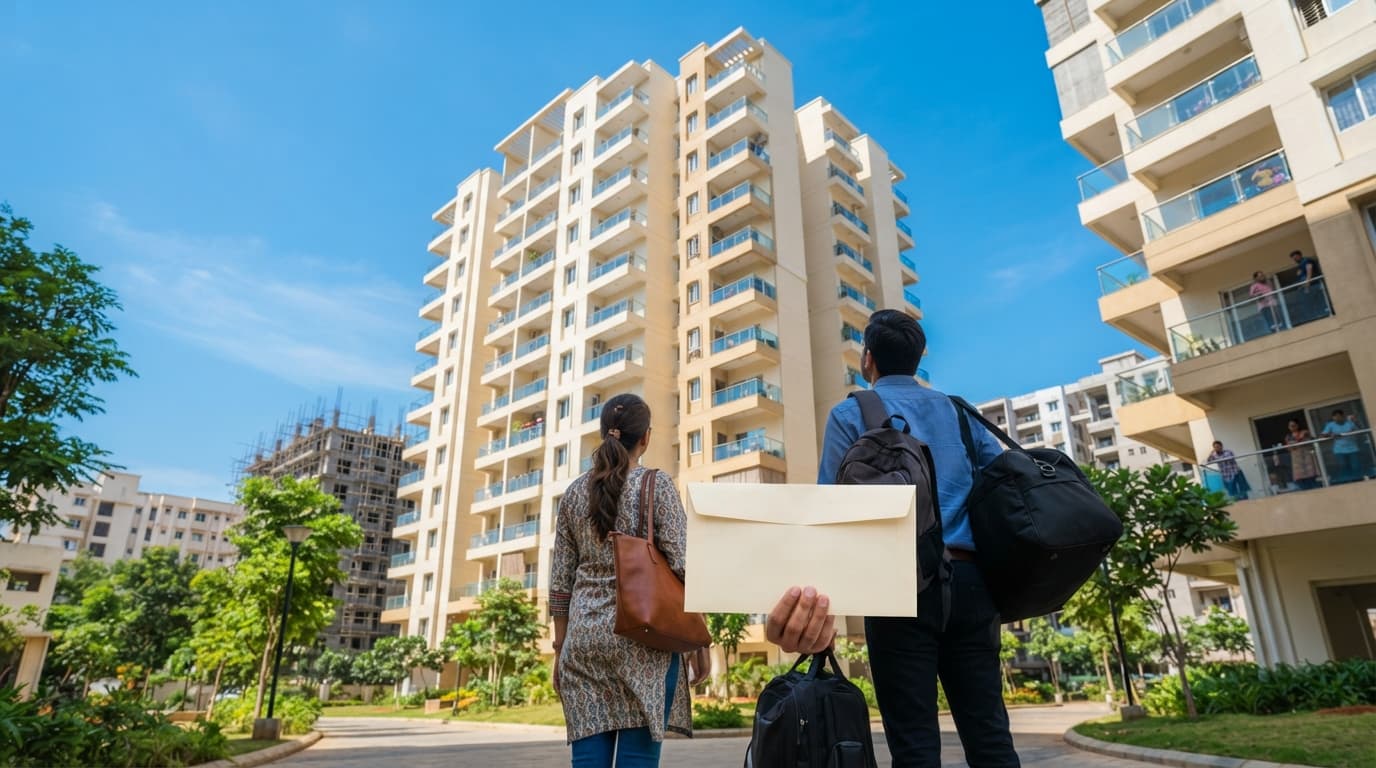
Bengaluru home loan borrowers who stop paying instalments after losing the underlying flat to a builder fraud cannot be treated as criminals for that default alone, the Karnataka High Court has held while quashing criminal proceedings started by the State Bank of India against a Mumbai-based homebuyer. The buyer, identified as Mr. Bari, had taken a home loan of Rs 39.92 lakh for flat B-306 in the Grandeur Park project in Bengaluru and later stopped his equated monthly instalments after learning that the same flat had been resold by the builder to a third party in March 2023. The bank had lodged a first information report in September 2024 alleging cheating, criminal breach of trust and misappropriation of the loan amount. The Court set aside those proceedings, holding that an unpaid loan, by itself and without dishonest intent, gives rise to civil liability and not to criminal prosecution.
The ruling draws a clear line between failure to repay and fraud. It states that criminal law cannot be used as a tool to recover money where the borrower has not taken title to the property, has not taken part in the resale and has not gained from the alleged fraud. For Indian legal readers, particularly borrowers, banks and developers caught in similar tripartite disputes, the order explains when a stopped EMI remains a contractual default to be resolved through civil recovery and when it can become a criminal offence.
Mr. Bari had purchased the flat in the Grandeur Park project on the strength of a housing loan from the State Bank of India. The loan amount of Rs 39.92 lakh was disbursed in the usual manner for an under-construction or newly constructed property, with the flat serving as the security for the advance and the borrower bound to repay in monthly instalments with interest. The arrangement assumed that the borrower would receive a clear title and possession, and that the bank would retain enforceable security until the loan was closed.
That assumption broke down in March 2023. The buyer later discovered that the builder had allegedly resold flat B-306 to a different person, despite the earlier allotment in his favour. The resale was described before the Court as fraudulent, made without the knowledge or consent of the original allottee. From the buyer’s perspective, he was being asked to continue paying for a home that no longer stood in his name and to which he had no access.
Flat resold while loan continued
The discovery placed the borrower in a difficult position. On one side stood a binding loan contract with monthly obligations that continued regardless of the dispute with the builder. On the other side stood a property transaction in which the flat promised to him had been transferred to someone else. He had paid instalments for a period on the understanding that he owned the beneficial interest in B-306, but the resale cut that link between payment and property.
After the resale came to light, Mr. Bari stopped paying further EMIs. The research material does not indicate that he sold the flat, transferred the loan funds to another use, or received any part of the resale price from the builder or the subsequent purchaser. The case put before the Court was that he simply refused to service a loan for an asset he would never receive, while the money disbursed by the bank remained tied to a project now clouded by the builder’s conduct.
Banks in such situations often face their own loss. The security for the loan becomes disputed, the borrower stops paying, and the outstanding balance remains on the books with interest continuing to accrue. Lenders then have to decide whether to pursue civil remedies for recovery, proceed against the property, act against the builder, or invoke criminal law against the borrower. The choice made by the State Bank of India in this matter was to approach the criminal process.
In September 2024, more than a year after the alleged resale, the bank registered a first information report against the borrower. The complaint alleged cheating, criminal breach of trust and misappropriation of the loan amount. The substance of the allegation was that by taking Rs 39.92 lakh as a home loan and then failing to repay it, the borrower had cheated the bank and had misused funds entrusted to him for a specific purpose.
FIR alleged cheating and misappropriation
Cheating, criminal breach of trust and misappropriation each require more than non-payment. Cheating requires a dishonest intent at the time the promise to pay is made, not merely a later inability or refusal to pay. Criminal breach of trust requires entrustment of property and dishonest use of that property contrary to the terms of the entrustment. Misappropriation similarly requires a dishonest diversion of funds. The Court examined whether those ingredients were present in the borrower’s conduct.
The bank’s position was that the outstanding liability itself justified criminal action. Once the EMIs stopped, the loan turned into an unpaid debt, and the bank treated the retention of the disbursed amount without repayment as wrongful. That approach is common when lenders argue that borrowed money used for a home that is no longer available to the bank as clean security must have been diverted.
Mr. Bari’s defence was factual and narrow. He said he had not received title to B-306, had played no role in the builder’s decision to resell the flat in March 2023, and had obtained no financial benefit from that second transaction. The loan had been sought for the purchase of a specific flat, and it was the builder’s subsequent act that destroyed the purpose of the loan. In his account, the default was a consequence of fraud practised on him, not fraud practised by him.
The Court accepted that account for the purpose of deciding whether a criminal trial was warranted. It found no material to show that the borrower had acted with malicious intent or had planned from the start to take the money and avoid repayment. There was no allegation supported by material that he had colluded with the builder, shared in the resale proceeds, or created false documents to obtain the loan. The record showed a buyer who lost both the flat and, in the bank’s view, the obligation to be treated as a borrower in good standing.
Central to the reasoning was the status of title. The Court noted that the homebuyer never received the property title. Without title or possession, he held no asset that could be said to represent unjust gain from the bank’s disbursement. A borrower who has not received the flat cannot be described in the same terms as a borrower who takes the property, sells it privately and pockets the money while refusing to repay the lender.
Default alone is not a crime
The order states the principle in plain terms. An outstanding financial liability does not automatically constitute a criminal offence. A failure to pay EMIs, even over a sustained period, remains a breach of contract unless the prosecution can point to dishonest intent, deception or misuse. The Court said criminal prosecution should not be used as a means for civil financial recovery without clear malicious intent.
That distinction matters because civil and criminal remedies operate differently. A bank that faces default can file a civil suit for recovery, enforce security interest under the applicable recovery laws, or proceed against guarantors and the property itself. Those actions test the amount due, interest, limitation and the validity of the security. A criminal case, by contrast, exposes the accused to arrest, custodial investigation and trial for offences carrying imprisonment, and it requires proof of a guilty mind beyond a reasonable doubt.
Allowing every stopped EMI to be treated as cheating would blur that boundary. Borrowers who lose jobs, face medical emergencies, suffer project delays or, as here, lose the flat to a second sale would face prosecution alongside wilful fraudsters. The Court’s reasoning keeps that door closed. It requires the complainant bank to show something more than arrears, such as false representation at the loan stage, diversion of funds, or active participation in the builder’s fraud.
No such additional element was found here. The resale in March 2023 was attributed to the builder, not to the borrower. The FIR of September 2024 did not, in the Court’s assessment, disclose how the borrower himself had committed cheating or breach of trust. The allegation of misappropriation rested on the fact that Rs 39.92 lakh remained unpaid, but non-payment after loss of the underlying asset does not by itself prove that the money was dishonestly converted.
The practical result is that the criminal proceedings against Mr. Bari stand quashed. He will not face trial on charges of cheating, criminal breach of trust and misappropriation arising from the stopped EMIs for flat B-306. The quashing removes the threat of arrest and criminal conviction in that FIR, though it does not decide the civil question of how much remains due under the loan contract or how the bank may lawfully recover it.
The bank retains civil options for the unpaid balance. It can pursue recovery through the civil court or through the statutory regime for enforcement of security interest, subject to defences the borrower may raise about failure of consideration, builder fraud and absence of security. Any such claim will have to address who should bear the loss where the bank disbursed funds to or for a project and the builder then resold the same unit. The order does not wipe out the loan, nor does it give the borrower title to the flat now held by the third-party purchaser.
For homebuyers in similar builder-fraud cases, the order provides protection against the use of criminal process for recovery. A buyer who can show that the flat was resold without his involvement, that title never passed to him, and that he derived no benefit from the second sale can resist a criminal complaint based only on stopped EMIs. Documentation of allotment, payment, loan disbursement and the subsequent resale will remain critical, as will prompt complaints against the builder where fraud is suspected.
Comments
Sign in to read the discussion and share your thoughts.
Latest from LawWorld
News
View all- Supreme Court Seeks Centre, ECI Reply On Plea Against Immunity For CEC And ECs4 Nov 2026
- Supreme Court Directs MP Speaker To Decide Bina MLA Disqualification Plea In Two Months4 Nov 2026
- Supreme Court Orders Special Cell To Monitor Child Labour Law Enforcement4 Nov 2026
- Bail Cannot Rest On Judge's Personal Notions Of Morality, Rules Supreme Court4 Nov 2026
- Supreme Court Refers Two-Child Norm Penalties To Larger Bench As Outdated4 Nov 2026