
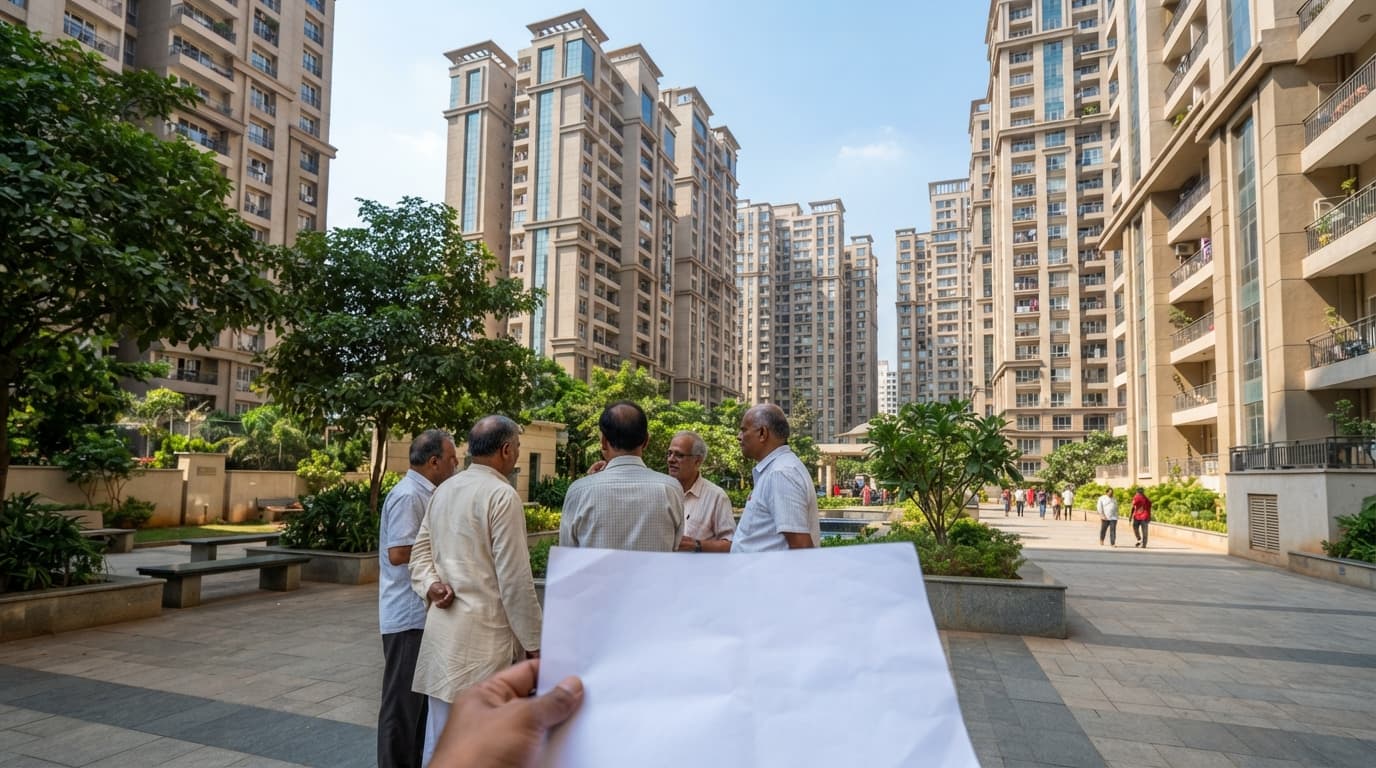
The Karnataka High Court has allowed four additional owners of Sobha Silicon Oasis off Hosa Road near Electronic City in Bengaluru to join the suit filed against the owners association. Justice K.V. Aravind allowed Writ Petition No. 8125 of 2025 by order dated October 7, 2026. The Court set aside the trial court's order dated November 29, 2024 that had rejected their request for impleadment. The four applicants will now come on record as plaintiffs 29 to 32. The underlying suit challenges a resolution dated February 7, 2020 passed by the association.
The order was made on applications filed under Order I Rule 10(2) of the Code of Civil Procedure. The Court said refusal of impleadment would lead to multiplicity of proceedings. It accepted that the applicants were entitled to seek identical relief by filing separate suits. Bringing them into the pending suit would allow the dispute to be decided once rather than in repeated rounds.
Trial court refusal set aside
The dispute had reached the High Court after the trial court turned down the impleadment plea in November 2024. The four owners then moved the High Court in Writ Petition No. 8125 of 2025. They asked for the trial court order to be quashed and for permission to join as additional plaintiffs.
Justice Aravind allowed those pleas. The order dated October 7, 2026 records the setting aside of the order dated November 29, 2024. The result is straightforward. The trial court will now have to read the four persons as plaintiffs 29 to 32 on the cause title. Their pleadings and prayers will travel with the existing plaint.
For readers unfamiliar with civil procedure, an order refusing to add a party is not always treated as the end of the road. A party aggrieved by such an order can approach the High Court in appropriate proceedings. The High Court then examines whether the trial court exercised its discretion in line with the Code and the need for complete adjudication. In this case, the High Court found reason to interfere.
The numbering itself tells part of the story. By the time the four applicants approached the court, the suit already had 28 plaintiffs on record. That figure suggests that the challenge to the February 7, 2020 resolution was already a collective effort. The new order expands that group to 32. It does not create a new suit. It keeps one case, with more co-plaintiffs, before the same trial court.
Why impleadment was allowed
Order I Rule 10(2) of the Code of Civil Procedure gives the court authority to add a person as a party at any stage of the proceedings. The court may do so on its own or on application by a party. The test often applied is whether the presence of the person is needed to decide the questions involved in the suit in a complete and effective manner. Courts also consider whether the person has a direct interest in the relief claimed.
A second idea runs through such orders. Courts try to avoid more than one round of litigation over the same question. If several persons claim the same relief on the same ground, hearing them together saves time and cost. It also reduces the risk of conflicting findings by different courts on the same resolution or transaction.
That reasoning appears in this order. The Court stated that denying impleadment would result in multiplicity of proceedings. The four owners could have filed separate suits seeking the same relief against the same association and the same resolution. Separate suits would have meant separate pleadings, separate issues, separate evidence and separate hearings. A common trial was the simpler course.
The approach also fits the way apartment disputes usually develop. When an association passes a resolution on maintenance, common areas, charges or management, it touches many units at once. Owners in the same project often share the same grievance and seek the same declaration or injunction. Hearing them together allows the trial court to look at the resolution once and decide its validity for all who have joined.
Resolution under challenge in suit
The suit at the centre of the order challenges a resolution dated February 7, 2020 passed by the owners association of Sobha Silicon Oasis. The project is located off Hosa Road near Electronic City in Bengaluru, a corridor with dense apartment development and large resident associations.
The High Court order does not decide whether that resolution is valid or invalid. The impleadment stage is not the stage for that decision. At this stage the Court was concerned only with who is entitled to remain before the trial court while that question is tried. The merits of the February 7, 2020 resolution will be examined by the trial court after pleadings are complete and evidence is led.
That distinction matters for both sides. For the plaintiffs, being added as parties does not mean the suit has been decreed. They will still have to prove their case on facts and law. For the association, the addition of four plaintiffs does not mean an adverse finding has been recorded against the resolution. It means the defence will now have to meet the case of 32 plaintiffs instead of 28.
Procedure after such an order is largely routine but it takes time. The trial court record will be corrected to show the new plaintiffs. They may need to adopt the existing plaint or file a memo joining the pleadings already on file. The defendants will have an opportunity to file an additional written statement so far as the new plaintiffs are concerned. Issues may be recast if needed. The suit will then move toward trial on the same questions, with a larger plaintiff group.
Lawyers who handle association litigation say that chronology often explains delay. A resolution of 2020, a trial court order of 2024 and a High Court order of 2026 show how long joinder disputes can take. The suit itself did not move to final determination while the question of who could sue remained pending in the writ petition. With that question answered, the focus returns to the trial court.
What this means for flat owners
For apartment buyers in Bengaluru, the practical point is narrow but useful. Owners who are placed in the same position and want the same relief against the same association action do not always have to file separate cases. In a suitable case they can seek to join a pending suit under Order I Rule 10(2). The court will examine the connection between their claim and the existing claim.
Identity of interest is central. The court will look at whether the new applicants challenge the same resolution, rely on the same facts and seek the same relief. If they do, the court is more likely to favour a single proceeding. If their claim rests on different facts, different documents or different relief, the court may ask them to file independently.
Timing also plays a role. An application filed early, before issues are settled or trial has begun, is easier to allow. An application filed very late, after evidence has closed or arguments have started, faces closer scrutiny. Courts weigh prejudice to the existing parties and delay against the benefit of a joint trial. The present order shows that where the relief is identical, the balance can tilt in favour of joinder to avoid duplicate suits.
The apartment ownership framework adds context. In a large project such as Sobha Silicon Oasis, decisions taken by the association affect common expenses, shared facilities and day to day management. Individual owners may feel the effect in the same way. A collective suit allows the trial court to consider the association's records once and hear all affected voices together. It also helps the association. It gets a single forum and a single judgment that binds all contesting owners who are parties, instead of defending the same resolution in several courts.
Costs and convenience point the same way. Separate suits would mean separate court fees, separate lawyers and separate attendance for owners living in the same complex. A joint suit spreads that burden. Witnesses from the association would otherwise be called to depose more than once about the same meeting and the same minutes. One record reduces that repetition.
The order leaves the main contest open. The trial court will now proceed with 32 plaintiffs on record. It will decide, on evidence, whether the February 7, 2020 resolution can stand. Until then, owners in similar projects who wish to join a pending challenge will need to show they stand on the same footing and seek the same relief, and they will need to make that request in the manner provided by the Code.
Comments
Sign in to read the discussion and share your thoughts.
Latest from LawWorld
News
View all- Supreme Court Seeks Centre, ECI Reply On Plea Against Immunity For CEC And ECs4 Nov 2026
- Supreme Court Directs MP Speaker To Decide Bina MLA Disqualification Plea In Two Months4 Nov 2026
- Supreme Court Orders Special Cell To Monitor Child Labour Law Enforcement4 Nov 2026
- Bail Cannot Rest On Judge's Personal Notions Of Morality, Rules Supreme Court4 Nov 2026
- Supreme Court Refers Two-Child Norm Penalties To Larger Bench As Outdated4 Nov 2026