
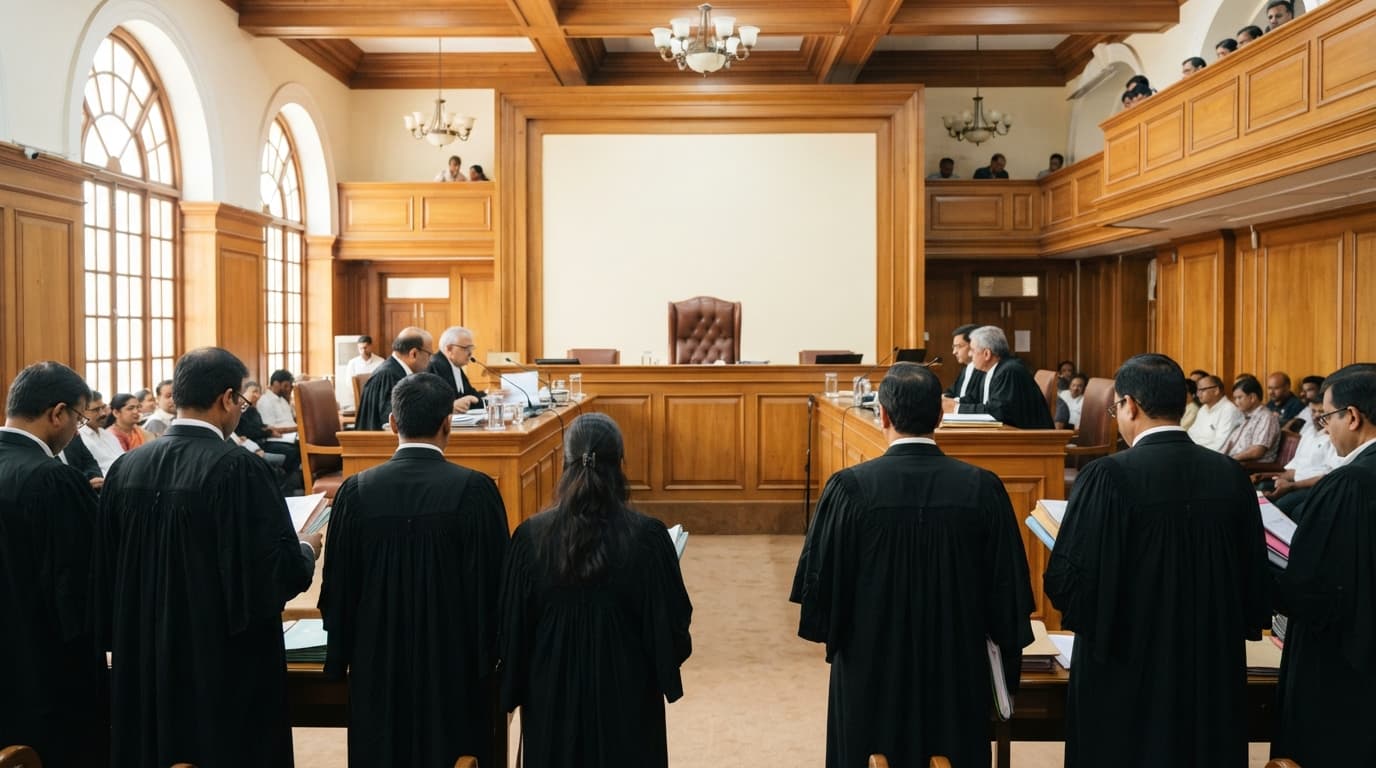
Justice P. S. Narasimha on Monday, November 2, 2026, recused himself from hearing a public interest litigation seeking finalisation of the revised Memorandum of Procedure for appointments to the Supreme High Court of India. He said he had appeared as Additional Solicitor General in the proceedings that led to the 2015 judgment striking down the National Judicial Appointments Commission. The petition, filed by non-governmental organisation Lok Prahari, was listed before a bench of Justices P. S. Narasimha and Alok Aradhe and says the process has remained pending for nearly 11 years.
When the matter was called in open court, Justice Narasimha said he could not hear it because of his prior association as a law officer for the Union government before the five-judge Constitution Bench in the NJAC case. The bench directed that the petition be placed before another bench. There was no hearing on the merits, and no notice or interim direction was issued.
Filed under Article 32 of the Constitution, the plea asks the Court to direct finalisation of the revised Memorandum of Procedure for appointment of judges to the Supreme Court and the High Courts. The need for revision arose from the 2015 NJAC judgment. In that verdict the Court struck down the constitutional amendment and the accompanying statute that sought to replace the collegium system with a commission, and held that the existing Memorandum of Procedure needed reconsideration and revision in consultation with the government.
Lok Prahari says that despite nearly 11 years since that judgment, and despite repeated correspondence between the Union government and the Supreme Court on the contents of the revised document, the exercise is still incomplete. The absence of a final text, the plea states, has left the appointment process without a settled, written framework incorporating the improvements contemplated at the time. It asks the Court to set the process in motion and to bring it to a close within a defined time frame.
On assessment, the plea says there are no clearly defined and publicly available criteria for evaluating candidates for elevation as judges of the constitutional courts. The lack of published standards, it argues, affects transparency and makes it difficult for the legal community and the public to understand how suitability, seniority, merit, diversity of representation and professional competence are weighed. It seeks directions for formulation and disclosure of such criteria as part of the finalised Memorandum of Procedure.
MoP for Supreme High Court of India delayed
The Memorandum of Procedure is the administrative document that guides appointments to the higher judiciary. It sets out how proposals are initiated by the collegium, what material must accompany recommendations, how consultation with the executive takes place, and how objections or requests for reconsideration are handled. It also covers timelines, handling of complaints against candidates, and transfer of High Court judges. Appointments are made by the President under the Constitution, but the judiciary and the executive have for years worked under this procedure.
Pursuant to the 2015 judgment, the Court had indicated the document could be revised to allow greater transparency, a secretariat for the collegium, clearer eligibility conditions and a mechanism for recording reasons where appropriate. That was without affecting the primacy of the judiciary in appointments affirmed in the judgment. Drafts and communications were exchanged between the government and the Court after those observations. Lok Prahari says the exchange continued for years without producing a final text, and the file has effectively remained open since.
The petition also asks that decisions of the collegium be brought within the scope of the Right to Information Act, 2005. Disclosure of the basis for recommendations and rejections, the petitioner argues, would allow public scrutiny and fit the accountability standards applied to other public authorities. The Court has in past cases examined how far the office of the Chief Justice and aspects of the collegium process fall under the transparency law. The bench did not examine the request on November 2 because the recusal stopped the hearing.
Delay in settling the document has come up before the Court in different forms over the years. Successive governments and successive Chief Justices have spoken on the status of the Memorandum of Procedure. Judges in other proceedings have at times referred to the fact that a revised text had not been settled. This petition seeks to place the issue directly before the Court for adjudication through a writ directing finalisation, instead of leaving it to administrative correspondence between the two wings.
Recusal over earlier appearance as law officer
Judges step aside from matters where they earlier appeared as counsel to protect fairness and public confidence. Justice Narasimha served as Additional Solicitor General before his elevation and appeared in that capacity in the NJAC proceedings before the Constitution Bench. In keeping with the convention against hearing a matter where the judge acted for one side or was closely linked with the litigation, he stepped aside from the Lok Prahari petition because it traces its history and relief directly to that judgment.
Monday's order says nothing on the merits. It does not touch maintainability or the reliefs sought. The practice is for the matter to be released and placed before the Chief Justice of India on the administrative side for allocation to another bench. It will then be listed afresh. Lawyers tracking daily changes follow the regular cause list for reallocation, and once the Chief Justice reallocates the file, the fresh bench and date will be reflected on the Supreme Court of India display board outside the courtrooms.
On paper, the case will no longer show as before the bench of Justices Narasimha and Aradhe. In some online case-status mirrors the institution name has at times appeared with a typographical variation as Supreme Court 0f India, and Registry staff reconcile such entries with the certified cause list when a matter is transferred after recusal. That correction has no bearing on the pleadings. The next date will be fixed only after orders on the administrative side.
Bench to be reassigned after recusal order
The new bench will first have to decide whether an Article 32 petition can direct finalisation of a document historically settled through consultation between the judiciary and the executive. The petitioner must satisfy the Court that continued non-finalisation violates constitutional provisions and calls for a judicial direction. It must also address separation of powers and the limits of mandamus in matters involving consultation between constitutional authorities. The Union government, as respondent, will get the chance to place on record the present status of the draft, the points of disagreement, and the reasons for the time taken.
If it issues notice, the bench is likely to call for a detailed affidavit on the correspondence so far and the specific clauses still under discussion. It may also have to consider whether the plea for published criteria and disclosure under the Right to Information Act can be decided in the same case or needs separate consideration under existing judgments on judicial independence and confidentiality of deliberations. Any direction on timelines, disclosure or reconsideration of names would affect pending and future recommendations for the Supreme Court and the High Courts, where vacancies and pace of processing have been repeatedly discussed at the Bar.
Until then, the only fallout of the November 2 proceeding is a change of bench. The Lok Prahari petition remains pending and will be listed after administrative orders assign it to a bench with no prior NJAC association. The petitioner will then have to press for notice and for a government response on why the revised Memorandum of Procedure has not been finalised in nearly 11 years and by when the consultation can be completed.
Comments
Sign in to read the discussion and share your thoughts.
Latest from LawWorld
News
View all- Supreme Court Seeks Centre, ECI Reply On Plea Against Immunity For CEC And ECs4 Nov 2026
- Supreme Court Directs MP Speaker To Decide Bina MLA Disqualification Plea In Two Months4 Nov 2026
- Supreme Court Orders Special Cell To Monitor Child Labour Law Enforcement4 Nov 2026
- Bail Cannot Rest On Judge's Personal Notions Of Morality, Rules Supreme Court4 Nov 2026
- Supreme Court Refers Two-Child Norm Penalties To Larger Bench As Outdated4 Nov 2026