
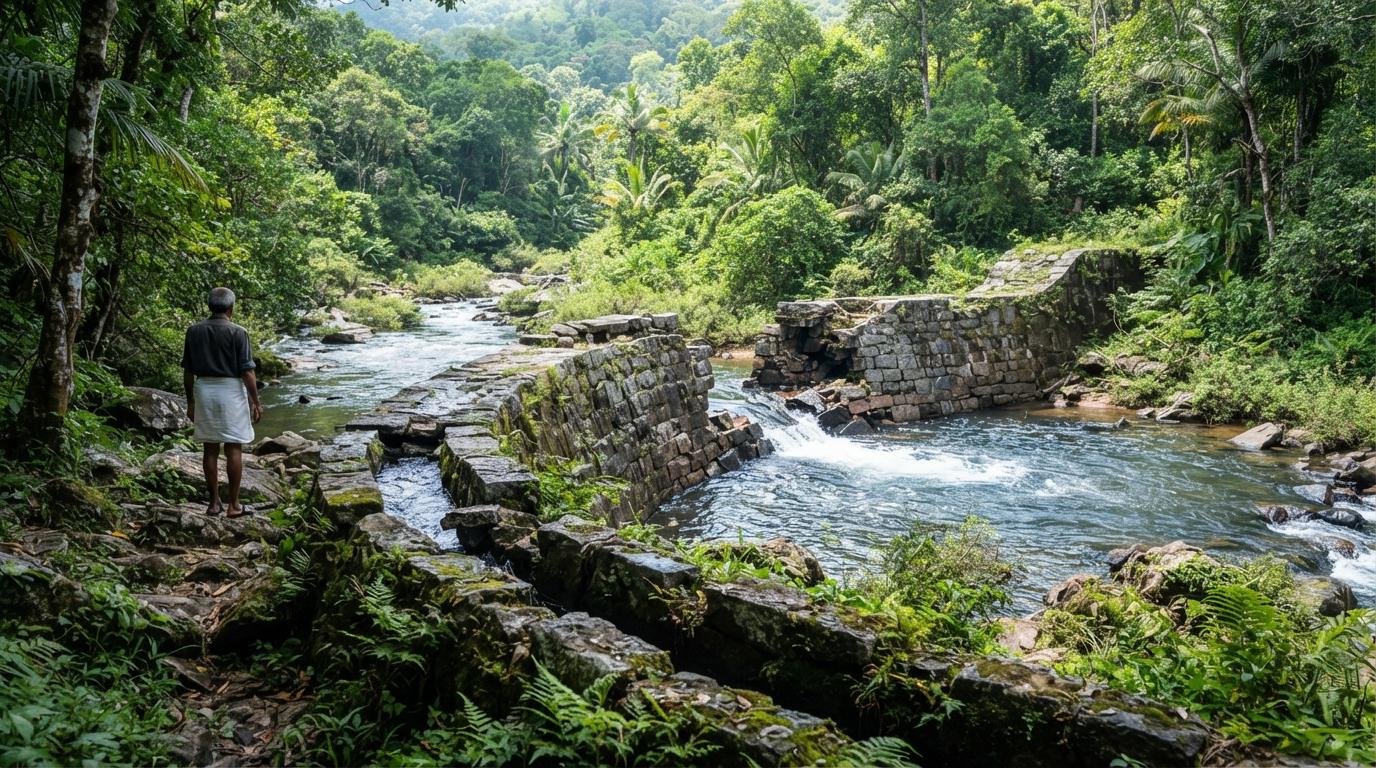
The Supreme Court refused to entertain a petition by Ananthan Ayyasamy seeking a direction to compel the Tamil Nadu government to request a reference of the Shenbagavalli weir dispute to a tribunal under Section 3 of the Inter-State River Water Disputes Act, 1956. The bench comprised Chief Justice Surya Kant, Justice Joymalya Bagchi and Justice J Mohana.
Filed as Ananthan Ayyasamy vs Union of India, the petition also sought a direction to Tamil Nadu and Kerala to jointly work out a mechanism for repairing the weir and the connecting Kanyamadugu channel up to the Tamil Nadu border. The court dismissed it without issuing mandamus.
Senior Advocate Srinath Sridevan appeared for the petitioner and called the Periyar an interstate resource. He said the weir irrigated agricultural lands in Sivagiri taluk in Tamil Nadu. He told the bench, "There's a small check dam in the mountains where tributaries join the Periyar river," to establish the geographical link of the water flow.
Chief Justice Surya Kant responded, "It's an inter-state dispute." Justice Joymalya Bagchi said, "We cannot pass a mandamus initiating a litigation." The bench asked about prior efforts to take the matter to the state authorities. Counsel confirmed discussions had taken place but produced no meaningful progress.
Weir inside tiger reserve stalls repairs
The Shenbagavalli weir sits at the confluence of the Puliampattithodu and Chokkampattithodu streams deep within the core area of the Periyar Tiger Reserve in Idukki district in Kerala. The petitioner said the 18th-century water-diversion structure had remained largely non-functional after flood damage over decades. The connecting channel, which historically diverted water to irrigation tanks, had fallen into disrepair.
Irrigation benefits from the structure accrue mainly to farmers in Tamil Nadu, while the physical structure lies inside a protected forest area in Kerala. The petitioner said any repair required multiple clearances from environmental regulators and the Kerala forest department. The petition said the state authorities had failed to reach an amicable agreement despite previous efforts, and the inaction called for a court-ordered push under the 1956 Act.
Section 3 of the Act permits a state government to ask the central government to refer a dispute to a tribunal where it believes its interests or those of its inhabitants are being adversely affected. The court declined to use that provision to direct Tamil Nadu to move the Union of India for constitution of a tribunal. The dismissal leaves repair of the weir and the Kanyamadugu channel to coordination between the two state governments through administrative channels, while the structure continues to deteriorate.
Comments
Sign in to read the discussion and share your thoughts.
Latest from LawWorld
News
View all- Supreme Court Protects Birbhum Stone Quarry Accused From Coercive Action Till December 521 Nov 2026
- Supreme Court Orders Medical Examination Of 70-Year-Old Convict In 1981 Dumka Double Murder21 Nov 2026
- Supreme Court Caps Arbitral Award To Monetary Limit Of Referred Dispute21 Nov 2026
- Karnataka High Court Quashes Summoning Order Against Head Constable, Orders Fresh Process21 Nov 2026
- Karnataka High Court Upholds IGST Export Refund After Omission of Rule 96(10)21 Nov 2026