
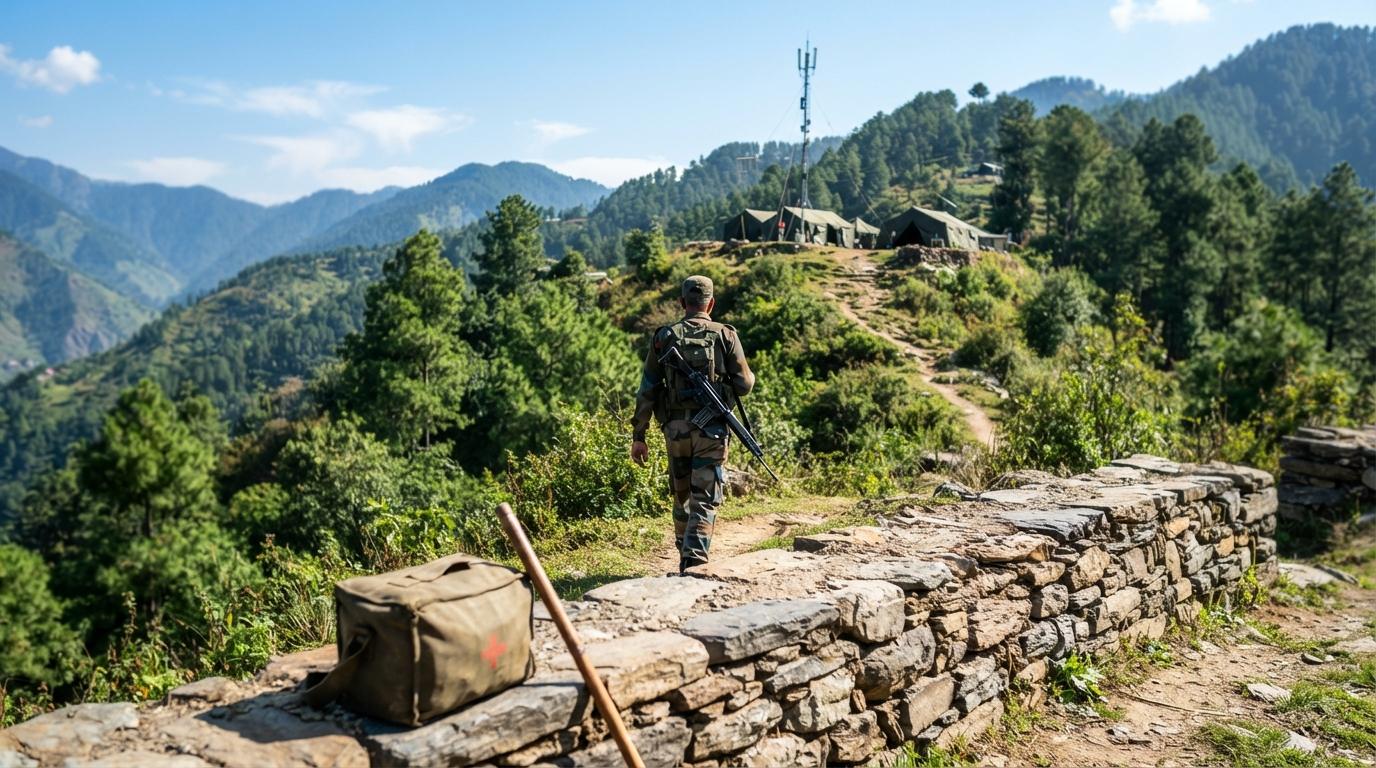
Justices Satish Chandra Sharma and Nongmeikapam Kotiswar Singh allowed the appeal on 21 November 2026. JC-377745M Ex Subedar Major and Honorary Lieutenant Devi Singh had claimed the higher War Injury Element of pension. The Bench set aside the Armed Forces Tribunal Regional Bench Lucknow orders dated 10 May 2023 in O.A. No. 1066 of 2022 and 19 July 2023 in M.A. No. 1034 of 2023. It directed the Union of India to sanction the War Injury Element under Regulation 103 of the Pension Regulations for the Army from the date of retirement.
Devi Singh joined the Indian Army on 24 June 1985. He retired on 31 March 2019 as Subedar Major and Honorary Lieutenant after 33 years of service, as his service record cited in the judgment shows. On 7 August 2002, while on duty with 31 Sub Area Signal Company in Jammu and Kashmir during Operation Rakshak/Operation Parakram, his loaded service weapon accidentally discharged, the Court recorded. The bullet passed through his left thigh and damaged the femoral vein. The injury left permanent disability assessed at 40 per cent for life and rounded to 50 per cent for pension purposes, the medical findings noted in the order state. The Release Medical Board found the injury attributable to military service. He was granted the ordinary Disability Element but denied the higher War Injury Element, the judgment records. The Tribunal had rejected his claim for want of final approval from the Adjutant General's Branch (MP-5), absence of his name in a later digital database, and loss of the original Court of Inquiry and unit records in the 2014 floods while in official custody, the Supreme Court noted.
Battle casualty papers survived floods
Part II Order No. BC-59 dated 16 December 2002 was headed "Battle Casualty Wound Op Rakshak Op Parakram" and recorded the gunshot wound as sustained on duty, the Bench said. Read with later Entitlement Cards and a Battle Casualty/Attributability Certificate from Signals Records, the documents proved the link with Operation Rakshak/Parakram. The case fell within Category 'E', specifically clause (h) of Regulation 82 covering injury sustained in action against extremists or anti-social elements, the Court held. Army Order 1/2003/MP covers gunshot or splinter injuries "sustained accidentally" in operations against the enemy or militants, or injuries caused by firing by own troops. The present case fell under the first limb, the Bench observed. Both tests in Paragraph 69 of the Army Order — operational circumstance and grievous severity — stood met on the surviving field and medical records including the Severity Certificate, the judgment said. "The exclusion is of a self-inflicted injury, not of every injury in which a serviceman's own weapon happens to be the source of the bullet," the Bench observed, holding weapon ownership and intention to be distinct facts. Accidental discharge can follow impact or fall, snagging of the trigger, inadvertent pressure, or mechanical defect. Such events differ from deliberate self-harm, which needs knowledge or intention, the Court said. Absence from a later digital database and loss of primary records in floods while in official custody could not defeat the claim. The appellant could not suffer for no fault of his own, the Bench held. Contemporaneous certificates on how a casualty occurred carry authoritative weight, consistent with Union of India v. Saroj Devi, the judgment said. The revised Pension Payment Order and net arrears, after adjusting the Disability Element already paid to avoid double payment, must be issued and paid within three months.
Comments
Sign in to read the discussion and share your thoughts.
Latest from LawWorld
News
View all- Supreme Court Protects Birbhum Stone Quarry Accused From Coercive Action Till December 521 Nov 2026
- Supreme Court Orders Medical Examination Of 70-Year-Old Convict In 1981 Dumka Double Murder21 Nov 2026
- Supreme Court Caps Arbitral Award To Monetary Limit Of Referred Dispute21 Nov 2026
- Karnataka High Court Quashes Summoning Order Against Head Constable, Orders Fresh Process21 Nov 2026
- Karnataka High Court Upholds IGST Export Refund After Omission of Rule 96(10)21 Nov 2026