
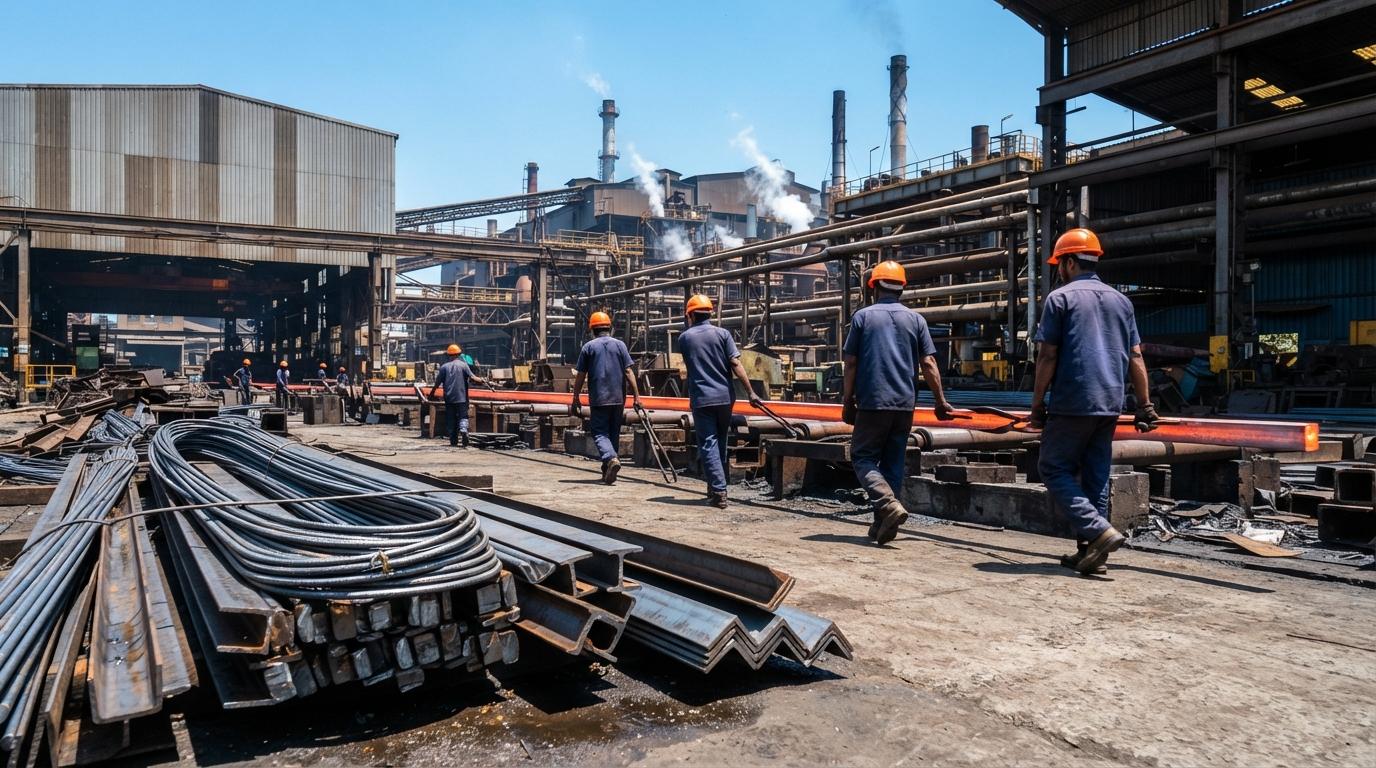
The High Court of Karnataka has dismissed Pragati Metallurgical Services Forging Inspection & Consultant's appeal against Steel Authority of India Ltd. A Division Bench of Justices D. K. Singh and H. Shanthi Bhushan held on November 21, 2026, in proceedings under Section 37 of the Arbitration and Conciliation Act, 1996, that a contractor's duty to pay revised wages does not oblige the employer to reimburse the extra cost without an express escalation clause.
The contractor had been engaged under a work order dated April 26, 2016 for finishing of rolled materials and heat treatment at the Visvesvaraya Iron and Steel Plant in Bhadravathi. It later claimed about Rs 98.80 lakh, comprising Rs 72.10 lakh toward additional wages after Central Government revisions in 2017 and Rs 26.70 lakh as interest. The work order required compliance with all labour laws including the Minimum Wages Act, 1948.
According to the contractor, the rise in labour cost by about 40% after the revision was unforeseen and should be borne by the principal employer. SAIL replied that the bid was submitted with full knowledge of statutory obligations and that the contract contained no term permitting increased statutory costs to be passed back to the employer.
Fixed-sum contract, no escalation term
The Bench described the agreement as a fixed-sum commercial arrangement. A statutory duty to pay higher wages to workmen, it said, does not by itself create an equitable right to be indemnified by the employer. As the Bench observed, "The Commercial Court has rightly noticed that the statutory obligation of the petitioner to pay revised wages cannot, by itself, be converted into a contractual obligation on the part of the respondent to reimburse the same."
For the contractor, partial reimbursement of a separate statutory bonus payment in 2016 was acknowledgment of liability for other statutory increases. The Court rejected that argument. Arrangements on bonus were distinct from liability for wage escalation, and no supplemental agreement modifying the original terms supported the claim.
The appeal followed dismissal of the contractor's challenge before the Commercial Court under Section 34. Before the High Court, the contractor contended that the arbitrator's failure to account for the economic effect of the wage hike amounted to patent illegality and left the contract unbalanced. The Bench said the arbitrator had examined the work order and subsequent correspondence and reached a legally and factually plausible interpretation of the contract.
It said its role was not to re-evaluate evidence as an ordinary court of appeal. As the Bench observed, "The Appellate Court has no authority of law to consider the matter in dispute before the arbitral tribunal on merits so as to find out as to whether the decision of the arbitral tribunal is right or wrong upon reappraisal of evidence as if it is sitting in an ordinary court of appeal." With that finding, the Bench affirmed the arbitral award and the Commercial Court order and refused any reimbursement to the contractor.
Comments
Sign in to read the discussion and share your thoughts.
Latest from LawWorld
News
View all- Supreme Court Protects Birbhum Stone Quarry Accused From Coercive Action Till December 521 Nov 2026
- Supreme Court Orders Medical Examination Of 70-Year-Old Convict In 1981 Dumka Double Murder21 Nov 2026
- Supreme Court Caps Arbitral Award To Monetary Limit Of Referred Dispute21 Nov 2026
- Karnataka High Court Quashes Summoning Order Against Head Constable, Orders Fresh Process21 Nov 2026
- Karnataka High Court Upholds IGST Export Refund After Omission of Rule 96(10)21 Nov 2026