
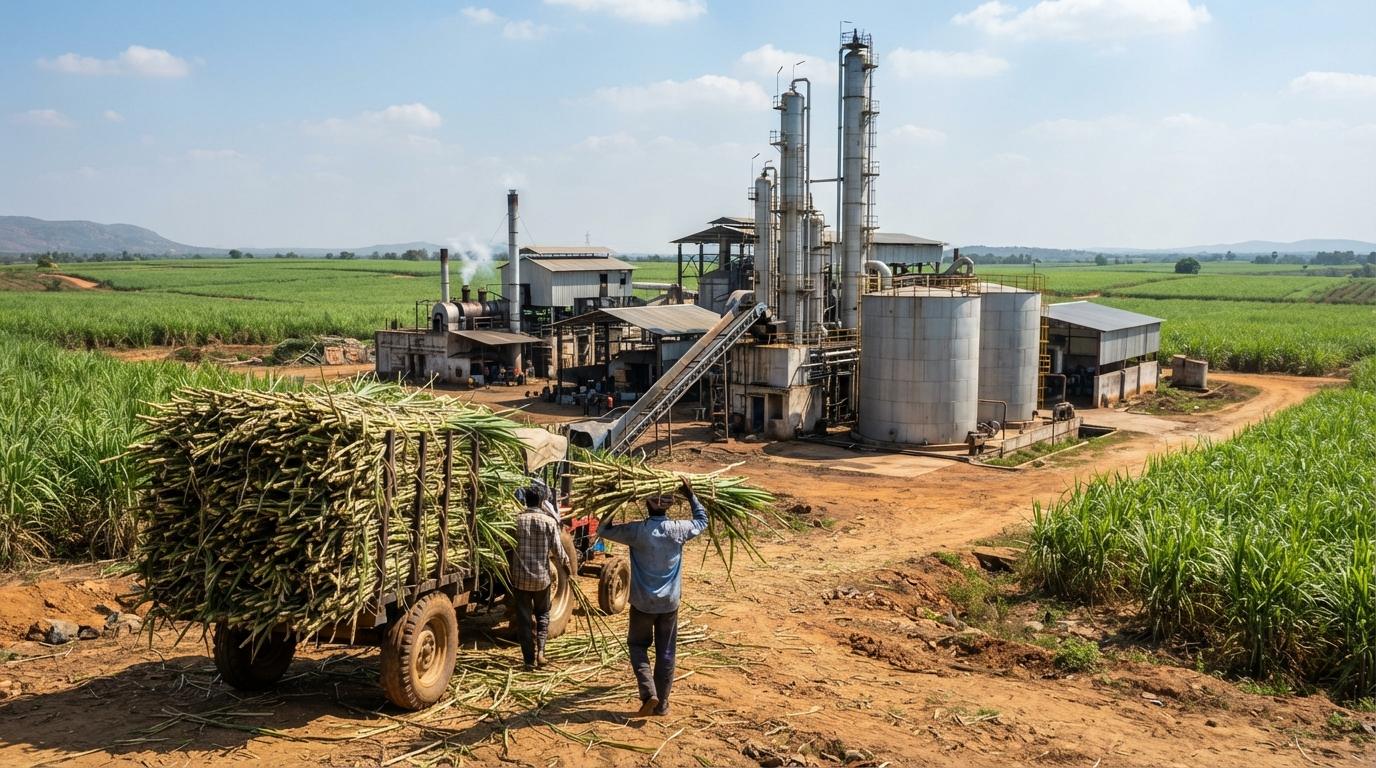
On November 17, 2026, Justice C.M. Poonacha of the Karnataka High Court refused interim relief to M/s Askins Biofuels Private Limited and Shri Bhramanandasagar Jaggery Industries. The oral order keeps in force the Centre's October 22, 2026 communication barring ethanol from sugarcane juice and B-heavy molasses for Ethanol Supply Year 2026-27.
The court said the petitioners' commercial activity could not override curbs imposed on account of sugar shortage. It denied permission to continue manufacture and supply while the challenge is pending.
For Ethanol Supply Year 2026-27, which runs from November 1, 2026 to October 31, 2027, diversion of the two cane-based feedstocks for fuel ethanol stands barred under the impugned communication.
Distilleries cite earlier court orders
M/s Askins Biofuels and Bhramanandasagar had asked the court to quash the communication and to allow production and supply. They relied on Division Bench orders dated March 31, 2023 and November 21, 2025, which they said had earlier permitted it. Compensation was also sought for loans raised, losses suffered and expenses incurred on what the petition called an illegal and arbitrary absolute ban.
Askins came up as a standalone distillery under an Industrial Entrepreneur Memorandum dated December 5, 2019, the petition said. It later signed a memorandum of understanding with Bhramanandasagar, a jaggery maker, for purchase of cane juice and syrup as feedstock.
Trouble started with neighbouring Alagawadi Bireshwar Sugars Private Limited, which obstructed setting up of the plant, the petition stated. Several rounds of litigation followed. In those cases Division Benches had held that Askins, as a standalone distillery, fell outside the Sugarcane (Control) Order, 1966.
The two units said they drew cane only from the 5 per cent of cane area left to farmers' discretion for uses including jaggery and seed, and not from the 95 per cent allotted to sugar factories. A ban on them would halt the distillery, cause irreparable financial loss to the units and their workers, and commercially ruin the enterprise, they argued.
They cited Hermes Distilleries Pvt Ltd & Others v. Union of India, where, according to them, the court had granted interim protection and recognised promissory estoppel, legitimate expectation and proportionality.
Opposing interim relief, the Additional Solicitor General cited sugar scarcity. Counsel submitted the curbs were issued under Section 3 of the Essential Commodities Act, 1955 read with the Sugar (Control) Order, 2025, published on May 1, 2025. The court recorded the respondents' stand that the 2025 Order empowers the Centre to regulate diversion of sugar for ethanol production in such a situation.
Comments
Sign in to read the discussion and share your thoughts.
Latest from LawWorld
News
View all- Supreme Court Protects Birbhum Stone Quarry Accused From Coercive Action Till December 521 Nov 2026
- Supreme Court Orders Medical Examination Of 70-Year-Old Convict In 1981 Dumka Double Murder21 Nov 2026
- Supreme Court Caps Arbitral Award To Monetary Limit Of Referred Dispute21 Nov 2026
- Karnataka High Court Quashes Summoning Order Against Head Constable, Orders Fresh Process21 Nov 2026
- Karnataka High Court Upholds IGST Export Refund After Omission of Rule 96(10)21 Nov 2026