
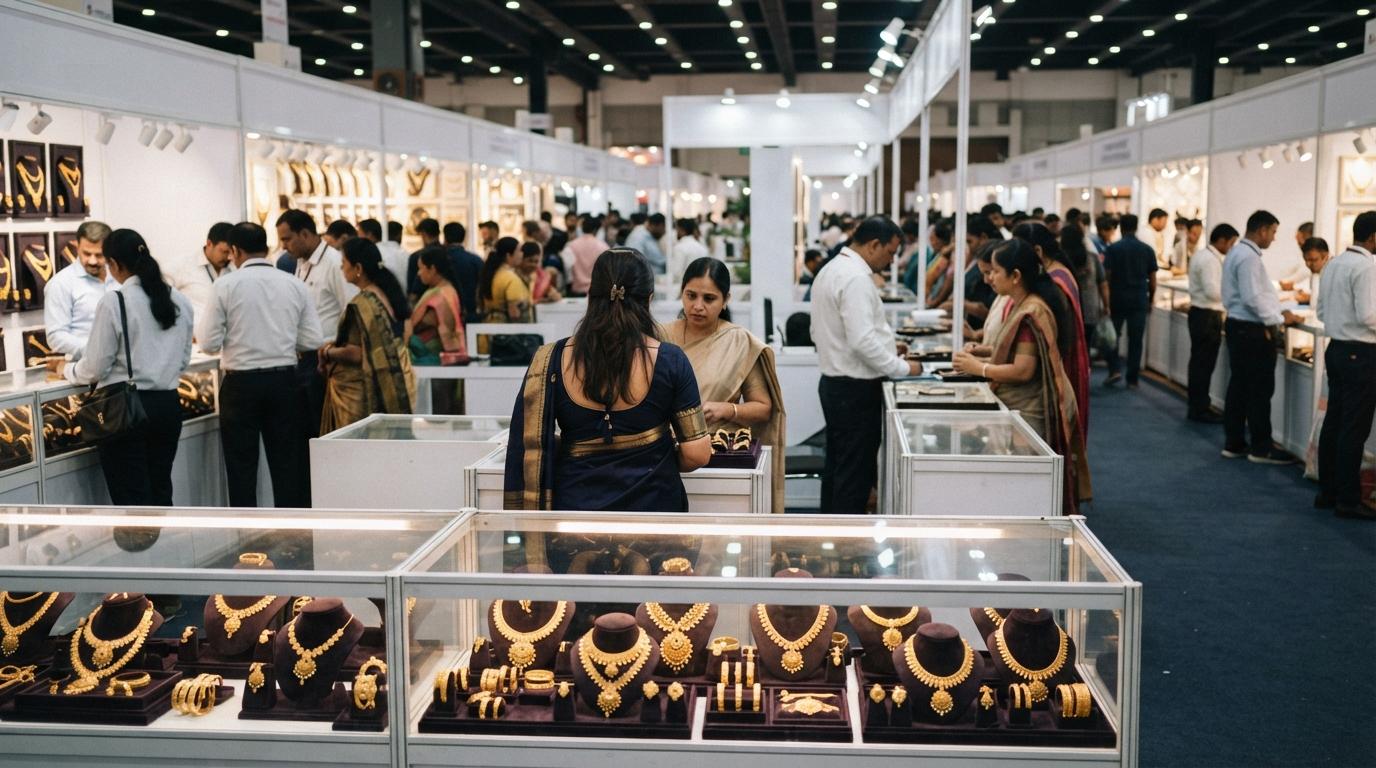
The Supreme Court has dismissed Civil Appeal No. 1889 of 2015 filed by the Gem and Jewellery Export Promotion Council against the State of Maharashtra and others. It affirmed the Bombay High Court judgment on the Council's IIJS and IIJS Signature exhibitions. The business-to-business trade exhibitions fall within entertainment in Section 2(a) of the Bombay Entertainments Duty Act, 1923 and attract duty under Section 3. The Court said it was in full agreement with the High Court.
Organised by the Council under the IIJS and IIJS Signature banners, the events were large-scale exhibitions. Entry to each trade exhibition was against payment of substantial registration charges. Exhibitors drew significant commercial benefit from them. The Council disputed the levy and sought refund.
According to the Bombay High Court, an exhibition need not involve a musical or ramp performance to qualify as entertainment where it has a public character, provides gratification and admission is against payment. Referring to Geeta Enterprises, the High Court said an event has public colour if it is open to the public or a defined segment of it. Gratification, it said, includes monetary benefit to exhibitors. The identity of the person deriving pleasure is irrelevant.
High Court rejected business platform argument
The High Court had rejected the contention that trade shows, being business platforms rather than recreational events, fall outside the levy. The statutory definition, it said, is inclusive and wide enough to cover exhibitions, even those of an educative character. It distinguished the Madhya Pradesh High Court ruling in Calico Mills, where a nominal entry fee was adjusted against purchases. The Council's events, involving substantial charges and commercial benefits, stood on a different footing. The refund claim was rejected.
In the Supreme Court, Section 2(a) was read with Union Medical Agency, Bharat Coop. Bank and Forest Range Officer. An exhibition, performance, amusement, game or sport to which persons are admitted for payment falls within the definition, the Court held. The words to which persons are admitted for payment are the deciding factor. Where entry is on payment, the event cannot be taken out of the definition merely because it is a business-to-business transaction. Administrative requirements for entry, such as filling up forms for security and other purposes, cannot defeat the plain reading of Section 2(a).
The Council's liability under Section 3 stands affirmed and its refund claim stands rejected.
Comments
Sign in to read the discussion and share your thoughts.
Latest from LawWorld
News
View all- Supreme Court Protects Birbhum Stone Quarry Accused From Coercive Action Till December 521 Nov 2026
- Supreme Court Orders Medical Examination Of 70-Year-Old Convict In 1981 Dumka Double Murder21 Nov 2026
- Supreme Court Caps Arbitral Award To Monetary Limit Of Referred Dispute21 Nov 2026
- Karnataka High Court Quashes Summoning Order Against Head Constable, Orders Fresh Process21 Nov 2026
- Karnataka High Court Upholds IGST Export Refund After Omission of Rule 96(10)21 Nov 2026