
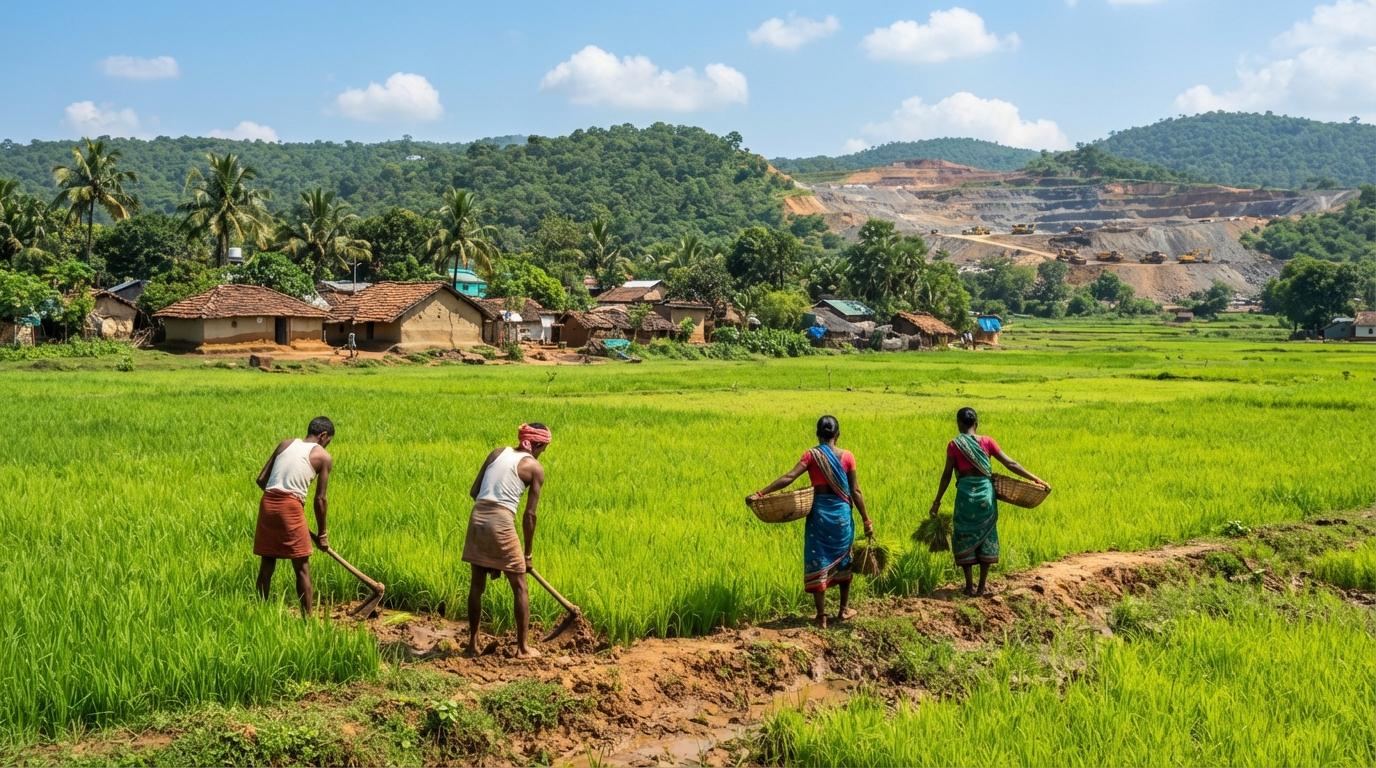
The Supreme Court on November 18, 2026 quashed acquisition proceedings for land in three villages of Sundergarh district in Odisha that had been initiated for mining by M/s Dalmia Cements Bharat Limited.
It was delivered by a bench of Justice Dipankar Datta and Justice Satish Chandra Sharma.
The bench held the acquisition violated safeguards governing consent, public participation and independent scrutiny.
It had examined Section 2(2)(b) of the relevant statute, which requires prior consent of at least 80 percent of affected families for acquisition of this character.
According to the order, consideration of that question of land acquisition law in India involved two procedural stages, the Social Impact Assessment study and examination of the proposal by the government under Section 8.
Consent alongside assessment, before Section 8
The Court said the consent process must proceed alongside the Social Impact Assessment study.
It said the proposal cannot be taken up for examination under Section 8 until that consent alongside the study is complete.
Failure to maintain that order, the bench held, defeated the protection of independent scrutiny built into the statute.
Public participation through consent and assessment was therefore treated by the bench as a precondition to governmental consideration, not a step that could follow it.
The bench set aside the judgment of the Orissa High Court dated September 6, 2024.
It quashed the acquisition proceedings and the related notifications and orders issued for the mining project.
The bench left liberty to initiate a fresh acquisition process strictly in accordance with law.
Under the order, until such fresh process is undertaken and completed, the land in the three villages cannot be used for the proposed mining on the strength of the quashed notifications.
The acquisition proceedings therefore stand closed under the order, subject only to any future proposal pursued afresh in compliance with the statutory safeguards.
Comments
Sign in to read the discussion and share your thoughts.
Latest from LawWorld
News
View all- Supreme Court Protects Birbhum Stone Quarry Accused From Coercive Action Till December 521 Nov 2026
- Supreme Court Orders Medical Examination Of 70-Year-Old Convict In 1981 Dumka Double Murder21 Nov 2026
- Supreme Court Caps Arbitral Award To Monetary Limit Of Referred Dispute21 Nov 2026
- Karnataka High Court Quashes Summoning Order Against Head Constable, Orders Fresh Process21 Nov 2026
- Karnataka High Court Upholds IGST Export Refund After Omission of Rule 96(10)21 Nov 2026