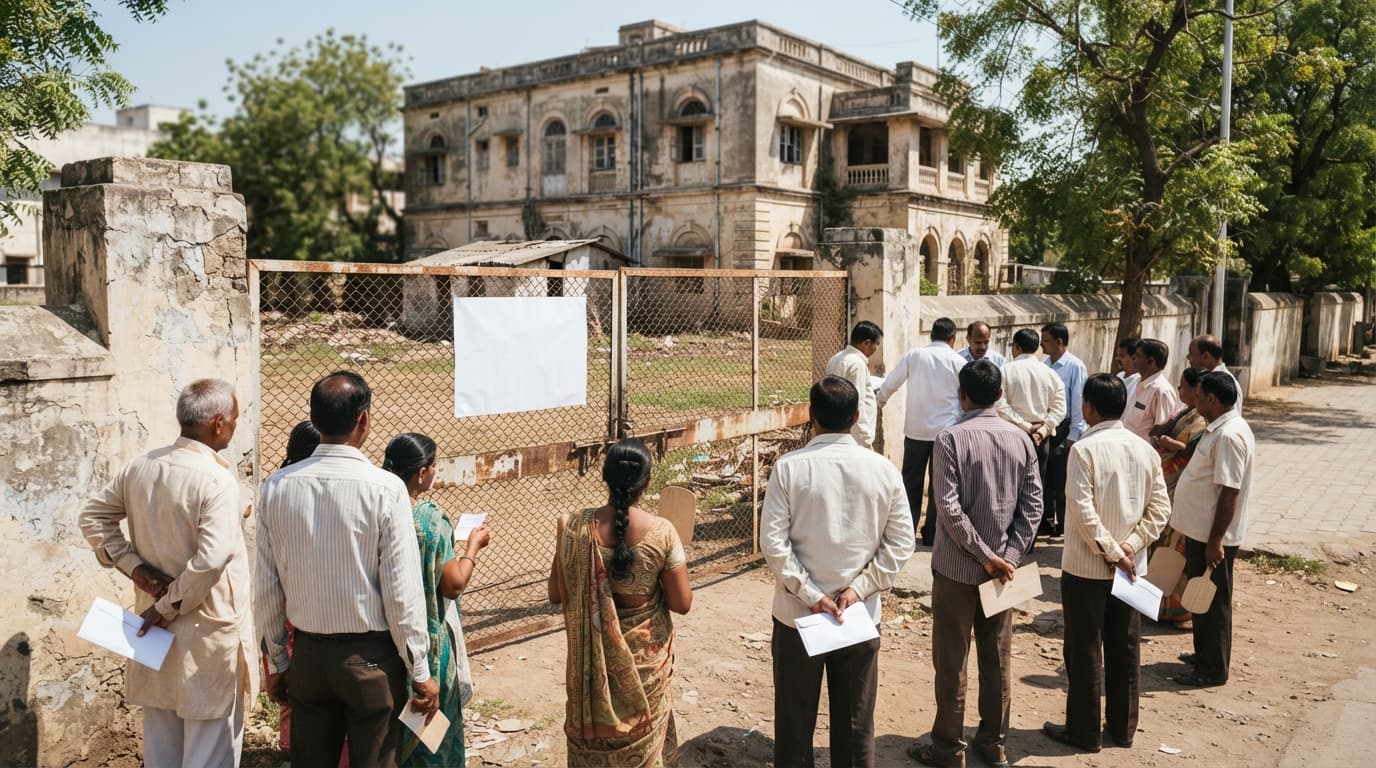
Court Sets Aside 2025 High Court Order
Lawyers for the bidder had argued that once the hammer had fallen, the authority could not walk back. The Bench rejected that reading. It held that public authorities can revisit or recall an auction for sale of public property before the contract is finally concluded. The aim, the Court said, must be to secure the best possible price and maximise public revenue. No enforceable contract had been made here. Without that concluded agreement, the bidder could not insist the sale be completed in its favour.
Auction notices are invitations for offers. Bids made in response are offers. The fall of the hammer or the naming of the highest bid is still not always the end in public sales. There was no valid contract concluded here because acceptance by the competent authority, communication of that acceptance, and execution of the sale terms had not taken place. Government auctions in India remain subject to reserve price, approval of the competent officer, and formal allotment. Until those steps are over, the process stays provisional.
When property public auction can be recalled
Unlike a private owner, who can sell for less if she wishes, a public authority has no such freedom. The judgment describes the State as custodian of public resources. Its actions must align with public interest, and that includes obtaining full value for public assets. Where the earlier round did not fetch the right value, or wider participation would improve the price, it can start again. The power is not open-ended. It must be used fairly, for recorded reasons, and before rights have vested. It cannot be used after there is a contract concluded between the authority and the purchaser that is binding in law. Once title has passed or formal allotment with payment and possession is complete, recall raises a different legal question.
A concluded contract example from municipal sales makes the line clear. Suppose a corporation auctions a plot, issues a formal acceptance letter, receives the full price, executes the sale deed, and hands over possession. That is concluded. No authority can then cancel only because a higher offer comes later. Contrast bids opened and noted on file, with no approval from the commissioner and no acceptance letter issued. That is not concluded. For recorded reasons linked to public revenue, the authority can cancel and invite fresh bids. The Court placed the present case in the second category.
Most government sale notices keep an express term that the officer conducting the sale may accept or reject any bid without giving reasons, subject to later approval. Courts have upheld such terms where they are used in good faith and in public interest. In any concluded contract Indian Contract Act test, proposal and acceptance must match, consideration must move, and communication must be complete. Section 4 of the Indian Contract Act, 1872 deals with communication of proposal and acceptance. Acceptance is complete only when communicated and approved in the manner required by the rules. Writing on when is a contract concluded UK law starts from the fall of the hammer unless the conditions say otherwise, but Indian public auctions turn far more on written conditions and statutory approvals.
Highest Bid Does Not Equal Sale
Bidders often assume the highest bid gives them a right to the property. The judgment rejects that assumption for public sales still in progress. A high bid is a strong position. It is not ownership. Municipal sellers, development authorities, trusts holding public land, and liquidators selling under court supervision all work under rules that require confirmation. Confirmation guards against collusion, low turnout, or a depressed price. If only two bidders take part because of poor publicity, or the reserve price rested on an old valuation, confirmation allows correction. The ground of better revenue must be real, not a cover for favouritism.
Anyone who tracks a public bank auction property list will have seen repeat notices after failed rounds for want of bidders, valuation change, or stay orders. The litigation that followed one public bank property auction 2018 sale, fought over valuation and service, showed the same pattern of postponement, recall, and re-notification. Those bank sales run under separate recovery rules, yet the idea is close. Until the sale certificate is issued and the bargain is closed under the applicable rules, the process can be corrected. This ruling applies that logic to direct sale of public property, with emphasis on custodial duty rather than recovery.
Custodian Duty To Get Best Price
Public land and public buildings belong to the people in a real sense. The officer who sells them acts as trustee for that value. Courts have said State grants of land, mines, spectrum, or commercial plots must pass tests of fairness and non-arbitrariness. Price is part of fairness. Selling cheap without competition drains the public purse and invites suspicion. Selling through a wide, well-publicised auction with clear terms protects both the authority and the honest bidder. The October 16, 2026 judgment ties recall to best price and public revenue. An authority that recalls one auction and then sells privately at a lower price would face a very different judicial response.
A repeat process will need careful handling. Fresh publicity must be wide. Valuation should be current. The reserve price should reflect market inquiry. Earnest money, eligibility, inspection dates, and payment timelines should be stated in plain terms. Bidders from the earlier round should be free to bid again unless disqualified under the rules. Any change in conditions should be explained. A reasoned order for cancellation helps in court. It should state what was wrong with the earlier round, what new steps will improve price discovery, and why no vested right had arisen.
Fresh Auction And Bidder Protection
Read the auction notice as a legal document. Check who has to approve the bid. Check whether acceptance needs a committee decision or government sanction. Check the clauses on confirmation and cancellation. Keep proof of earnest money, bid submission, and communications. Do not treat a provisional declaration as final allotment. Do not start construction, create third-party rights, or take loans on an unconfirmed bid. If the sale is recalled, ask for written reasons and the terms of the fresh notice. A writ remedy remains open if the recall looks arbitrary or mala fide.
Hospital groups, schools, and charitable bodies that often bid for public plots should factor this risk into pricing. Money locked in earnest deposits has a cost. Timelines can shift if a round is cancelled. Joint bidders should agree in writing on who will rebid and at what ceiling. Lenders should not release funds until the allotment letter is issued by the competent authority. The law still protects a bidder once acceptance is communicated and acted upon under the rules. After that stage, cancellation needs a contractual or statutory basis, and compensation questions arise.
The case now goes back for implementation. The High Court order of April 1, 2025 stands set aside. The authority can issue a fresh auction notice for the property under its own rules, with fresh dates for inspection, earnest money, bidding, and confirmation. Earlier bidders, including the contesting parties, will have to decide whether to take part again and at what price.