
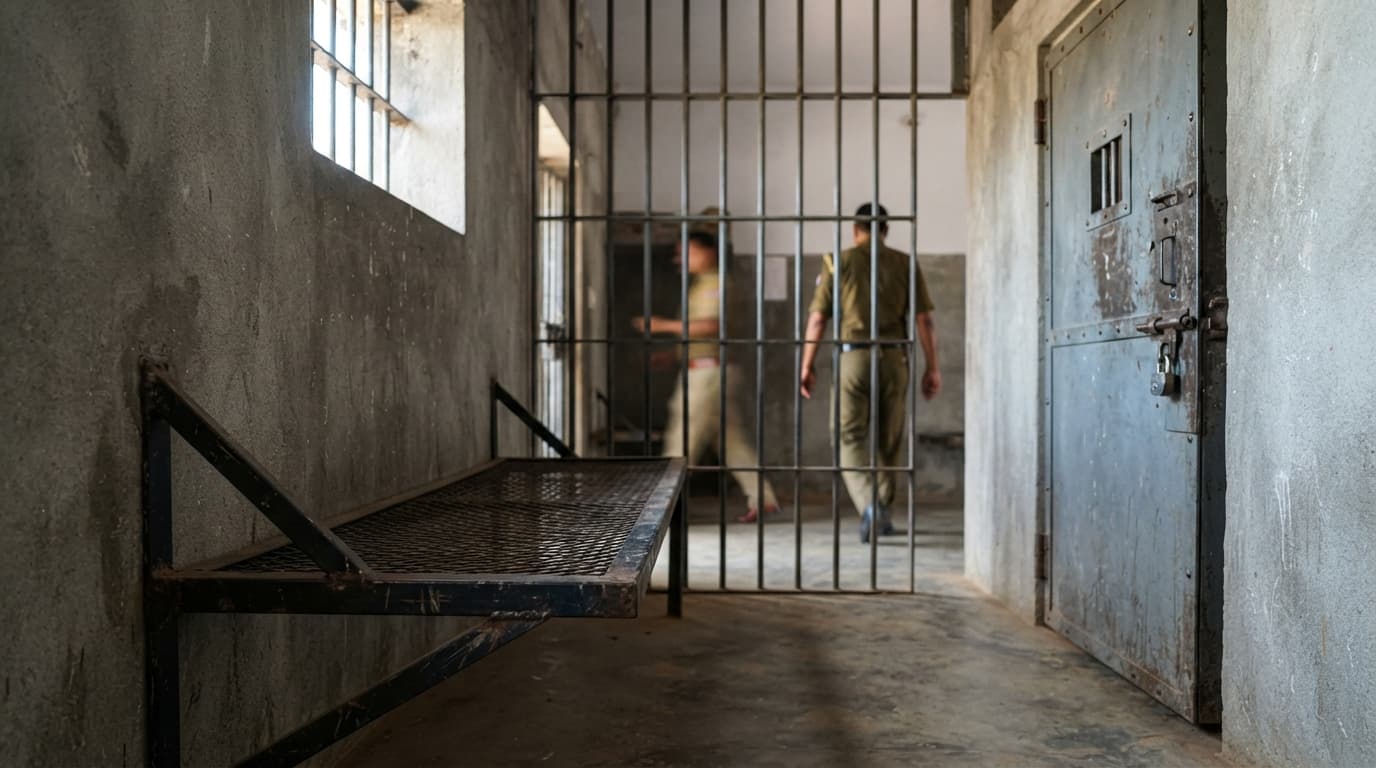
The Supreme Court has extended the Central Bureau of Investigation's investigation deadline by three months in the custodial death case of Shravan Suryavanshi from Chhattisgarh in 2024. A bench comprising Justices Vikram Nath and Sandeep Mehta granted the extension after reviewing the CBI's sealed cover report detailing the agency's progress and its request for more time to complete the probe.
The case involves the death of Suryavanshi while in police custody, an incident that prompted the Supreme Court to intervene and order a CBI investigation into the circumstances surrounding his death. Beyond directing the federal agency to conduct the probe, the court had previously mandated that the state of Chhattisgarh pay ₹25 lakh in compensation to the victim's family. The bench also issued instructions to register a regular criminal case against those found responsible for the death.
Previous Court Orders and Compensation
The Supreme Court's earlier orders reflected the gravity with which the bench viewed the custodial death. The direction to pay compensation to the family acknowledged the loss and trauma caused by Suryavanshi's death while in state custody. Simultaneously, the instruction to register a criminal case against responsible parties signalled the court's commitment to ensuring accountability. These measures were not merely symbolic; they represented concrete steps toward justice for the deceased and his family.
Custodial deaths remain a persistent concern within India's criminal justice system. When a person dies while in police custody, fundamental questions arise about the state's duty of care and the rule of law. The Supreme Court has consistently held that such deaths demand thorough investigation and accountability. By ordering a CBI probe rather than allowing state police to investigate themselves, the court sought to ensure impartiality and public confidence in the outcome.
The CBI's Request and Court's Decision
The CBI submitted a sealed cover report to the bench, outlining the current status of its investigation and the reasons necessitating an extension. Sealed cover reports allow investigative agencies to present sensitive details to the court without public disclosure, a practice that protects ongoing investigations and confidential sources. The bench, after reviewing the CBI's submission, found merit in the agency's request for additional time.
Three months is a substantial extension, indicating either the complexity of the investigation or the volume of evidence requiring examination. Custodial death investigations typically involve multiple layers of inquiry: the circumstances immediately preceding the death, the medical cause of death, the actions or omissions of police personnel, and the institutional failures that may have contributed to the tragedy. Each layer demands careful documentation and witness statements.
The CBI, as India's premier investigative agency, possesses the resources and expertise to conduct such complex inquiries. However, the agency must balance thoroughness with timeliness. Families of deceased persons and the public interest demand resolution, yet rushing an investigation risks incomplete findings and failed prosecutions. The court's decision to grant three months reflects this balance.
When the Supreme Court Transfers a Case
When the Supreme Court transfers a custodial death case from state police to the CBI, it signals a break from the ordinary investigative hierarchy. State police investigating their own officers creates an inherent conflict of interest. Officers may be reluctant to implicate colleagues, and the investigating team may face institutional pressure. The CBI, operating independently and accountable directly to the Union government and the courts, can investigate without such pressures.
The decision to involve the CBI also sends a message about the seriousness with which the judiciary views custodial deaths. It demonstrates that when a person dies in state custody, the matter transcends routine police investigation. The Supreme Court's intervention elevates the case and ensures that investigative resources and political will align toward uncovering the truth.
Next Steps and Further Hearing
The matter has been scheduled for further hearing on February 2. By that date, the CBI is expected to submit an updated report on its findings. The bench will then assess whether the investigation has reached a stage where charges can be filed, whether further time is needed, or whether other measures are necessary.
The February 2 hearing will be crucial for the Suryavanshi family. It represents an opportunity for the court to review the CBI's progress and determine whether the investigation has yielded sufficient evidence to prosecute those responsible. The family's pursuit of justice depends on the investigation's quality and the court's willingness to hold officials accountable.
Broader Context of Custodial Deaths
Custodial deaths occur when individuals die while in police detention or in police-controlled environments. These deaths may result from torture, medical neglect, or circumstances that remain unclear. Each death raises concerns about police conduct and the state's adherence to constitutional protections. Article 21 of the Indian Constitution guarantees the right to life, and courts have consistently held that this right extends to persons in police custody.
The Supreme Court has repeatedly emphasized that custodial deaths demand rigorous investigation. In several judgments, the court has laid down procedures for investigating such deaths, including mandatory autopsy, FIR registration, and investigation by senior police officers. Despite these directives, custodial deaths continue to occur, suggesting that systemic reforms remain necessary.
The Suryavanshi case exemplifies the court's approach: intervene swiftly, order an independent investigation, provide compensation to the family, and ensure criminal accountability. While these steps do not restore the deceased to life, they provide a measure of justice and deter future misconduct.
Accountability and Institutional Responsibility
The instruction to register a criminal case against responsible parties is significant. It means that once the CBI investigation concludes and identifies culpable officials, those individuals will face criminal prosecution. This is distinct from departmental action or suspension; criminal prosecution can result in imprisonment and conviction. The severity of potential consequences reflects the court's commitment to accountability.
Institutional responsibility also matters. The state of Chhattisgarh has been directed to pay compensation, signifying that the state, as the employer of police personnel, bears responsibility for their actions. This approach encourages state governments to implement better training, oversight, and accountability mechanisms within police forces.
With the three-month extension, the CBI now has additional time to complete its investigation and prepare its findings. The February 2 hearing will determine the next phase. If the investigation is complete, the court may direct the CBI to file a chargesheet. If the investigation is ongoing, the court may grant further extension or impose conditions on the CBI's work. The Suryavanshi case reflects the Supreme Court's role as custodian of constitutional rights. By ensuring that custodial deaths are investigated independently and that those responsible are held accountable, the court reinforces the principle that no one—police officer or civilian—is above the law.
Comments
Sign in to read the discussion and share your thoughts.
Latest from LawWorld
News
View all- Karnataka High Court Upholds Cancellation of Occupancy Certificates for 33 Incomplete Villas in Hosakote14 Oct 2026
- Supreme Court Registry Flags 14 Defects in INDIA Bloc Leaders' Electoral Roll Revision Petition14 Oct 2026
- Lawyers' Association for Constitution Files Article 32 Petition Over Alleged Police Excesses During Delhi Protests14 Oct 2026
- Supreme Court Agrees to Hear Plea Seeking Ban on Political Demonstrations Within Court Premises14 Oct 2026
- Centre Seeks Extension to File Affidavit on Delhi Detentions and Transit Shutdown, Deadline Set for October 1514 Oct 2026
Articles
View all- Supreme Court Refers DPDP Act Constitutional Challenge to Five-Judge Bench: RTI vs. Privacy Rights at Stake12 Oct 2026
- Supreme Court Disposes PIL on Doxxing and Deepfakes; Directs Union Ministries to Implement Remedial Measures8 Oct 2026
- Supreme Court Issues Notice on Constitutional Challenge to GST Input Tax Credit Denial Provision7 Oct 2026
Blogs
View all- Supreme Court Orders Priority Hearing for Pension Cases: A Decade-Long Wait Deemed 'Grave Injustice'12 Oct 2026
- Supreme Court Clarifies Gratuity Calculation: Monthly Wages Divided by 26 Working Days, Not 3011 Oct 2026
- Supreme Court Affirms Damages Recovery for Delayed Provident Fund Contributions Without Time Limit10 Oct 2026