
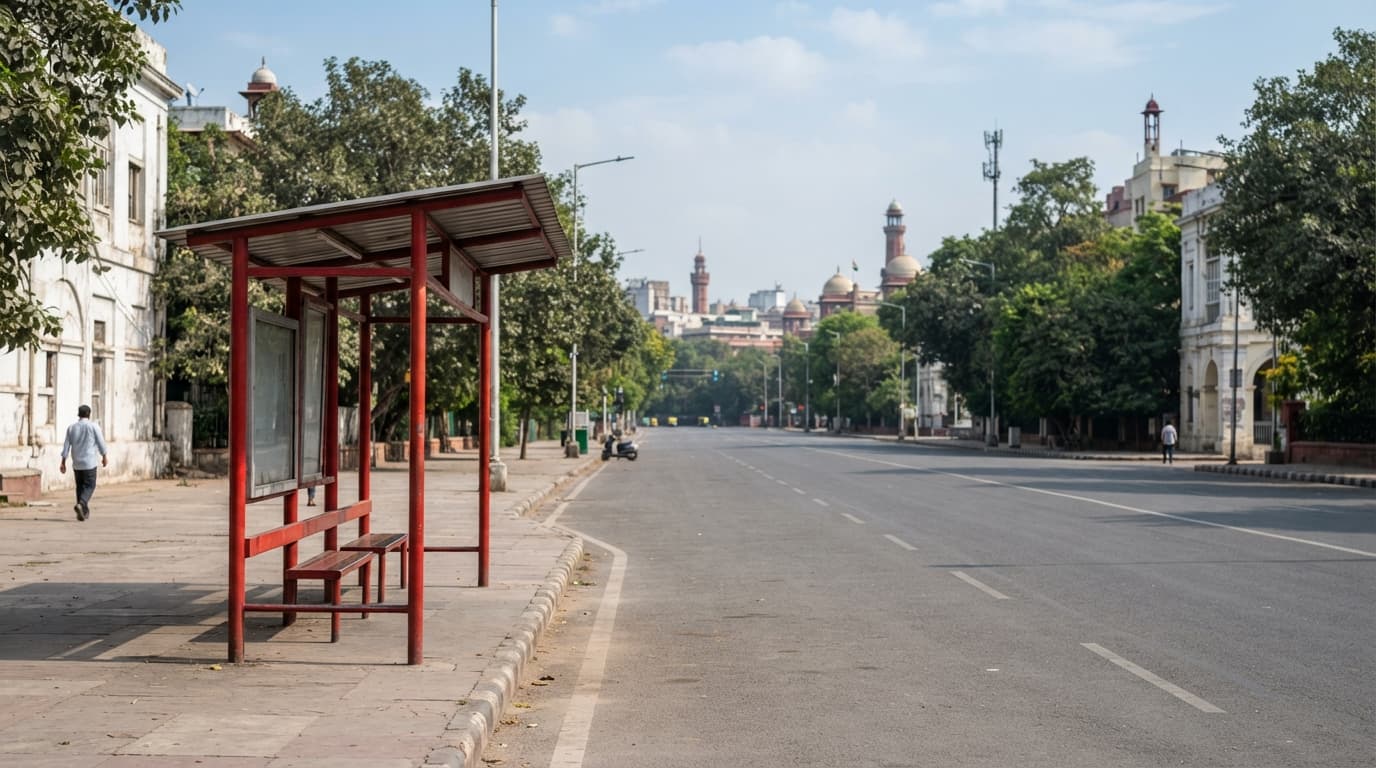
The Union government has sought and obtained an extension to file its affidavit responding to petitions concerning alleged illegal detentions and the shutdown of Delhi's public and rail transport on October 10, 2026. A three-judge bench of the Supreme Court, headed by Chief Justice of India Surya Kant, extended the deadline for the government's reply to October 15, 2026, after the Centre informed the Court that its response was prepared but required further refinement.
The bench, which also comprises Justices Joymalya Bagchi and V. Mohana, adjourned multiple contempt petitions to the same date. A senior police officer must attend the next hearing to address allegations of assault against women during the October 10 incidents.
The extension comes as petitions pile up before the Court, raising concerns about both law enforcement conduct and the conduct of political actors near the Court premises. On October 12, 2026, Congress leader Rahul Gandhi and other opposition leaders marched to the Supreme Court to file a petition related to the Special Intensive Revision of electoral rolls. That demonstration has now triggered separate proceedings before the bench.
Political Demonstrations and Contempt Proceedings
On the same date that the government sought its extension, the Supreme Court agreed to hear on October 15 a plea seeking a complete ban on political demonstrations within court premises and contempt proceedings against political leaders who obstruct the judicial system. Senior advocate and BJP leader Gaurav Bhatia mentioned the plea. The bench listed the matter for hearing on Thursday, October 15, 2026.
The plea flagged the large crowd that gathered at the apex court on October 12 when opposition leaders filed their petition. A separate Public Interest Litigation has also been filed by four advocates seeking a party-neutral framework to prevent political processions, protests, and sloganeering within constitutional court premises. That PIL also requested the Court to consider initiating suo motu criminal contempt proceedings against several opposition leaders for events on October 12, including the march towards the Court and social media posts demanding the Chief Justice of India's resignation.
The petitioners in the PIL argued that such conduct, directed at matters listed for hearing on October 13, could prejudice pending proceedings. They cited Article 124(4) of the Constitution regarding the exclusive mechanism for removing a Supreme Court judge and referenced the judgment in C. Ravichandran Iyer v. Justice A.M. Bhattacharjee, which held that Bar association pressure to coerce a judge's resignation is impermissible. The PIL named Rahul Gandhi, Mallikarjun Kharge, Akhilesh Yadav, Mahua Moitra, the Indian National Congress, and the Kerala Pradesh Congress Committee, among others, as respondents.
Allegations of Police Misconduct and Detention
Parallel to the government's extension request, the Supreme Court Bar Association and the Supreme Court Advocate-on-Record Association have filed a petition under Article 32 of the Constitution alleging that Delhi Police manhandled and detained lawyers protesting outside the Supreme Court on October 10. The petition claims violations of fundamental rights, including Article 19(1)(a) on freedom of speech and expression, Article 19(1)(b) on the right to assemble peacefully, Article 19(1)(d) on the right to move freely throughout the territory of India, and Article 21 on the right to dignity. The associations sought orders for the preservation of CCTV footage and bodycam footage from police officers involved. The petition also highlighted similar alleged detentions and violations of rights concerning media personnel.
The Lawyers' Association for Constitution has also filed a writ petition under Article 32 along with four of its member advocates, raising concerns over alleged police excesses during protests in Delhi on October 10 and 11, 2026. The petition alleges assault and unlawful detention of advocates and other individuals, denial of timely legal assistance and medical aid, failure to display police identification, and suspension of mobile internet services during the period in question.
These allegations form the backdrop against which the government's request for extension must be understood. The affidavit the Centre is preparing is expected to address the factual basis for the detention of individuals and the decision to shut down public and rail transport, including Metro services, on October 10.
Jurisdictional Questions and Procedural Matters
In a separate but related development, the Supreme Court declined to entertain a writ petition filed directly under Article 32 of the Constitution and directed the petitioner to first approach the Allahabad High Court under Article 226. The bench, comprising Chief Justice Surya Kant, Justice Joymalya Bagchi, and Justice V. Mohana, stated that the High Court is the court of first instance for such matters. Justice Joymalya Bagchi observed that a breach of fundamental rights involves an overlap in Articles 32 and 226 and emphasised the preference for the court of first instance to take cognizance of fundamental rights violations.
The petition that was declined concerned allegations that Anti-terrorism Squad personnel in Uttar Pradesh entered the petitioner's house without proper uniform or identification, despite no criminal proceedings against the individual. While that case is distinct from the Delhi detention and transport shutdown matters, it reflects the Court's current approach to Article 32 petitions and jurisdictional boundaries.
October 15 Hearing Consolidates Multiple Matters
The October 15 hearing date now consolidates several critical matters before the bench. The government must file its affidavit addressing the alleged illegal detentions and the transport shutdown. The Court will also hear arguments on the plea seeking a ban on political demonstrations within court premises and the contempt proceedings against political leaders. Additionally, the bench will address the allegations of police misconduct against lawyers and other individuals, with senior police presence expected at the hearing.
The extension granted to the government reflects the complexity of the issues at hand and the need for a carefully considered response from the Centre. The consolidation of multiple matters on a single date also suggests the Court's intention to address the broader questions raised by the events of October 10, 11, and 12 in a comprehensive manner.
For the lawyers' associations and advocates who have filed petitions alleging police misconduct, the October 15 hearing will provide an opportunity to present evidence and arguments supporting their claims of assault, unlawful detention, and denial of rights. The presence of senior police officers at the hearing is intended to facilitate direct responses to these allegations.
The bench's request for the preservation of CCTV footage and bodycam footage suggests that the Court intends to examine the factual record carefully. Such evidence will be crucial in determining whether the allegations of police excesses are substantiated and, if so, what remedies and accountability measures are appropriate.
Comments
Sign in to read the discussion and share your thoughts.
Latest from LawWorld
News
View all- Karnataka High Court Upholds Cancellation of Occupancy Certificates for 33 Incomplete Villas in Hosakote14 Oct 2026
- Supreme Court Registry Flags 14 Defects in INDIA Bloc Leaders' Electoral Roll Revision Petition14 Oct 2026
- Lawyers' Association for Constitution Files Article 32 Petition Over Alleged Police Excesses During Delhi Protests14 Oct 2026
- Supreme Court Agrees to Hear Plea Seeking Ban on Political Demonstrations Within Court Premises14 Oct 2026
- Supreme Court Grants CBI Three Additional Months to Complete Custodial Death Investigation14 Oct 2026
Articles
View all- Supreme Court Refers DPDP Act Constitutional Challenge to Five-Judge Bench: RTI vs. Privacy Rights at Stake12 Oct 2026
- Supreme Court Disposes PIL on Doxxing and Deepfakes; Directs Union Ministries to Implement Remedial Measures8 Oct 2026
- Supreme Court Issues Notice on Constitutional Challenge to GST Input Tax Credit Denial Provision7 Oct 2026
Blogs
View all- Supreme Court Orders Priority Hearing for Pension Cases: A Decade-Long Wait Deemed 'Grave Injustice'12 Oct 2026
- Supreme Court Clarifies Gratuity Calculation: Monthly Wages Divided by 26 Working Days, Not 3011 Oct 2026
- Supreme Court Affirms Damages Recovery for Delayed Provident Fund Contributions Without Time Limit10 Oct 2026