
Karnataka High Court Voids Occupancy Certificates for 33 Incomplete Villas in Raffles Park Project
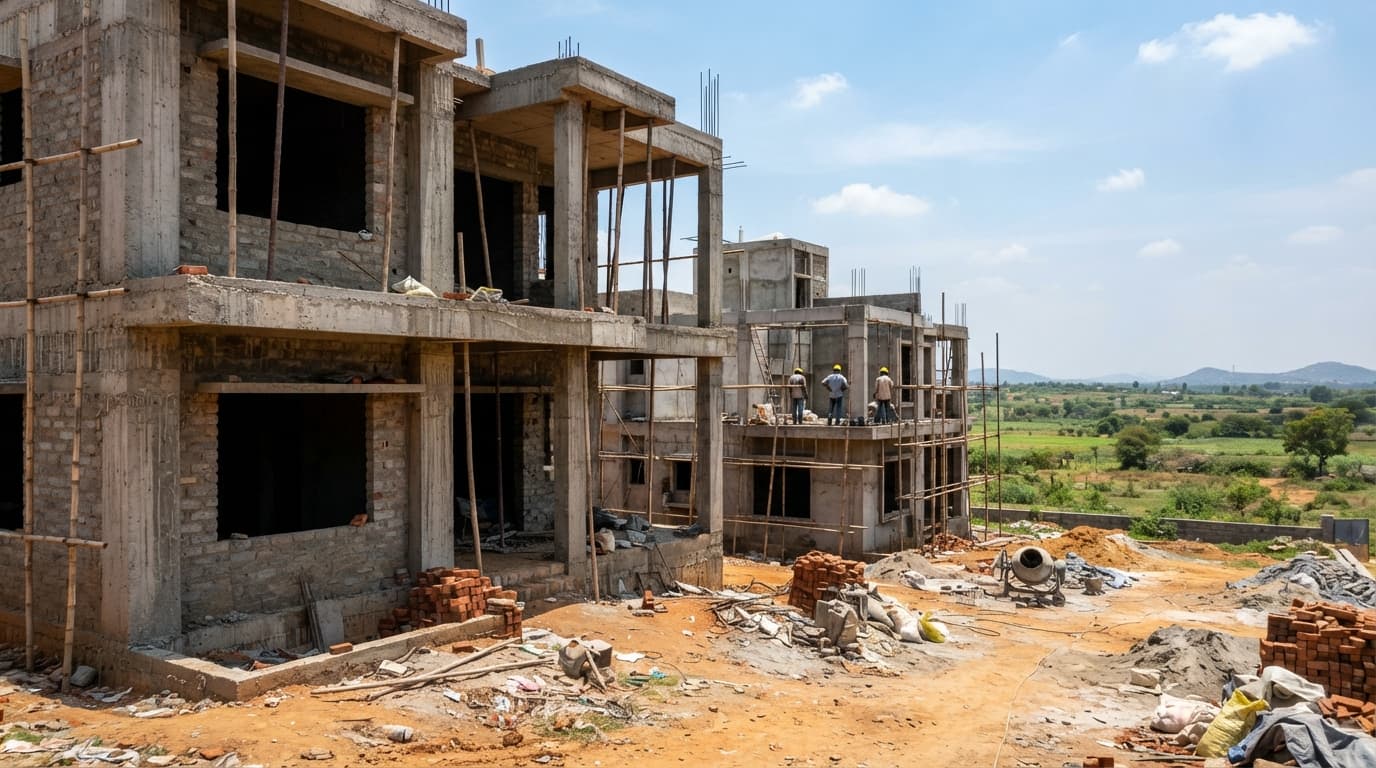
The Karnataka High Court has upheld a gram panchayat's decision to cancel occupancy certificates issued for 33 incomplete villas in the Raffles Park residential project developed by Raffles Residency Pvt Ltd in Hosakote, Bengaluru Rural district. Justice Suraj Govindaraj found that the villas were unfit for occupation when the certificates were granted, and that the gram panchayat had acted within its authority in revoking them due to serious statutory compliance failures.
The court's ruling exposes gaps in the approval process that allowed certificates to be issued without proper site inspections and verification against sanctioned architectural plans. Justice Govindaraj also cast doubt on the validity of a completion certificate submitted by the project's architects, M/s Karan Grover and Associates, which did not reflect the actual condition of the structures. Occupancy certificates cannot be treated as mere administrative formalities and must be grounded in genuine compliance with building and planning regulations.
Statutory Violations in Certificate Issuance
Justice Govindaraj's order identified multiple procedural breaches in how the occupancy certificates were originally granted. The villas lacked statutory compliance. No proper site inspection was conducted before the certificates were issued, and verification against the sanctioned plan—a fundamental requirement in building approvals—was also not carried out. These omissions meant that the certificates were issued without the factual foundation necessary to certify that the structures were complete and safe for habitation.
The court observed that the completion certificate furnished by the architects failed to match the ground reality of the project. This discrepancy between the certificate and actual conditions highlights a common problem in real estate development: the uncritical acceptance of documentation from project professionals without independent verification by local authorities. The gram panchayat, as the local body responsible for issuing occupancy certificates in rural areas, had the duty to ensure that statutory requirements were met before granting approval.
Gram Panchayat's Authority Upheld
By upholding the gram panchayat's decision to revoke the certificates, the court affirmed that local authorities possess the power and responsibility to cancel approvals that were issued in breach of statutory procedure. The Samethanahalli gram panchayat in Hosakote taluk revoked the certificates after discovering that the villas were incomplete and unfit for occupation. Justice Govindaraj's judgment validates this action, making clear that occupancy certificates are not irrevocable once granted.
This ruling has practical implications for other local bodies across Karnataka. It establishes that gram panchayats need not treat occupancy certificates as final and binding if they later discover that the certificates were issued without proper compliance. The court's support for the revocation process sends a message to developers that shoddy or incomplete work cannot be masked by obtaining certificates through procedural shortcuts.
Inquiry into Official Responsibility
The court has directed both the Samethanahalli gram panchayat and the principal secretary of the Rural Development and Panchayat Raj Department to conduct a detailed inquiry into the role of officials who were responsible for issuing the occupancy certificates. This inquiry must be completed within three months of the court's order. The investigation is expected to examine whether officials acted negligently, failed to perform mandatory inspections, or were complicit in issuing certificates without proper verification.
The three-month deadline creates an urgent timeline for the state government to investigate its own officials. Such inquiries often precede disciplinary action or criminal referrals if misconduct is found. The involvement of the principal secretary indicates that the matter is being treated seriously at the departmental level, suggesting that findings could lead to action against officials at various levels of the administration.
Implications for Real Estate Approvals
The judgment carries wider significance for how occupancy certificates are issued across Karnataka. Developers and local authorities may now face greater scrutiny over the completeness of villas and residential units before certificates are granted. The court's emphasis on site inspection and verification against sanctioned plans sets a clear standard: certificates must be preceded by thorough on-ground verification, not merely by submission of architect-issued completion certificates.
For homebuyers who may have purchased units in the Raffles Park project, the cancellation of occupancy certificates creates legal uncertainty. Those who took possession based on the original certificates may now face questions about the legality of their occupancy. The revocation could also affect mortgage agreements, insurance coverage, and property transfer processes. Buyers may need to seek remedies against the developer or the local authority, depending on the circumstances of their purchase and the terms of their agreements.
The decision makes clear that independent verification is essential in the approval chain. Architects and engineers submit completion certificates based on their professional assessment, but local authorities cannot rely solely on these documents. They must conduct their own inspections to ensure that structures are genuinely complete and comply with approved plans. The court's criticism of the completion certificate issued by M/s Karan Grover and Associates suggests that professional certificates, while important, must be corroborated by independent official verification.
Developer Accountability
Raffles Residency Pvt Ltd, the developer of the project, will likely face consequences from the cancellation of the occupancy certificates. The company may be required to complete the villas to bring them to a state of genuine completion, or it may face legal action from buyers who cannot take possession. The developer's failure to ensure that structures were truly complete before seeking occupancy certificates represents a breach of the trust placed in it by buyers and regulators.
The court's order does not explicitly state what remedies are available to affected buyers, but the cancellation of certificates effectively prevents the developer from claiming that its obligations under building regulations have been met. This may trigger contractual obligations to complete the work or refund amounts paid by buyers.
Next Steps and Timeline
With the inquiry directed to be completed within three months, the gram panchayat and the Rural Development Department will need to move swiftly to gather evidence and interview relevant officials. The findings of this inquiry could influence whether further legal action is taken against officials or whether administrative remedies are pursued. The court has set a clear deadline, and failure to comply could result in contempt proceedings.
Meanwhile, the status of the 33 villas remains in limbo. Without occupancy certificates, the units cannot legally be occupied, and buyers who have taken possession may face legal exposure. The developer will be under pressure to either complete the villas to an acceptable standard or face mounting disputes with buyers. The gram panchayat may also face pressure to reissue certificates once the villas are genuinely completed, provided proper verification is conducted.
Comments
Sign in to read the discussion and share your thoughts.
Latest from LawWorld
News
View all- Supreme Court Registry Flags 14 Defects in INDIA Bloc Leaders' Electoral Roll Revision Petition14 Oct 2026
- Lawyers' Association for Constitution Files Article 32 Petition Over Alleged Police Excesses During Delhi Protests14 Oct 2026
- Supreme Court Agrees to Hear Plea Seeking Ban on Political Demonstrations Within Court Premises14 Oct 2026
- Centre Seeks Extension to File Affidavit on Delhi Detentions and Transit Shutdown, Deadline Set for October 1514 Oct 2026
- Supreme Court Grants CBI Three Additional Months to Complete Custodial Death Investigation14 Oct 2026
Articles
View all- Supreme Court Refers DPDP Act Constitutional Challenge to Five-Judge Bench: RTI vs. Privacy Rights at Stake12 Oct 2026
- Supreme Court Disposes PIL on Doxxing and Deepfakes; Directs Union Ministries to Implement Remedial Measures8 Oct 2026
- Supreme Court Issues Notice on Constitutional Challenge to GST Input Tax Credit Denial Provision7 Oct 2026
Blogs
View all- Supreme Court Orders Priority Hearing for Pension Cases: A Decade-Long Wait Deemed 'Grave Injustice'12 Oct 2026
- Supreme Court Clarifies Gratuity Calculation: Monthly Wages Divided by 26 Working Days, Not 3011 Oct 2026
- Supreme Court Affirms Damages Recovery for Delayed Provident Fund Contributions Without Time Limit10 Oct 2026