
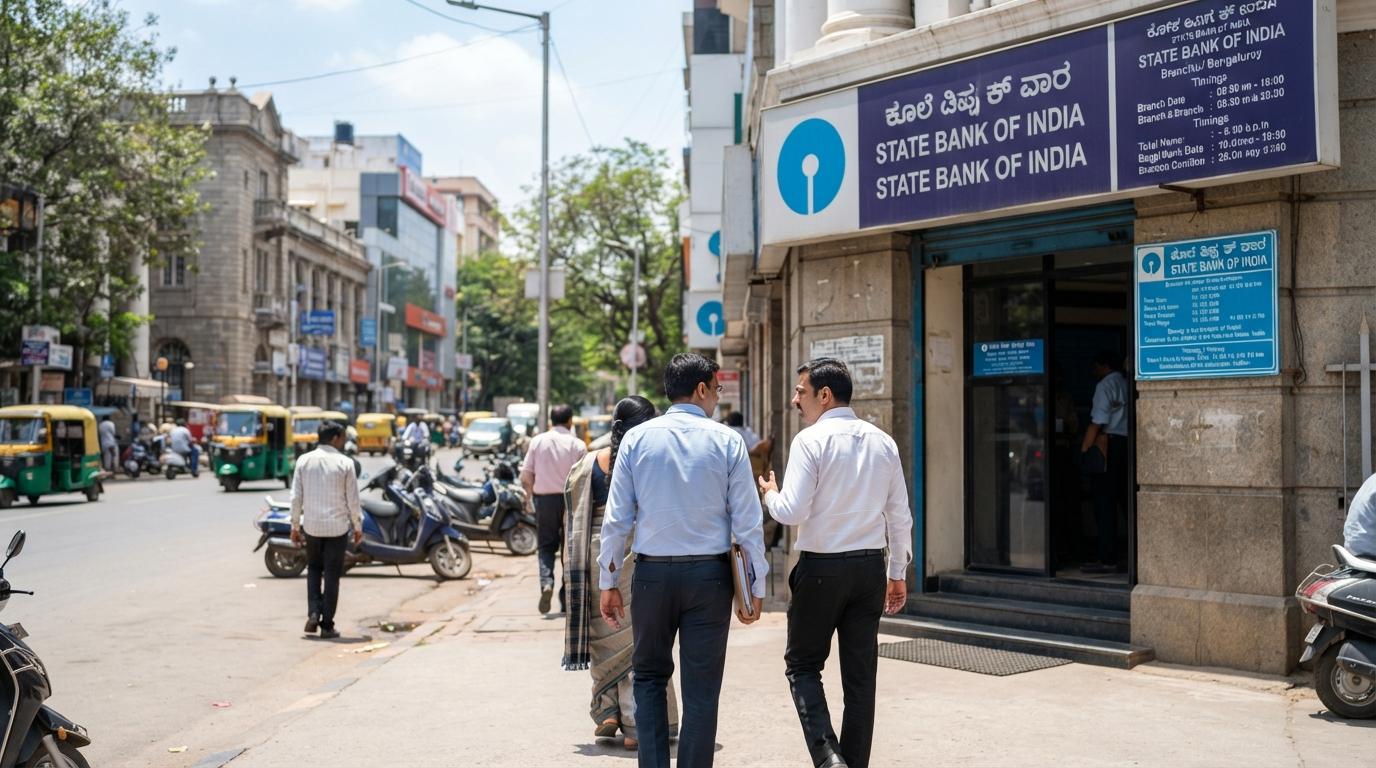
The Karnataka High Court, presided over by Justice Sachin Shankar Magadum, dismissed Writ Petition No. 768 of 2022 (GM-RES) filed by Jeetendra Kumar Rajan seeking a direction to the State Bank of India to sanction a Rs.70,000 loan for payment of costs imposed in earlier litigation.
Dated November 4, 2026, the decision was rendered in Jeetendra Kumar Rajan v. The High Court of Karnataka & Another.
He had addressed the application to the manager of the Karkala branch for consideration and sanction.
Costs Order Triggered Loan Plea
The plea traced its origin to earlier writ proceedings in which the Court had taken serious note of repeated filings described as frivolous and vexatious.
There, deposit of Rs.10,000 per petition within four weeks had been ordered as a check against further misuse of judicial proceedings.
Instead of complying, the petitioner applied for outside funding to meet the requirement arising from those directions and returned to the Court seeking a writ of mandamus against the lender.
A direction to deposit costs in one case, the bench said, could not be treated as a basis for demanding financial assistance from a third-party banking institution.
"The mere fact that this Court, in an earlier round of litigation, imposed a condition requiring the petitioner to deposit the cost before entertaining further proceedings relating to the same subject matter, no corresponding right accrues to the petitioner to demand financial assistance from a banking institution," the order said.
Grant of credit, the order said, remains within the commercial and financial judgment of the lender, where final loan sanction is subject to bank discretion after assessment under applicable regulations, lending policies and procedures besides the borrower's creditworthiness and eligibility.
Without a corresponding statutory duty or legal obligation on the bank, use of writ jurisdiction to force assumption of financial risk was rejected.
Accepting such a claim, the order recorded, would defeat the purpose of the previous directions aimed at preventing repeated and vexatious filings.
"The petitioner cannot seek to convert a judicial direction intended to curb frivolous litigation into a foundation for claiming an enforceable right against a third-party banking institution. Such an ingenious attempt to circumvent the effect of the earlier order is wholly misconceived and cannot receive the imprimatur of this Court," the bench said.
Compulsion in such circumstances was described as unwarranted interference in commercial decision-making.
"The mere submission of a loan application does not confer an indefeasible right upon an applicant to demand sanction or disbursement of the amount sought," the order said.
For lack of merit, the Court found no legally enforceable right with the applicant and no corresponding legal duty upon the bank, and refused the relief.
No direction was issued to the lender, leaving the earlier costs condition to be satisfied by the petitioner himself.
Comments
Sign in to read the discussion and share your thoughts.
Latest from LawWorld
News
View all- Supreme Court Protects Birbhum Stone Quarry Accused From Coercive Action Till December 521 Nov 2026
- Supreme Court Orders Medical Examination Of 70-Year-Old Convict In 1981 Dumka Double Murder21 Nov 2026
- Supreme Court Caps Arbitral Award To Monetary Limit Of Referred Dispute21 Nov 2026
- Karnataka High Court Quashes Summoning Order Against Head Constable, Orders Fresh Process21 Nov 2026
- Karnataka High Court Upholds IGST Export Refund After Omission of Rule 96(10)21 Nov 2026