
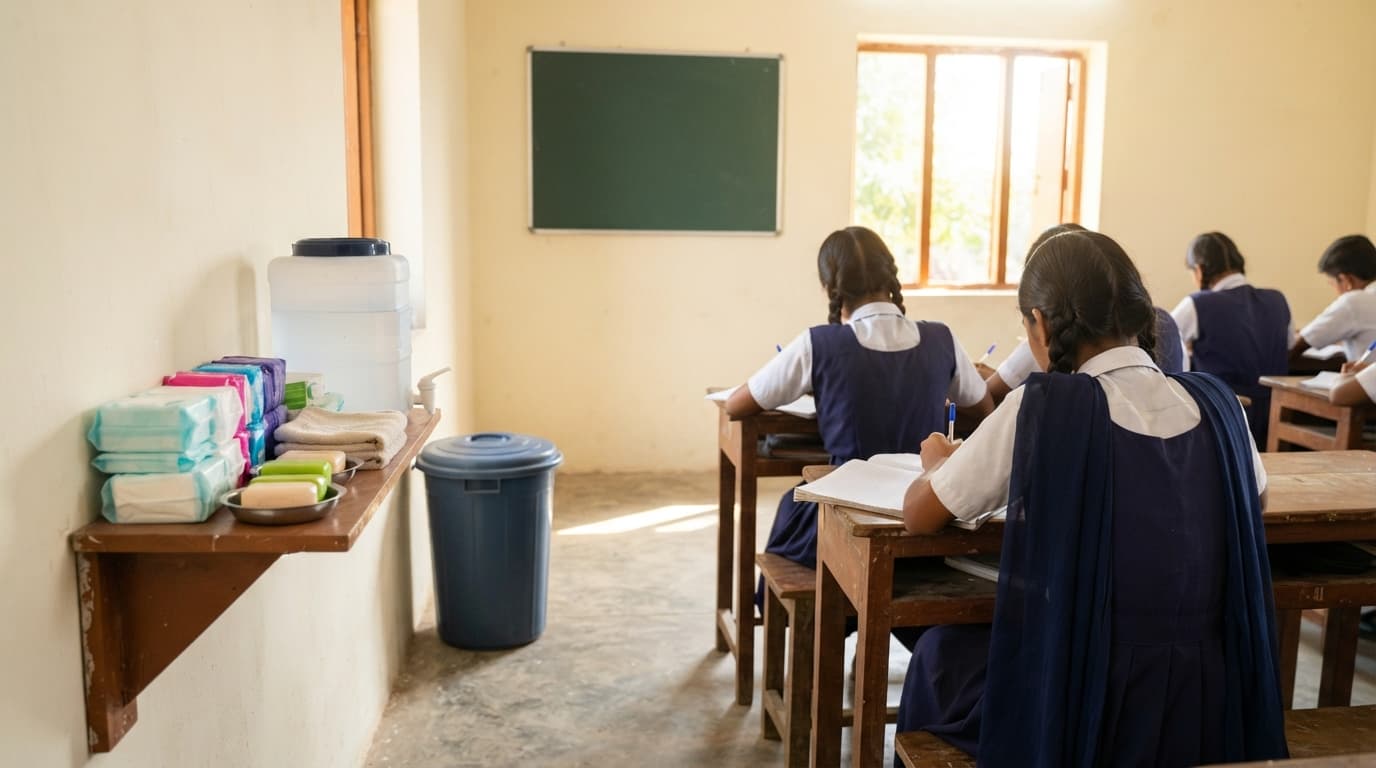
The Supreme Court of India has issued a final warning to all states and union territories regarding their implementation of the Menstrual Hygiene Policy for School-going Girls, setting the stage for potential contempt proceedings against senior government officials who fail to comply.
In an order dated October 13, 2026, a bench comprising Justice J.B. Pardiwala and Justice R. Mahadevan gave states and union territories "one last opportunity" to respond to the Union's requests for information on policy implementation. The bench, hearing Writ Petition (Civil) No. 1000 of 2022 filed by Dr. Jaya Thakur against the Government of India and others, warned that contempt notices would be issued to Chief Secretaries if they do not provide the required responses.
Rather than accepting general compliance reports, the bench has directed that future submissions must focus specifically on identifying gaps in implementation, the underlying causes of those gaps, and realistic timelines for closing them. This shift in reporting requirements reflects the Court's frustration with the pace of progress on an issue affecting millions of school-going girls across the country.
Surprise inspections to verify compliance
Beyond requiring more detailed reporting, the bench has introduced a new mechanism for ground-level verification. District Education Officers have been directed to form dedicated teams that will conduct surprise school inspections to assess menstrual hygiene policy compliance. This move introduces an element of unpredictability into the monitoring process, making it harder for schools to present a false picture of compliance during scheduled reviews.
The surprise inspection protocol represents a departure from routine monitoring practices. By empowering District Education Officers to lead unannounced verification teams, the order creates a direct line of accountability between district-level education authorities and the implementation of central policy directives.
Previous compliance reports submitted by states may not have captured the true state of affairs in schools, particularly in rural and remote areas where implementation challenges are often most acute. Unannounced inspections are designed to provide a more authentic picture of how menstrual hygiene facilities are functioning in real school environments.
Contempt action threatened for non-compliance
The threat of contempt notices to Chief Secretaries represents a significant escalation in the Court's enforcement strategy. Chief Secretaries are the senior-most civil servants in state governments, responsible for overall administration and policy implementation. By targeting this level of authority, the Court is signaling that non-compliance will not be tolerated and that accountability extends to the highest echelons of state bureaucracy.
Contempt of court proceedings can result in penalties including fines and, in serious cases, imprisonment. The invocation of this power in the context of menstrual hygiene policy compliance reflects the Court's view that this is not merely an administrative matter but a fundamental issue affecting the dignity, health, and education of girls in Indian schools.
The "one last opportunity" language used by the bench carries particular weight. States that have previously submitted incomplete or inadequate responses are now on notice that further delays or evasions will trigger contempt action.
The petition and its four-year history
The writ petition at the heart of this order was filed by Dr. Jaya Thakur and has been pending before the Supreme Court since 2022. The petition challenges the central government and various state governments regarding their implementation of menstrual hygiene policies. Over four years, the case has evolved from initial directives to increasingly stringent compliance mechanisms.
Menstrual hygiene management in schools is recognized as a critical public health and educational issue in India. Poor access to sanitary products, inadequate toilet facilities, and lack of awareness can lead to girls missing school during menstruation, affecting their education and long-term outcomes. The Supreme Court has consistently treated this as a matter of constitutional significance, relating to the right to education and the dignity of the girl child.
What states must now do
For state governments, the order creates immediate pressure to undertake a comprehensive audit of their menstrual hygiene policy implementation. The requirement to identify gaps and their causes demands that states conduct honest self-assessment rather than simply claiming compliance.
The directive to explain the time needed to close identified gaps introduces a planning element. States will need to prepare realistic implementation schedules and commit to specific milestones. These commitments will then become the benchmark against which future compliance will be measured.
District Education Officers will face heightened responsibility under the new inspection regime. They must now organize and supervise surprise visits to schools, document findings systematically, and report back to the Court.
Active judicial oversight in fundamental rights
The Court's approach reflects a broader judicial strategy of active monitoring and enforcement in matters affecting fundamental rights. Rather than issuing a one-time direction and assuming compliance, the Court is maintaining continuous oversight, adjusting its enforcement mechanisms based on the level of compliance achieved.
The emphasis on identifying causes of non-compliance, rather than merely documenting non-compliance itself, represents a more sophisticated approach to judicial problem-solving. By requiring states to explain why gaps exist, the Court is pushing for root-cause analysis that can lead to more effective solutions.
The introduction of surprise inspections also sends a message about the limitations of self-reporting by government agencies. The Court is essentially saying that while it welcomes voluntary compliance, it will not rely solely on official reports and will independently verify implementation on the ground.
What happens next
States are expected to file their responses containing detailed information about implementation gaps, causes, and closure timelines before the next hearing. District Education Officers should simultaneously begin organizing their inspection teams and scheduling surprise visits to schools.
The window between now and the next hearing will be critical for states to demonstrate their commitment to compliance. Those that submit substantive, honest reports and show evidence of active implementation efforts may avoid contempt proceedings. Those that continue to provide evasive or incomplete responses can expect the Court to follow through on its warning.
Comments
Sign in to read the discussion and share your thoughts.
Latest from LawWorld
News
View all- Karnataka High Court Issues Notice on Royal Fragrances' Petition Regarding KIADB IT Park Land17 Oct 2026
- Karnataka High Court Dismisses IRCTC's Delayed Appeal in Commercial Dispute17 Oct 2026
- Karnataka High Court Recalls Order in Kharge Family Trust Land Case, Schedules Fresh Hearing17 Oct 2026
- Karnataka High Court Upholds Constitutional Validity of Ancient Monuments Restrictions17 Oct 2026
- Karnataka High Court Directs Formation of District-Level Committees on Illegal Immigrants17 Oct 2026
Articles
View all- Supreme Court Issues Notice on Constitutional Validity of BNSS Section 172: Police Powers and Peaceful Assembly Rights at Stake17 Oct 2026
- Supreme Court Refers DPDP Act Constitutional Challenge to Five-Judge Bench: RTI vs. Privacy Rights at Stake12 Oct 2026
- Supreme Court Disposes PIL on Doxxing and Deepfakes; Directs Union Ministries to Implement Remedial Measures8 Oct 2026
Blogs
View all- Supreme Court Directs MEA to Publicize Compensation for Indians Killed in Russia-Ukraine War17 Oct 2026
- Contract Workers Cannot Claim Automatic Employment Despite Non-Compliance: Supreme Court Clarifies16 Oct 2026
- Supreme Court Calls for Separate Sexual Harassment Framework for Legal Professionals15 Oct 2026