
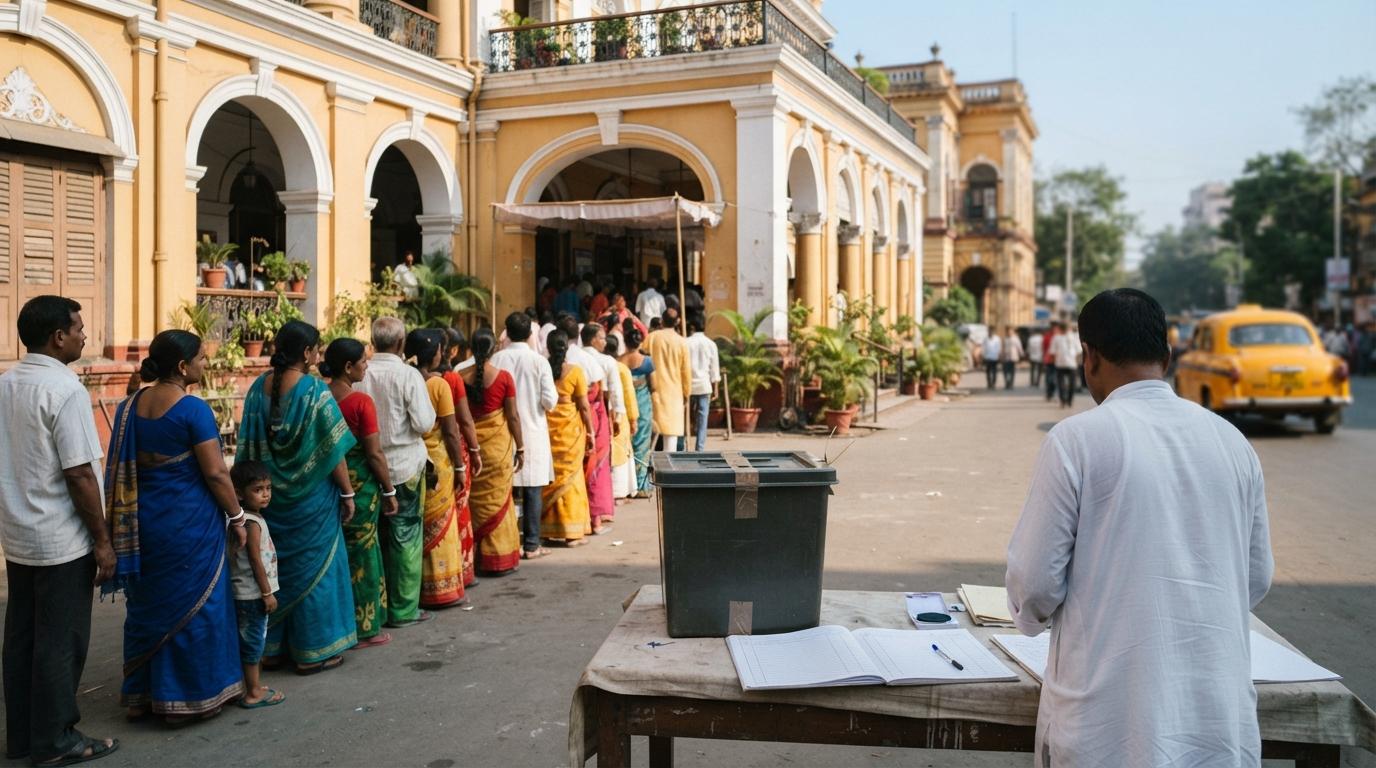
Supreme Court Inclined to Stay Order Deferring Kolkata Civic Polls for Ward Delimitation
On November 25, 2026, the Supreme Court said it is inclined to stay a Calcutta High Court order deferring Kolkata Municipal Corporation polls till the issue of ward delimitation is decided. The court was hearing a challenge to the High Court direction restraining the State Election Commission from issuing the election notification. The bench of Chief Justice Surya Kant and Justices Joymalya Bagchi and V. Mohana asked Solicitor General Tushar Mehta to obtain instructions on holding the polls.
The civic body has undertaken a boundary revision described as ward delimitation ahead of the next Kolkata Municipal Corporation elections, under a plan that could take the number of wards from 144 to 209. The High Court restraint is to operate till disposal of a writ petition on that revision pending before a single judge.
Petition against ward expansion
Former CPI-M councillor Dipu Das, the writ petitioner, sought a declaration that the entire exercise for determination of the number of wards is void and quashing of the September 11 gazette notification on expansion of wards. He alleged that the exercise was carried out on the basis of electoral rolls instead of actual population, thereby excluding a substantial number of residents from consideration. He said the Corporation had no elected council and its former chairperson Smita Pandey had been appointed administrator after dissolution of the House on June 8. He sought an interim stay of the delimitation notification and a restraint on issuance of any election notification.
The single bench refused interim stay on October 29. The petitioner then moved the division bench. That bench said the State government could empower its chosen administrator to make a tailor-made recommendation and then be bound by it, effectively allowing the government to recommend amendments to itself. "Such puppetry cannot be compatible with the scheme of the KMC Act," the order said.
Section 601 of the KMC Act, the order said, vests institutional autonomy in the Corporation in making a binding recommendation to the state government. That authority, it said, gives the Corporation as an autonomous institution the power to decide delimitation of its own wards, in other words its electoral constituencies. The manner of mid-term dissolution of the Corporation and appointment of an administrator, followed by what it called the hasty chronology of events thereafter, lent substance to the appellant's argument that there might have been a method in the madness. The division bench added that its observations were tentative for the final disposal of the writ petition.
In the Supreme Court, Justice Bagchi said, "We shouldn't postpone pending elections unreasonably." The bench observed, "We are inclined to stay the impugned order for the reason that the factual and legal issues which have been highlighted, the division bench will pass a fresh order, an appropriate order." It proposed that the writ petition before the single judge be transferred to the division bench for fresh consideration. The Solicitor General will place instructions on the election timeline before the bench by November 30.
Comments
Sign in to read the discussion and share your thoughts.
Latest from LawWorld
News
View all- Supreme Court Refers SARFAESI Priority Dispute With Depositor Law To Larger Bench27 Nov 2026
- Supreme Court Rules Mere Objections In Protest Petition Are Not A Complaint27 Nov 2026
- Supreme Court Quashes Bihar Remission To Anand Mohan In IAS Officer Murder Case27 Nov 2026
- Supreme Court Acquits Rape Accused For Lack Of Medical Evidence27 Nov 2026
- Supreme Court Mandates Separate Hexagonal Warnings For Fat, Sugar, Salt26 Nov 2026