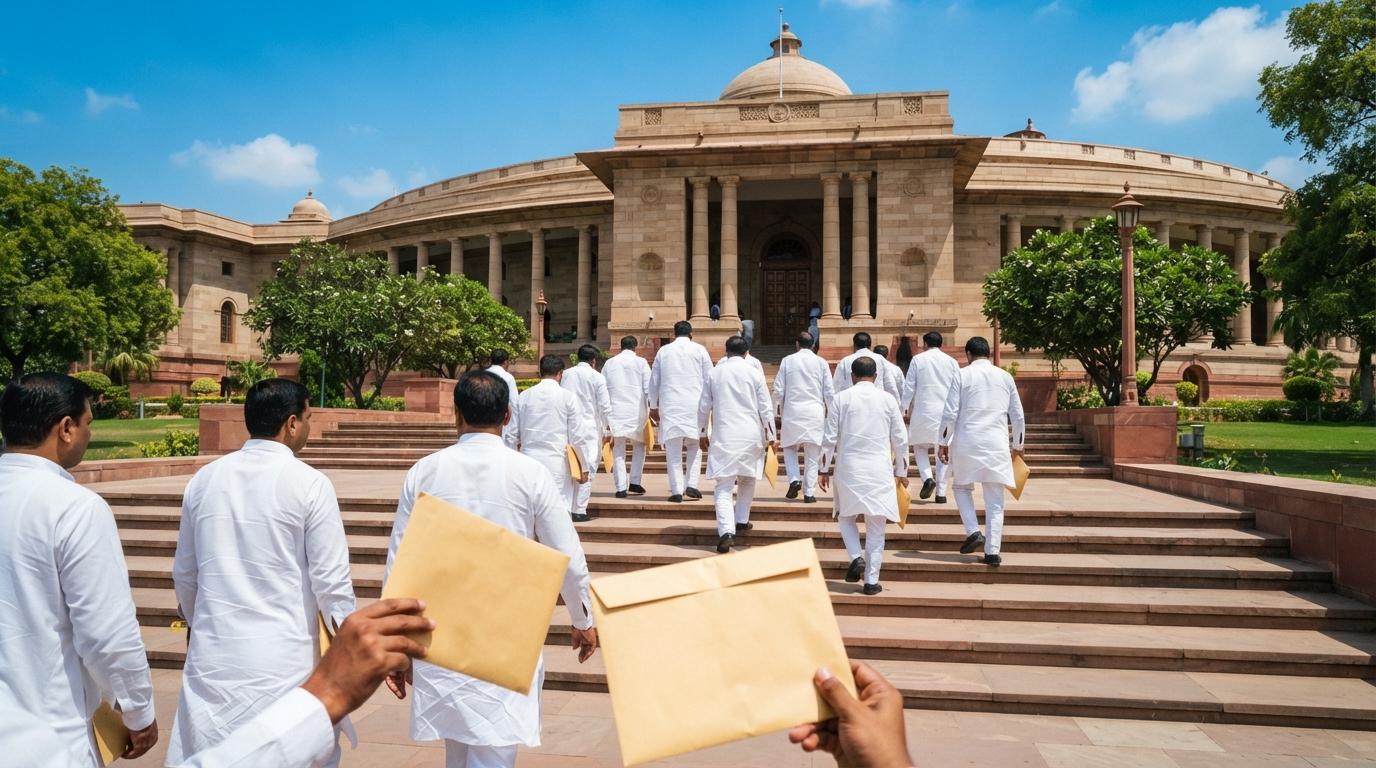
How Anti Defection Law in India Works
The Tenth Schedule was added to the Constitution by the 52nd Constitutional Amendment Act, 1985. It was meant to stop elected representatives from switching sides for office or money after voters had chosen them on a party symbol and manifesto. A legislator risks losing the seat if the conduct shows a break from the party that secured the election. The decision lies with the presiding officer — the Speaker in the Assembly and the Chairman in the Council.
In practice, two tests have mattered most in state assemblies. The first is voluntarily giving up party membership, which courts have read wider than a formal resignation letter. Public statements, campaigning for another party or acting against party interests can be treated as evidence. The second is voting or abstaining against the party whip on a crucial vote without permission. If either test is met, a disqualification petition can be filed and the Speaker must decide it.
Voters elect a candidate on a party symbol for a five-year term. The Tenth Schedule punishes the break by removing the legislator from the House. Delays in deciding petitions, divided rulings by presiding officers and quick acceptance of resignations have weakened that deterrent. Once a resignation is accepted, a by-election follows where the same person can often contest again.
Why Resignations Became the Escape Route
Central to the plea is that last step. A legislator facing a disqualification notice, it argues, can side-step the entire process by resigning. The Speaker then takes up the resignation instead of the disqualification petition. If the resignation is accepted fast, the disqualification file closes because the seat is already vacant. Numbers in the House shift at once. A majority can collapse and a government can fall without any finding on whether the Tenth Schedule was violated.
State politics has offered several versions of this sequence. Similar resignation letters arrive within days of each other. The members skip party meetings, meet leaders of a rival formation, then tell the Speaker's office the resignations are voluntary and genuine. The original party counters that the letters are meant to defeat pending disqualification cases and should wait until that question is settled. With no fixed order of priority, the timing of the Speaker's decision can decide the fate of the government.
For scrutiny, the petition seeks a clear rule. Resignations would need independent examination to confirm they are truly voluntary and not a device to defeat a pending case. Disqualification pleas would need time-bound, transparent disposal, with written reasons and proceedings that parties and the public can follow. Neither delay nor speed, the plea says, should work as a political weapon.
What the Judges Have Asked For
At the November 23 hearing, the bench decided none of these questions. It issued notices to the three respondents and asked for their stand. It is the usual course when the Supreme Court in India takes up reform pleas at admission stage. The Central Government must say whether it sees need for legislative change or new procedure. The Election Commission must set out its administrative experience with resignations, disqualifications and the by-elections that follow. The Law Commission, as the advisory body on reform, must say whether the issue needs a detailed study and draft proposal.
A notice is routine, but it matters. It does not accept the petitioner's case; it treats the questions as worth answering. Respondents usually get a few weeks for counter affidavits, the petitioner may file a rejoinder, and only then does the court hear full arguments. At that point it can frame guidelines, leave the matter to Parliament, or send it to a larger bench.
Lawyers will watch two points in those replies. One is who checks voluntariness when a disqualification petition is already pending — whether an outside authority gets a role or the Speaker follows a stricter procedure. The other is what a time-bound decision means in practice. Past court orders have spoken of an outer limit of three months for Speakers to act, but compliance has been uneven. The Centre and the commissions will have to say whether timelines should go into the rules, with consequences for delay.
What Voters Should Watch Next
A mid-term switch carries a direct cost for voters. The constituency faces a by-election within months. Public money is spent again, campaigns restart, and the new alignment in the Assembly may not reflect the mandate of the general election. A quick, reasoned process would fix the legal position before power changes hands.
The three authorities will now file written responses, and the bench led by Chief Justice Surya Kant will fix a date for further hearing. Until then the Tenth Schedule continues as before, and Speakers will decide pending petitions under existing procedure. If the court later lays down timelines or a method for independent scrutiny of resignations, those directions will govern future standoffs in the assemblies.