What Tamil Nadu Asked For
Filed as interim applications, these pleas are familiar in this interstate water dispute. Tamil Nadu moved the Court during pending proceedings and sought an urgent release order. It linked the claim to the June to September period, which feeds the Kuruvai paddy crop and the preparatory work for Samba operations. Kuruvai is sown in June-July and needs water before the northeast monsoon reaches the delta. Samba follows and depends on storage built up in Mettur and other reservoirs. A shortfall in June-September therefore runs into the rest of the agricultural year.
Permission to file extra papers was refused along with the release pleas. Courts often allow such applications when they explain flows, storage, rainfall or releases. Here the Bench declined. The order, on available material, gives no detailed reasons for that refusal. The practical result is plain. The record stays as it was before these three filings. Nothing was added, and nothing was ordered to be released.
Why the Cauvery water dispute Persists
Hydrology explains much of it, not law alone. The Cauvery rises in Karnataka and flows into Tamil Nadu, with Kerala and Puducherry also holding shares. Rainfall in the catchment is seasonal and variable. Accounting is easier in a good monsoon year. In a weak year, every TMC is contested. Karnataka cites drinking water for Bengaluru and other towns, standing crops in its basin, and low levels in its own reservoirs. Tamil Nadu cites delta farmers with no substitute source during Kuruvai and Samba, and stresses timing of releases, not only the annual total.
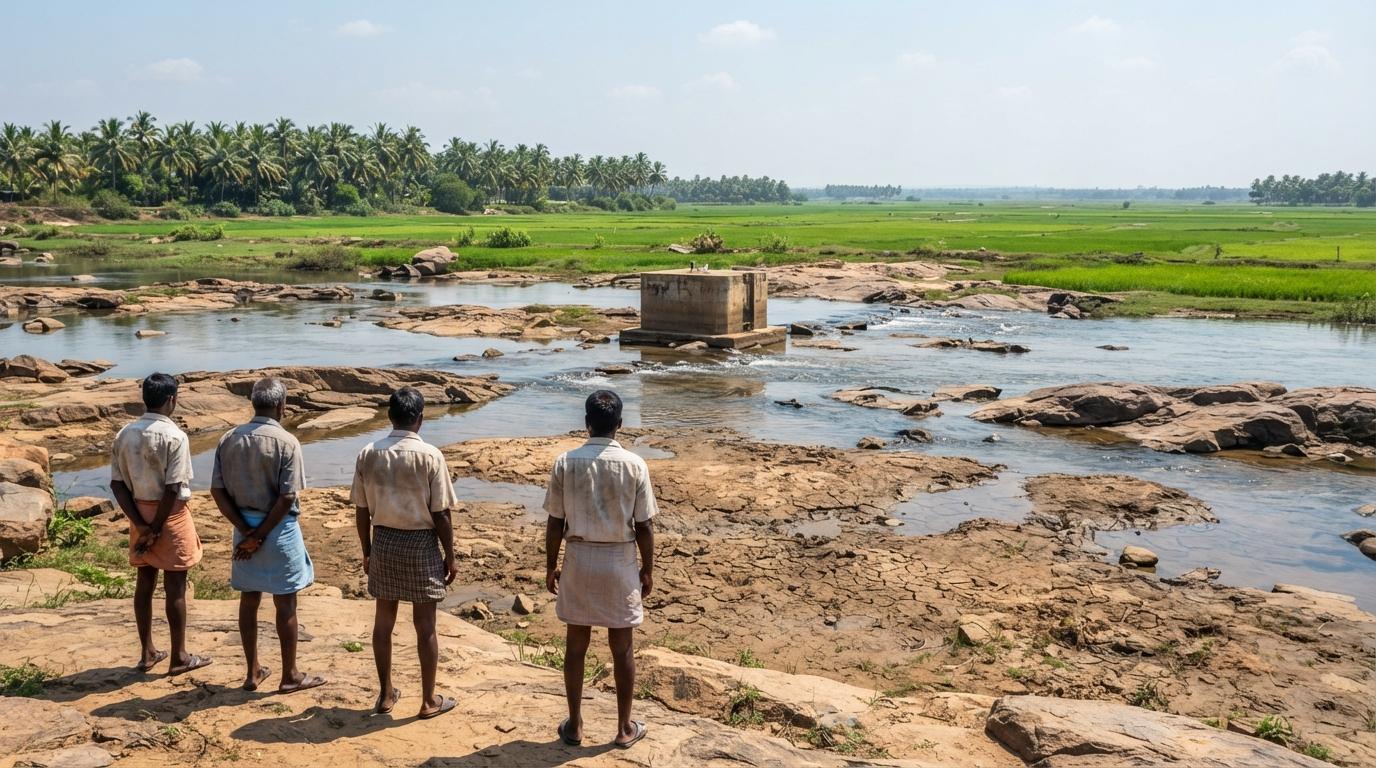
At the centre of that accounting stands Billigundulu. Releases measured there are tested against monthly schedules. Tamil Nadu framed its demand of 1.3 TMC per day for 10 days around that gauge. Thirteen TMC over ten days would have covered the stated 11 TMC arrears, with a margin for conveyance and measurement variation. Karnataka has in past seasons disputed such arrears arithmetic, pointing to inflows, rainfall deficit and its own consumptive use. The Court was asked to settle that immediate calculation. It passed no release order.
Billigundulu and June-September Releases
June to September matters because cultivation turns on it. In Tamil Nadu, Kuruvai is a short-term paddy crop harvested around September-October. It needs water at the start of the season. Samba, the longer crop sown from August, stretches into January and lives off water stored during southwest monsoon flows. If June-September releases fall short, Mettur does not fill enough to carry Samba through the later months. Farmers then face delayed sowing, reduced acreage, or costly groundwater that is often saline in coastal stretches.
Across the border, Karnataka works to a different clock under equal pressure. The southwest monsoon fills the Harangi, Hemavathi, Krishnaraja Sagar and Kabini reservoirs. Those storages must meet drinking water demand, irrigation in the Mandya-Mysuru belt, and releases downstream. In low-inflow years Karnataka has said it cannot meet the full schedule without harming its standing crops and city supply. Tamil Nadu has answered that deficit must be shared and delay defeats a monthly schedule. That clash over timing keeps bringing interim applications back to the Court.
How the Court Handles Such Pleas
In this setting the Supreme Court acts less as a trial court and more as supervisor of an existing framework. Parliament has provided for tribunals and authorities under Article 262 of the Constitution and the law made under it. The Cauvery Water Management Authority and the Regulation Committee monitor flows, collect gauge data and issue directions on releases. The Court has over the years retained power to hear grievances against those directions and to pass interim orders where needed. Dismissal of an interim plea does not alter fixed shares. Standing directions and monthly accounting remain.
For lawyers, the November 20 order matters for what it refused. A direction to release 11 TMC in a fixed window would have required the Court to accept Tamil Nadu's arrears calculation as of October 7. That calculation turns on rainfall figures, inflow data, prior releases measured at Billigundulu, and adjustments for deficit years. Karnataka would put a different set of figures. Without preferring one version over the other on affidavit material alone, a court often leaves technical assessment to the Authority and the Committee. The refusal to take more documents on record points the same way.
What Farmers and Governments Watch Next
For now Karnataka faces no new Court-ordered release schedule from these applications, and Tamil Nadu must work within existing directions of the Authority for the rest of the season. Attention shifts back to gauge readings at Billigundulu, storage in Karnataka reservoirs and at Mettur, and any fresh direction from the Regulation Committee if flows change. If Tamil Nadu believes arrears persist, its remedy is to place updated flow data before the Authority and, if needed, return to the Court on a fresh record. For this round, the files close with the status quo intact.