
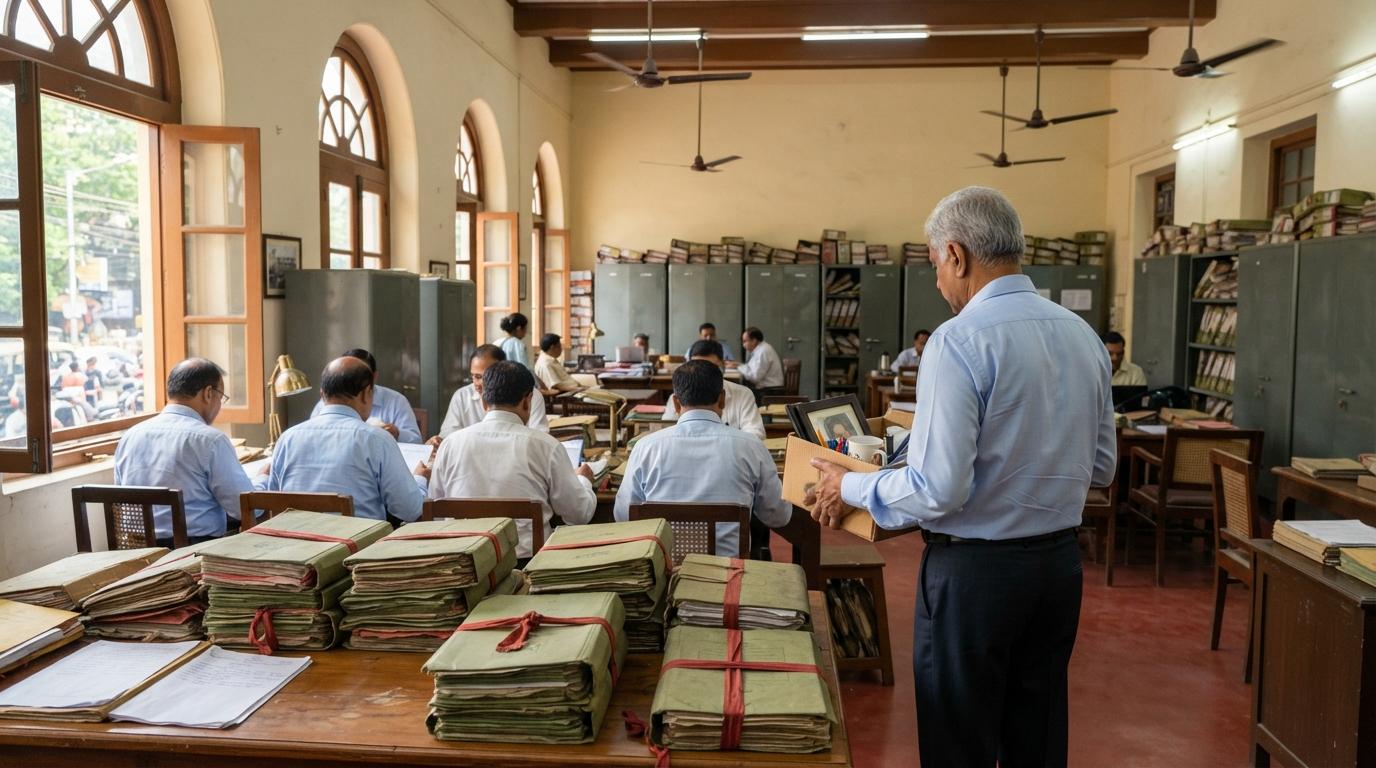
Supreme Court Holds Compulsory Retirement Is Not Punitive and Rejects Negative Equality Plea
LawWorld
The Supreme Court has upheld an order of compulsory retirement. It held the order is administrative, not punitive, and casts no stigma of misconduct on the officer. The plea that a colleague in a similar post was allowed to continue cannot succeed, the Court said. Equality under Article 14 is a positive concept and does not support a claim founded on negative equality. Judicial review, it added, is limited to whether the prescribed norms were followed and whether relevant material supported a reasonable view that retention was not in public interest.
In All India and state services, the power to retire a government servant prematurely in public interest has long created uncertainty. Service rules allow the government to act after a specified age or qualifying service, usually after a review of the record, integrity and continued usefulness. Employees often read such orders as punishment by another name. Salary stops, promotion chances end, and years of service are cut short. They come to court saying no charge was proved and no inquiry was held. The present ruling meets that grievance directly. It separates a penalty imposed for proved misconduct from an administrative decision taken to keep the service efficient and clean.
A compulsory retirement order records no finding of guilt. It does not carry the same bar on future employment as dismissal or removal. Pension and retiral benefits, subject to the rules, remain payable. The competent authority passes the order on an overall assessment that retention is not in public interest. Service entries, doubts on integrity, performance reports and other contemporaneous material may form that view. Proof beyond reasonable doubt is not required. For that reason, the Court said, the safeguards of a full disciplinary proceeding do not apply in the same manner.
Keep reading — it’s free.
Create a free LawWorld account to finish this piece and unlock the full library of practice guides written for advocates in India.
- Finish every guide, free
- Save articles to read later
- New practice insights weekly
Free forever. No card required.
Comments
Sign in to read the discussion and share your thoughts.
Latest from LawWorld
News
View all- Supreme Court Protects Birbhum Stone Quarry Accused From Coercive Action Till December 521 Nov 2026
- Supreme Court Orders Medical Examination Of 70-Year-Old Convict In 1981 Dumka Double Murder21 Nov 2026
- Supreme Court Caps Arbitral Award To Monetary Limit Of Referred Dispute21 Nov 2026
- Karnataka High Court Quashes Summoning Order Against Head Constable, Orders Fresh Process21 Nov 2026
- Karnataka High Court Upholds IGST Export Refund After Omission of Rule 96(10)21 Nov 2026