
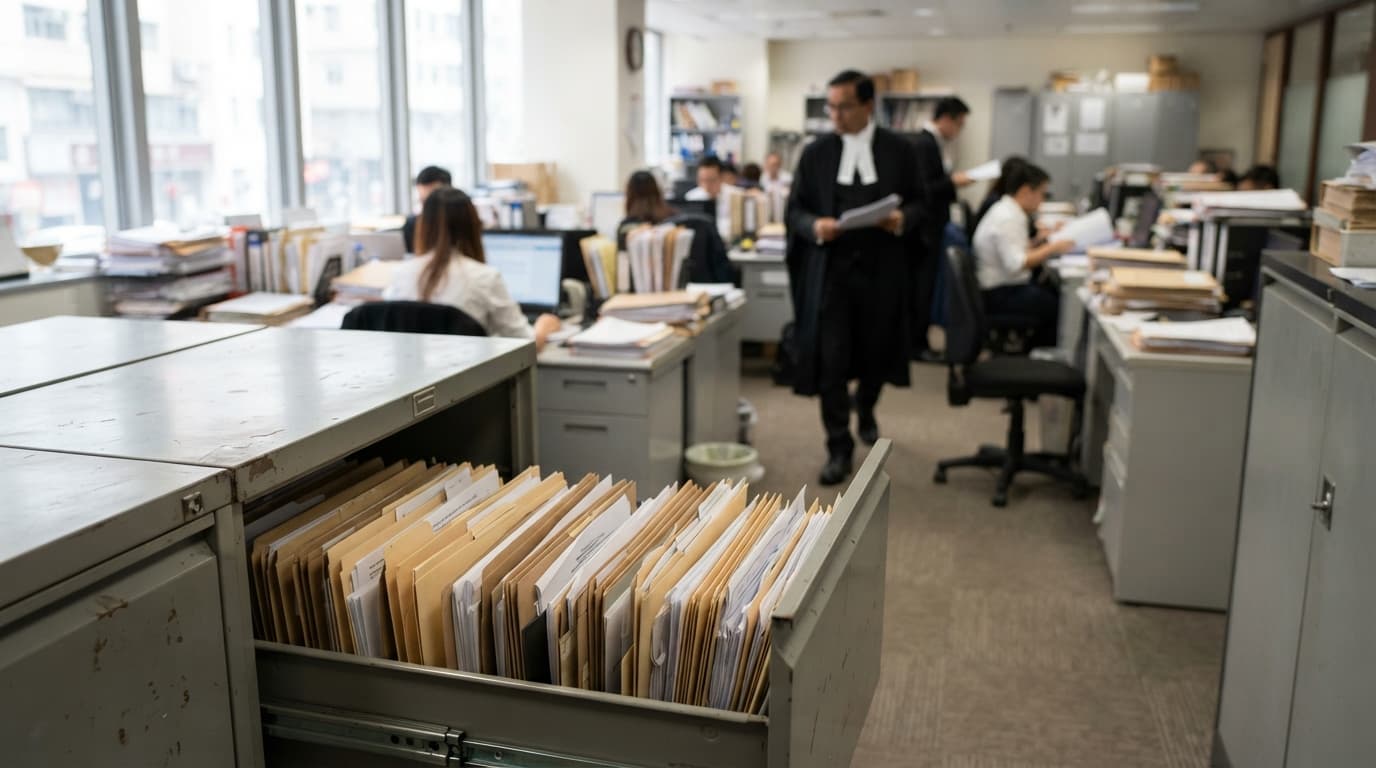
The Supreme Court of India on October 16 declined a petition by Sri Siddhi Lakshmi Transport Company seeking to club First Information Reports registered against it across different states. A bench led by Justice Joymalya Bagchi ruled that the consolidation of FIRs was a matter for police discretion and not appropriate ground for the apex court's intervention.
The company had argued that it faced hardship by having to approach ten separate High Courts to obtain relief in connection with the multiple FIRs. Justice Bagchi observed that the petitioner could appear online in all ten High Courts to obtain orders, effectively dismissing the hardship argument as insufficient reason for Supreme Court involvement.
The specific allegations contained in the FIRs and the states in which they were registered were not disclosed during the hearing. The Court also refrained from expressing any view on the merits of the allegations against the company. Throughout proceedings, the presumption of innocence remained applicable to the petitioner.
Police discretion over FIR consolidation
The bench's decision reflects a settled principle in Indian criminal procedure: the consolidation of First Information Reports registered in different jurisdictions falls within the investigative and administrative domain of police authorities. When multiple FIRs arise from related or identical facts, police may choose to club them or conduct a coordinated investigation, but this remains an exercise of police judgment rather than a matter requiring judicial intervention at the highest level.
The Supreme Court has consistently held that it will not ordinarily entertain pleas seeking directions on matters that fall squarely within the operational discretion of investigating agencies. Such restraint reflects the constitutional separation of powers and the recognition that the executive arm, through its investigative machinery, is better positioned to assess the practical and procedural feasibility of consolidating investigations across state lines.
In this case, the company's contention that appearing before ten High Courts would constitute undue hardship did not persuade the bench. The availability of online hearings has significantly reduced the logistical burden historically associated with simultaneous proceedings across multiple High Court jurisdictions. This development has made the traditional hardship argument less compelling in modern litigation.
Online hearings and jurisdictional access
Justice Bagchi's reference to the possibility of appearing online in all ten High Courts reflects the practical reality of contemporary judicial administration. Since the pandemic-induced shift to virtual hearings, the Supreme Court and High Courts have retained and expanded digital hearing facilities. This has democratized access to justice by eliminating the need for physical presence in courtrooms across distant locations.
The remark also indicates that the proper remedy for a company facing multiple FIRs lies not in seeking Supreme Court intervention to consolidate them, but in pursuing remedies available under criminal procedure before the appropriate High Courts. Each High Court has the power to examine whether the FIR before it discloses cognizable offenses, whether it is based on credible material, and whether it should be quashed under Section 482 of the Code of Criminal Procedure.
The company could have approached each High Court individually or simultaneously with identical grounds, presenting its case that the FIRs were frivolous, vexatious, or otherwise liable to be quashed. The availability of this remedy in multiple forums does not justify a deviation from the established principle that the Supreme Court should not ordinarily intervene in matters of police administration or investigation.
Presumption of innocence maintained
The Court's explicit statement that the presumption of innocence applies to the petitioner is significant. It clarifies that the rejection of the plea should not be read as an endorsement of the allegations against the company or as a finding that the FIRs have merit. Rather, the decision is purely procedural: it concerns the appropriate forum and mechanism for addressing the company's grievances, not the substance of those grievances.
This distinction is important for the company's legal standing. By maintaining the presumption of innocence, the Court has preserved the company's right to challenge each FIR on its merits before the respective High Courts. The company remains free to argue that the allegations are false, that they do not constitute offenses under law, or that the FIRs were registered without proper investigation or credible evidence.
Multi-state investigations and judicial limits
The decision sends a clear signal to litigants and their counsel about the limits of Supreme Court jurisdiction in matters of criminal procedure and police administration. While the Supreme Court is news reports of constitutional rights and can intervene in matters of fundamental importance, routine questions about the conduct of investigations or the consolidation of FIRs do not fall within this category.
Companies and individuals facing multiple FIRs across states must therefore adopt a strategy of pursuing relief before the competent High Courts rather than attempting to shortcut the process through the Supreme Court. This approach is consistent with the hierarchical structure of the Indian judiciary and the principle of judicial restraint.
For corporate entities in particular, early legal intervention is critical. Once an FIR is registered, the challenge to its validity or the plea for its quashing must be raised promptly before the High Court. Delay in approaching the court can prejudice the petitioner's case and may result in dismissal on grounds of laches or waiver.
What happens next for the company
Sri Siddhi Lakshmi Transport Company must now pursue its remedies through the ten High Courts where the FIRs have been registered. The company can file petitions under Section 482 of the Code of Criminal Procedure in each High Court, arguing that the FIRs should be quashed. These petitions can be filed simultaneously and heard online, reducing the practical burden that the company sought to avoid by approaching the Supreme Court.
The company may also seek interim relief in the form of protection from arrest or the suspension of investigation pending the outcome of the quashing petitions. Such relief is often granted by High Courts when the petitioner makes out a prima facie case that the FIR is frivolous or vexatious.
Moreover, the company can coordinate its legal strategy across the ten High Courts, ensuring that identical arguments are presented consistently and that any favorable order from one High Court can be cited before the others. This coordination, while requiring effort and resources, remains feasible through online hearings and the use of technology.
By declining the plea, the bench has reaffirmed that questions concerning the clubbing or consolidation of FIRs are matters for police discretion and that the proper forum for challenging the validity or basis of an FIR is the High Court of the state in which it has been registered. Sri Siddhi Lakshmi Transport Company must now pursue its remedies through these established channels rather than seek extraordinary relief from the apex court.
Comments
Sign in to read the discussion and share your thoughts.
Latest from LawWorld
News
View all- Karnataka High Court Issues Notice on Royal Fragrances' Petition Regarding KIADB IT Park Land17 Oct 2026
- Karnataka High Court Dismisses IRCTC's Delayed Appeal in Commercial Dispute17 Oct 2026
- Karnataka High Court Recalls Order in Kharge Family Trust Land Case, Schedules Fresh Hearing17 Oct 2026
- Karnataka High Court Upholds Constitutional Validity of Ancient Monuments Restrictions17 Oct 2026
- Karnataka High Court Directs Formation of District-Level Committees on Illegal Immigrants17 Oct 2026
Articles
View all- Supreme Court Issues Notice on Constitutional Validity of BNSS Section 172: Police Powers and Peaceful Assembly Rights at Stake17 Oct 2026
- Supreme Court Refers DPDP Act Constitutional Challenge to Five-Judge Bench: RTI vs. Privacy Rights at Stake12 Oct 2026
- Supreme Court Disposes PIL on Doxxing and Deepfakes; Directs Union Ministries to Implement Remedial Measures8 Oct 2026
Blogs
View all- Supreme Court Directs MEA to Publicize Compensation for Indians Killed in Russia-Ukraine War17 Oct 2026
- Contract Workers Cannot Claim Automatic Employment Despite Non-Compliance: Supreme Court Clarifies16 Oct 2026
- Supreme Court Calls for Separate Sexual Harassment Framework for Legal Professionals15 Oct 2026