
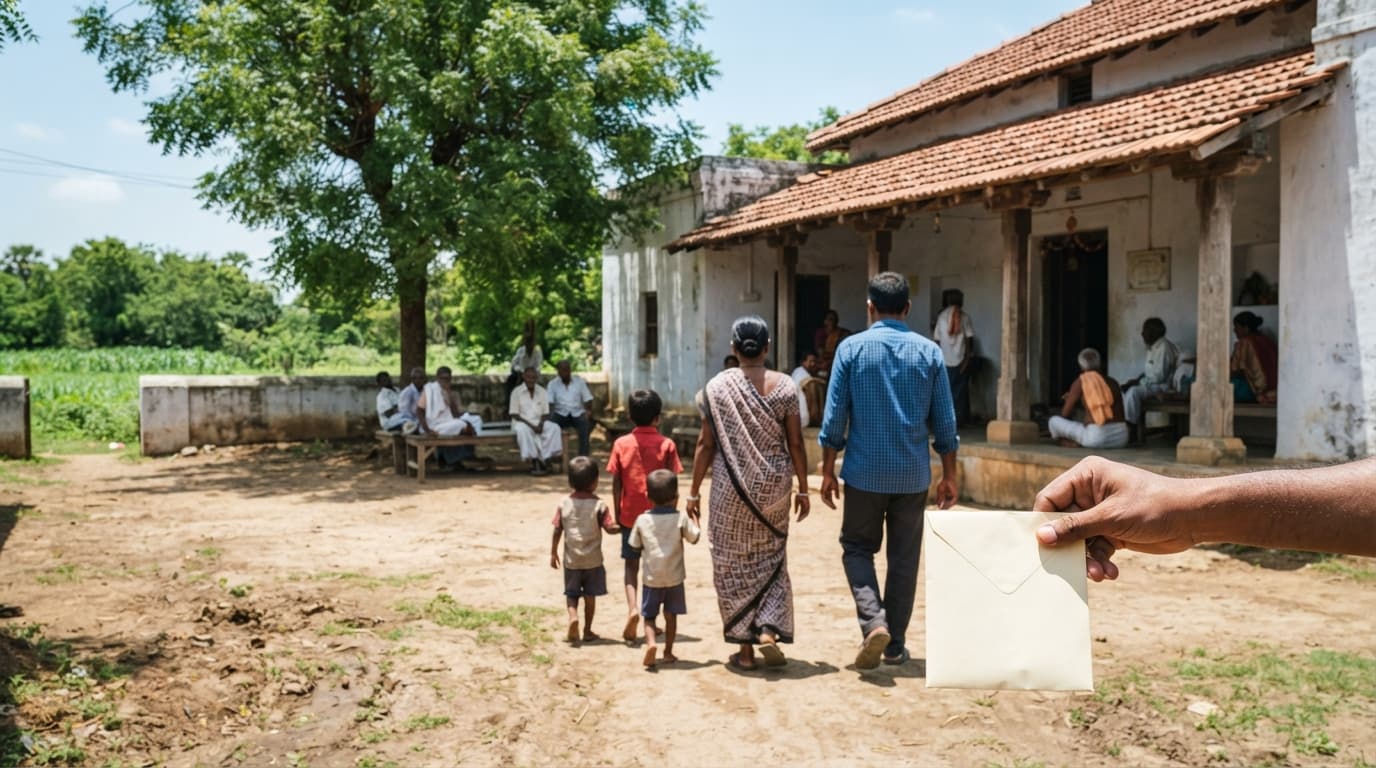
On November 4, 2026, Justice P.S. Narasimha, speaking for a Division Bench, asked whether laws that bar people with more than two children from panchayat and municipal office have lost their purpose. He framed it as a question of reproductive autonomy under Article 21. The Bench struck down nothing. It referred the validity of Javed v. Haryana to a larger Bench.
The difference is practical. A doubt has been recorded, with reasons, and a fuller hearing has been sought. Disqualifications in force in several States continue until the larger Bench answers. Candidates under scrutiny, members holding office, and lawyers advising them must still work with the law as it stands.
Fertility Down to 1.9 From 3
The Bench built its doubt on figures. India’s total fertility rate has fallen from 3 to 1.9, below the replacement level of 2.1 at which a population replaces itself from one generation to the next without migration. The fear that drove the norm was runaway population growth. The Court said that fear has eased.
Judges who decided these cases in the early 2000s saw a different country. Family planning was spoken of as a national emergency. Population control figured directly in policy for local governance. States wrote provisions that made a third child, born after a cut-off date, a ground for disqualification from panchayats and urban local bodies. The message was plain. Those who seek public office should model small-family conduct.
Twenty years on, the Court asked if the model still fits. A rate of 1.9 does not mean population has stopped growing. It means the average per woman has dropped below replacement. States vary widely, age structures vary, migration shifts local counts. Researchers tracking two child policy demography literature point to the same national slide to question a blanket bar tied to childbirth.
Keep reading — it’s free.
Create a free LawWorld account to finish this piece and unlock the full library of practice guides written for advocates in India.
- Finish every guide, free
- Save articles to read later
- New practice insights weekly
Free forever. No card required.
Comments
Sign in to read the discussion and share your thoughts.
Latest from LawWorld
News
View all- Supreme Court Bars Customs Refund Without Challenge to Self-Assessment15 Nov 2026
- Karnataka High Court Restores GST Appeal Dismissed for 226-Day Delay15 Nov 2026
- Karnataka High Court Holds Adulterer Is Proper But Not Necessary Party in Divorce Plea15 Nov 2026
- Karnataka High Court Quashes SC/ST Act Complaint Against Bharat Forge Chairman Over 11-Year Delay15 Nov 2026
- Karnataka High Court Directs Review of Mental Health Policies for Armed Personnel While Quashing Suicide-Attempt Case15 Nov 2026
Articles
View all- Article 22(2) Clock Starts at Curtailment of Liberty, Not Formal Arrest: Supreme Court in NDPS Bail Case15 Nov 2026
- Supreme Court Upholds Bihar Special Intensive Revision of Electoral Rolls14 Nov 2026
- Seven-Judge Constitution Bench Holds Decades-Old State Sales Tax Surcharge Reference Academic After GST6 Nov 2026