
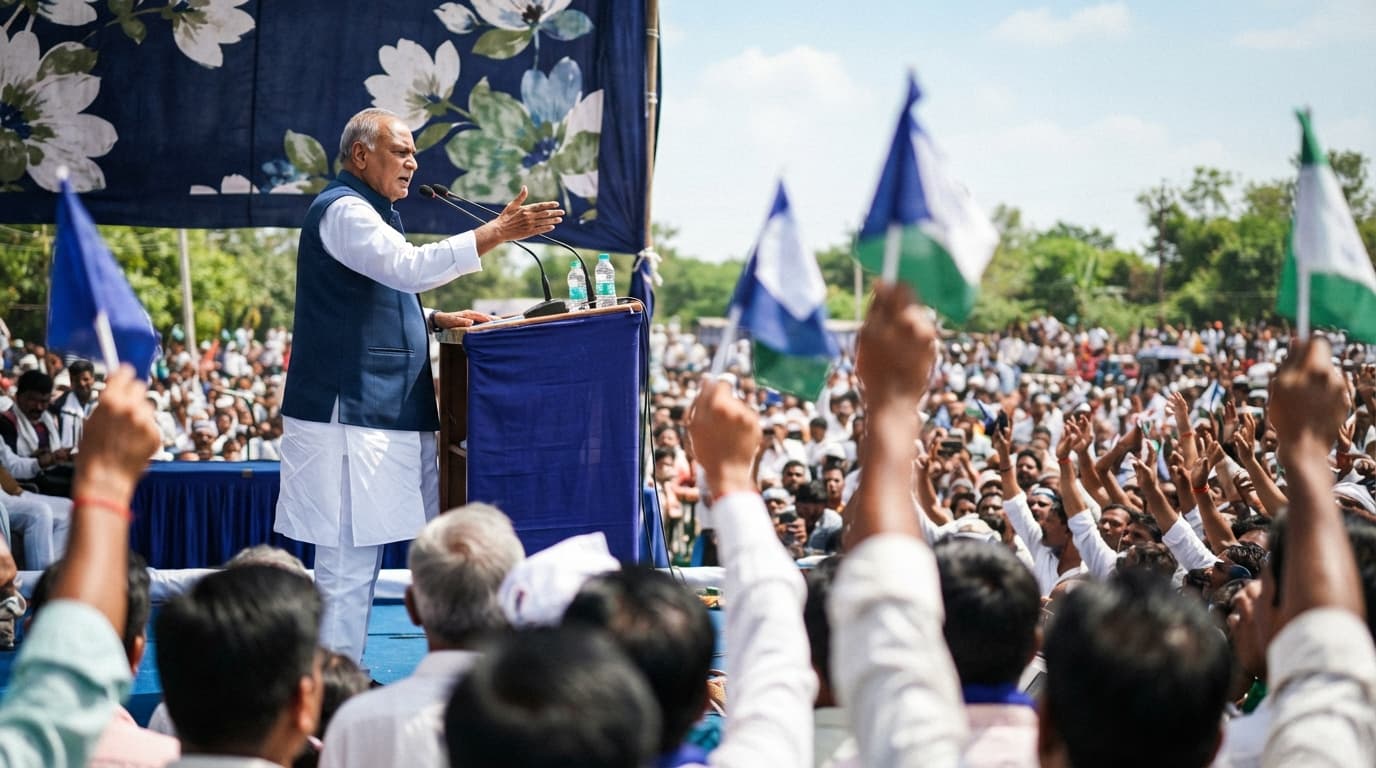
The Supreme Court on October 13, 2026, stayed criminal defamation proceedings against Congress MP Rahul Gandhi in a case stemming from his alleged remarks about Prime Minister Narendra Modi in connection with the Rafale fighter jet deal. A bench comprising Justices Vikram Nath and Aparesh Kumar Singh issued an interim order on Gandhi's petition, which challenged an earlier decision by the Bombay High Court refusing to quash the proceedings.
The Court issued notice to the Maharashtra government and BJP member Mahesh Shrishrimal, the complainant in the case, and scheduled the matter for further hearing after four weeks. This development comes after Gandhi challenged the Bombay High Court's September 8, 2026, order, which had declined to quash the summons issued against him.
Background of the Complaint
The defamation complaint originated in 2019 before a magistrate's court in Girgaon, Mumbai, based on remarks Gandhi allegedly made at a rally in Rajasthan in September 2018. According to the complaint, Gandhi made statements calling the Prime Minister "commander-in-thief" in reference to the Rafale defence deal, a controversial acquisition of fighter jets that has been a subject of political debate in India. The complaint alleged defamation under Section 500 of the Indian Penal Code, which provides for punishment for defamation.
Mahesh Shrishrimal, a BJP member, filed the original complaint, claiming that Gandhi's remarks constituted defamatory statements against the Prime Minister. The case proceeded through the lower courts and eventually reached the High Court, where Gandhi sought to have the summons quashed.
High Court's Earlier Refusal
When the matter came before the Bombay High Court in September 2026, the bench refused Gandhi's plea to quash the proceedings. This refusal prompted Gandhi to approach the Supreme Court, challenging the High Court's decision. The Supreme Court's decision to stay the proceedings represents a significant development in the case, effectively halting further action until the Court hears the matter again.
The interim stay order suggests that the Supreme Court found sufficient grounds to pause the proceedings while it examines the substantive issues raised in Gandhi's petition. Such stays are typically granted when the Court believes that allowing the proceedings to continue might cause irreparable harm or when the petition raises questions of law or procedure that warrant the Court's consideration.
Significance of the Stay
The granting of the stay order means that Gandhi is temporarily protected from further proceedings in the case, including the continuation of the trial or any orders that might be passed by the lower courts. During this period, neither the magistrate's court nor any other forum can take action to advance the case against him.
The issuance of notice to the Maharashtra government and the complainant indicates that the Supreme Court intends to hear their responses before proceeding further. This is a standard procedural step in the Supreme Court, allowing all parties to present their arguments before the bench makes a final decision on whether the defamation proceedings should be quashed entirely or allowed to continue.
The four-week timeframe set for the next hearing suggests that the Court expects responses from the respondents within this period. This timeline also indicates that the Supreme Court may not take an extended period to dispose of the petition, though the exact date of the hearing will be communicated by the Court registry.
Political Context
The Rafale fighter jet deal has been a subject of intense political debate in India since 2015, when the government announced its intention to procure 36 aircraft from the French manufacturer Dassault Aviation. Opposition parties, including the Congress, have raised concerns about the pricing, procurement process, and other aspects of the deal. Gandhi's remarks about the Prime Minister in this context reflect the broader political controversy surrounding the acquisition.
The defamation case against Gandhi must be understood within this political backdrop. While defamation law applies equally to all citizens regardless of their political affiliation, cases involving political figures and their statements often attract significant public and legal attention. The Supreme Court's decision to intervene and stay the proceedings suggests that the bench may be examining whether the statements in question fall within the scope of legitimate political speech or constitute actionable defamation.
Legal Implications
The Supreme Court's intervention raises important questions about the balance between protecting individual reputation and preserving the right to free speech in political discourse. Indian courts have historically recognized that political figures must tolerate a higher degree of criticism than ordinary citizens, and that statements made in the context of political debate may receive greater protection under constitutional guarantees of free speech.
The Section 500 IPC provisions under which the complaint was filed provide for imprisonment up to two years and a fine for defamation. However, courts have developed jurisprudence around what constitutes actionable defamation, particularly in the context of statements made by political figures about other political figures.
The Supreme Court's stay order does not prejudge the final outcome of the case. The Court may ultimately decide to quash the proceedings entirely, dismiss Gandhi's petition and allow the case to proceed, or take some intermediate position. The bench will likely examine whether the statements in question were made in good faith as political commentary, whether they were based on factual assertions that could be verified, and whether they crossed the line into personal attack rather than legitimate criticism.
Next Steps
With the matter now posted for hearing after four weeks, the focus shifts to the responses that will be filed by the Maharashtra government and Mahesh Shrishrimal. These responses are likely to argue in favour of the continuation of the defamation proceedings, while Gandhi's counsel will present arguments supporting the quashing of the case.
The Supreme Court bench will then hear oral arguments from both sides before deciding whether to grant final relief to Gandhi or dismiss his petition. Until that hearing takes place, the defamation proceedings remain stayed, and no further action can be taken in the case by any lower court.
The outcome of this case may have implications beyond Gandhi himself, potentially influencing how courts approach defamation cases involving political speech and statements made by elected representatives about government policies and decisions.
Comments
Sign in to read the discussion and share your thoughts.
Latest from LawWorld
News
View all- Karnataka High Court Grants Six-Day Interim Bail to KPSC Scam Accused for Daughter's Naming Ceremony13 Oct 2026
- Karnataka High Court Disposes Petition After State Notifies SOP for Underage Pregnancies13 Oct 2026
- Karnataka High Court Directs Police to Issue Look Out Circular in Dowry and Cruelty Case13 Oct 2026
- Karnataka High Court Strikes Down SC/ST Quota Law Exceeding 50% Constitutional Ceiling13 Oct 2026
- Supreme Court Issues Contempt Notices Over Metro Restrictions and Detentions During Delhi Protests13 Oct 2026
Articles
View all- Supreme Court Refers DPDP Act Constitutional Challenge to Five-Judge Bench: RTI vs. Privacy Rights at Stake12 Oct 2026
- Supreme Court Disposes PIL on Doxxing and Deepfakes; Directs Union Ministries to Implement Remedial Measures8 Oct 2026
- Supreme Court Issues Notice on Constitutional Challenge to GST Input Tax Credit Denial Provision7 Oct 2026
Blogs
View all- Supreme Court Orders Priority Hearing for Pension Cases: A Decade-Long Wait Deemed 'Grave Injustice'12 Oct 2026
- Supreme Court Clarifies Gratuity Calculation: Monthly Wages Divided by 26 Working Days, Not 3011 Oct 2026
- Supreme Court Affirms Damages Recovery for Delayed Provident Fund Contributions Without Time Limit10 Oct 2026