
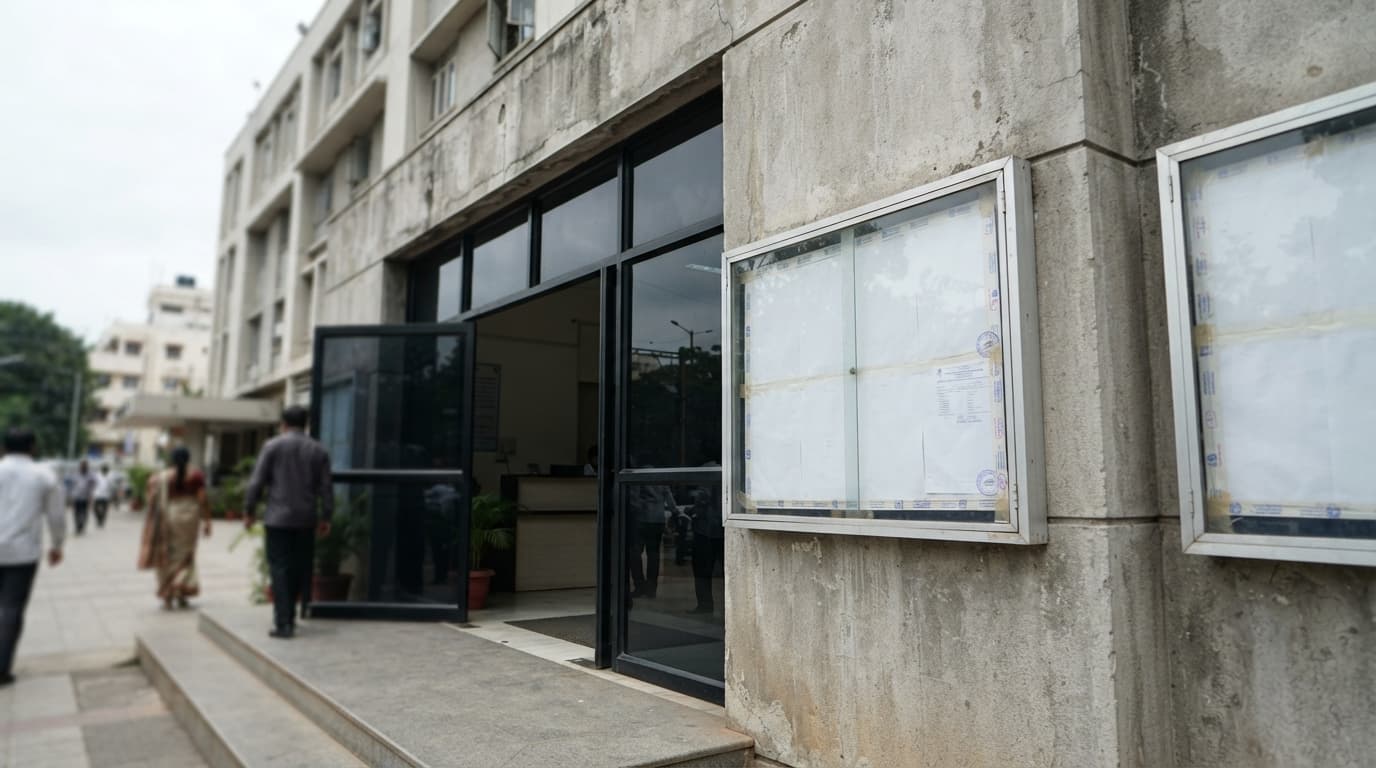
The Karnataka High Court on October 12, 2026, invalidated key sections of a state law that had expanded reservation quotas for Scheduled Castes and Scheduled Tribes beyond the constitutionally mandated 50% ceiling. A Division Bench comprising Chief Justice Vibhu Bakhru and Justice K.S. Hemalekha struck down Sections 3 and 4 of the Karnataka Scheduled Castes and Scheduled Tribes (Reservation of Seats in Educational Institutions and of Appointments or Posts in the Services under the State) Act, 2022, finding that the enhancement violated Articles 14, 15, and 16 of the Constitution.
The 2022 Act had increased SC reservation from 15% to 17% and ST reservation from 3% to 7%, bringing the total reservation in the state to 56%. This exceeded the 50% aggregate cap established by the Supreme Court in Indra Sawhney v. Union of India. The court's decision came in response to petitions filed by Mahendra Kumar Mitra and others, as well as H.R. Sagar and others, who challenged the constitutional validity of the enhanced quotas.
Constitutional Limits on Reservation
The 50% ceiling on reservation has been a settled constitutional principle since the Supreme Court's 1992 decision in Indra Sawhney v. Union of India, which examined the scope and limits of affirmative action under the Indian Constitution. The threshold reflects a balance between the constitutional commitment to equality and the principle that reservations cannot be so extensive that they undermine the general merit-based selection process or violate the rights of the unreserved category.
The Karnataka High Court's bench applied this established precedent directly to the state law. The court found that by raising the aggregate reservation to 56%, the state had breached this constitutional boundary. The bench did not merely strike down the excess in abstract terms; it invalidated the specific sections of the Act that had implemented the increase, making the enhanced quotas unenforceable within the state.
Procedural Failures and Consultation Requirements
Beyond the substantive constitutional violation, the court identified a significant procedural defect in how the 2022 Act was enacted. Articles 338(9) and 338A(9) of the Constitution impose a mandatory requirement that the National Commission for Scheduled Castes and the National Commission for Scheduled Tribes be consulted before any law affecting the interests of these communities is passed.
The bench noted that the Karnataka state government had failed to undertake this consultation process before increasing the reservation percentages. This omission amounted to a breach of constitutional procedure, independent of the question whether the increased quotas themselves exceeded permissible limits. The consultation requirement exists to ensure that the expert bodies established to safeguard SC and ST interests have an opportunity to advise Parliament or state legislatures on proposed changes affecting these communities.
The dual grounds of the judgment—both substantive constitutional violation and procedural non-compliance—reveal that the law was defective on multiple fronts.
Immediate Legal Effect
With Sections 3 and 4 struck down, the reservation percentages in Karnataka revert to their pre-2022 levels: 15% for SCs and 3% for STs. Any recruitment, admission, or appointment process that was initiated under the enhanced quotas may face legal challenges or require re-evaluation. Educational institutions and state services that had begun implementing the 56% aggregate reservation will need to adjust their ongoing processes.
The practical implications are significant. Candidates who may have been selected or rejected based on the now-invalidated enhanced quotas could potentially mount legal challenges. Government departments will need to clarify whether selections made during the period when the 2022 Act was in force remain valid or must be revisited. These questions will likely generate further litigation.
State's Response and Supreme Court Appeal
The Karnataka state government has indicated that it is considering an appeal to the Supreme Court against the High Court's decision. Such an appeal would raise the same constitutional questions before India's apex court, which would have the final say on whether the 50% ceiling is absolute or whether circumstances might permit exceptions.
An appeal would also give the state an opportunity to argue that the consultation requirement under Articles 338(9) and 338A(9), while mandatory, might not be grounds for striking down the substantive law if the increase itself could be justified on other constitutional grounds. The Supreme Court could potentially take a different view on either or both of these issues.
However, the Indra Sawhney precedent remains strong, and any Supreme Court review would need to grapple with decades of settled constitutional interpretation. The state would bear the burden of presenting compelling reasons why that precedent should be reconsidered or distinguished.
Ongoing Tension in Reservation Policy
The judgment reflects an ongoing tension in Indian constitutional law between two competing principles: the commitment to substantive equality for historically disadvantaged communities and the constitutional limits on how far affirmative action can extend without infringing the rights of other citizens. The 50% ceiling represents an attempt to strike this balance, though the balance itself remains contested in policy and academic circles.
Reservation policy has been a subject of intense debate in Karnataka for years. The 2022 Act represented a political decision to increase the quotas, reflecting the state government's view that the original percentages were insufficient to address historical injustice. The High Court's decision, conversely, prioritizes the constitutional framework established by the Supreme Court over the state's policy choice.
This dynamic—between state legislatures seeking to expand reservations and courts enforcing constitutional limits—is not unique to Karnataka. Other states have also attempted to increase reservation quotas, and courts have occasionally had to intervene. The Karnataka case will likely serve as a reference point for similar disputes elsewhere.
What Comes Next
The immediate question is whether the state will file an appeal to the Supreme Court and on what timeline. A Supreme Court challenge would not automatically stay the High Court's order, meaning the reversion to pre-2022 quotas would remain in effect unless the apex court grants interim relief.
In the meantime, educational institutions and government departments across Karnataka must ensure compliance with the court's order. Any ongoing recruitment or admission processes based on the 56% aggregate quota must be halted or adjusted. The state's legal department will need to issue circulars clarifying the revised reservation percentages and advising all concerned departments and institutions of the change.
The decision also sends a signal to other states considering similar quota increases: courts will enforce the 50% constitutional ceiling, and procedural requirements such as consultation with the National Commissions cannot be bypassed. For advocates of expanded reservations, the judgment makes clear the need to work within constitutional constraints or to pursue constitutional amendment—a far more difficult path than legislative action.
The Karnataka High Court's October 12 judgment thus closes one chapter on the state's attempt to expand SC/ST reservations while potentially opening another in the Supreme Court.
Comments
Sign in to read the discussion and share your thoughts.
Latest from LawWorld
News
View all- Karnataka High Court Grants Six-Day Interim Bail to KPSC Scam Accused for Daughter's Naming Ceremony13 Oct 2026
- Karnataka High Court Disposes Petition After State Notifies SOP for Underage Pregnancies13 Oct 2026
- Karnataka High Court Directs Police to Issue Look Out Circular in Dowry and Cruelty Case13 Oct 2026
- Supreme Court Issues Contempt Notices Over Metro Restrictions and Detentions During Delhi Protests13 Oct 2026
- Opposition Leaders File Supreme Court Petition Against Election Commission Over Electoral Roll Irregularities13 Oct 2026
Articles
View all- Supreme Court Refers DPDP Act Constitutional Challenge to Five-Judge Bench: RTI vs. Privacy Rights at Stake12 Oct 2026
- Supreme Court Disposes PIL on Doxxing and Deepfakes; Directs Union Ministries to Implement Remedial Measures8 Oct 2026
- Supreme Court Issues Notice on Constitutional Challenge to GST Input Tax Credit Denial Provision7 Oct 2026
Blogs
View all- Supreme Court Orders Priority Hearing for Pension Cases: A Decade-Long Wait Deemed 'Grave Injustice'12 Oct 2026
- Supreme Court Clarifies Gratuity Calculation: Monthly Wages Divided by 26 Working Days, Not 3011 Oct 2026
- Supreme Court Affirms Damages Recovery for Delayed Provident Fund Contributions Without Time Limit10 Oct 2026