
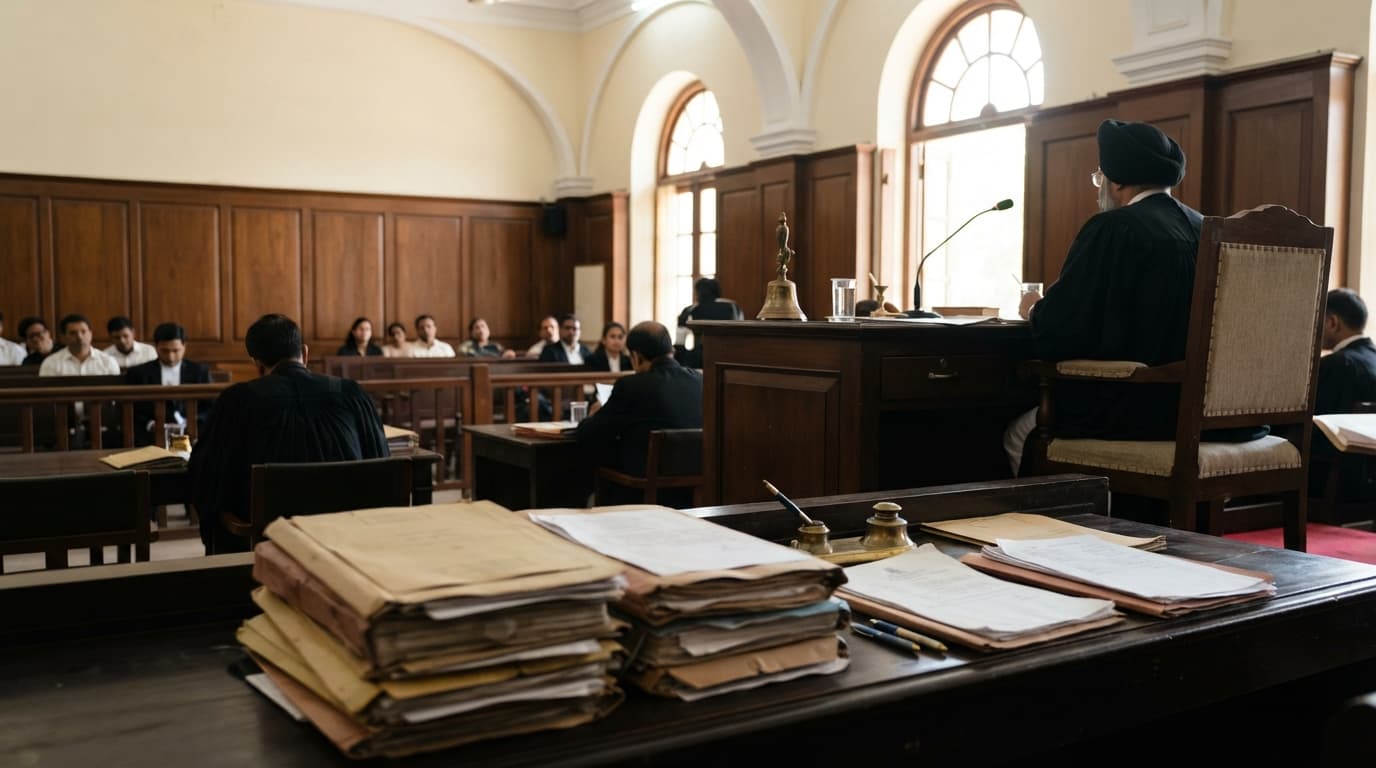
The Supreme Court of India has clarified that separate trials remain the procedural norm in criminal cases and that clubbing a sessions case with a complaint filed under the Bharatiya Nagarik Suraksha Sanhita (BNSS) or Criminal Procedure Code (CrPC) constitutes an unwarranted practice. The ruling came in the criminal appeal Danish & Ors. vs. State of UP & Anr., arising out of a Special Leave Petition (Criminal) No. 7334 of 2026, which originated from the Allahabad High Court. The Court disposed of pending applications in the matter while reaffirming fundamental procedural protections for criminal defendants.
Trial courts have sometimes attempted to consolidate sessions cases with complaint cases for joint hearing and adjudication. This practice, the Supreme Court found, deviates from established criminal procedure and undermines the distinct legal frameworks governing different categories of criminal proceedings. By clarifying that separate trials constitute the norm rather than the exception, the Court has reinforced the principle that procedural bifurcation serves important protective functions within the criminal justice system.
Separate Trials as Procedural Safeguard
When a sessions case and a complaint case arise from related facts or involve overlapping parties, trial courts may face pressure to consolidate proceedings for administrative efficiency. The Supreme Court recognized that such consolidation, while seemingly practical, can compromise the distinct procedural rights available to accused persons depending on the category of offense and the nature of the charge.
Sessions cases typically involve more serious offenses and carry different procedural provisions than complaint cases, which generally concern lesser offenses or matters initiated through private complaint rather than police investigation. The BNSS and CrPC contain separate provisions governing the trial, evidence, and procedural rights applicable to each category. By clubbing these cases, trial courts risk conflating procedural safeguards and potentially applying inappropriate standards of proof, examination, or cross-examination to one category of offense.
The Supreme Court's ruling ensures that accused persons retain the full benefit of procedural protections specific to the charges they face. This approach aligns with the constitutional commitment to due process under Articles 20 and 21 of the Constitution of India, which guarantee protection against self-incrimination and the right to life and liberty respectively.
Impact on Trial Court Practice
The judgment carries immediate practical consequences for trial courts across India. Judges presiding over criminal cases must now resist administrative convenience as a justification for consolidating sessions and complaint cases. Even where cases involve the same accused, the same complainant, or factually related allegations, the procedural norm requires separate trials unless specific statutory provisions explicitly authorize clubbing.
Trial courts have discretionary powers under the CrPC and BNSS to manage their calendars and consolidate proceedings in certain circumstances. However, the Supreme Court's ruling establishes that the exercise of such discretion must operate within defined boundaries. Clubbing sessions cases with complaint cases falls outside those boundaries and constitutes a departure from established practice that lacks principled justification.
For accused persons, this ruling protects their right to have each charge adjudicated according to the procedural framework applicable to that specific charge. An accused facing both a serious sessions charge and a lesser complaint charge can no longer be subjected to a single consolidated trial that might blur the distinction between the two proceedings or apply inappropriate evidentiary standards.
Statutory Framework Under BNSS and CrPC
Both the Bharatiya Nagarik Suraksha Sanhita, which came into effect in 2023 as the successor to the Criminal Procedure Code, and the CrPC contain provisions governing the conduct of trials. These provisions recognize different categories of offenses and prescribe distinct procedures accordingly. Sessions cases, involving offenses punishable with imprisonment exceeding seven years, fall under one procedural regime. Complaint cases, typically involving lesser offenses or private complaints, fall under another.
The BNSS represents a comprehensive reform of criminal procedure in India, incorporating contemporary principles of criminal justice administration while preserving core protections for accused persons. The Supreme Court's interpretation of BNSS provisions in this case reflects a commitment to reading the new statute in a manner consistent with constitutional principles and established procedural norms.
When trial courts club cases in violation of this principle, they create procedural confusion and expose their judgments to appellate scrutiny and potential reversal. The Supreme Court's clear statement that separate trials constitute the norm will likely reduce the frequency of such clubbing in lower courts and provide appellate courts with a firm foundation for reversing orders that consolidate sessions and complaint cases.
Disposal of Pending Applications
The Supreme Court disposed of the pending applications in Danish & Ors. vs. State of UP, bringing clarity to the procedural questions raised in that case. While the judgment does not detail the specific facts of the case or the nature of the charges involved, the ruling's focus on the clubbing issue suggests that this procedural defect formed a central part of the appeal.
The disposal of these applications establishes binding precedent for all subordinate courts in India. Trial courts cannot henceforth rely on administrative convenience, case management pressures, or factual overlap as justification for clubbing sessions cases with complaint cases. High Courts reviewing such orders must find such clubbing to constitute a procedural irregularity warranting correction.
Criminal Justice Administration and Court Efficiency
The ruling reflects the Supreme Court's broader approach to criminal procedure reform. Even as India transitions to the BNSS, the Court continues to emphasize that procedural protections exist for substantive reasons. Efficiency in criminal trials must not come at the cost of fairness to accused persons or the integrity of distinct procedural frameworks.
Trial courts across India manage heavy caseloads and face constant pressure to expedite proceedings. The temptation to consolidate related cases is understandable from an administrative standpoint. However, the Supreme Court's ruling makes clear that such consolidation, when it violates established procedural norms, cannot be justified by reference to court efficiency alone.
This judgment may prompt court administration bodies and high courts to issue practice directions emphasizing the separate trial principle. Some high courts may already have issued such directions, but the Supreme Court's explicit ruling provides a stronger foundation for their enforcement and for disciplinary action against judges who persistently violate the principle.
Clarity on Procedural Rights
The ruling protects fundamental procedural safeguards that distinguish the Indian criminal justice system from systems that prioritize administrative efficiency over fairness. The right to separate trials flows from the principle that each charge must be adjudicated according to the law applicable to that charge.
Accused persons benefit from this ruling by retaining clarity about which procedural rules govern their trial, what evidence is admissible, and what standards of proof apply to each charge. This clarity becomes particularly important in cases involving multiple charges of varying severity, where the procedural regime applicable to one charge might be inappropriate for another.
The Supreme Court's decision reinforces the rule of law in criminal procedure, ensuring that the framework governing trial conduct remains predictable, transparent, and rooted in statutory provisions rather than judicial improvisation or administrative convenience. As trial courts implement this ruling, they will find that maintaining separate trials, while administratively more demanding, better serves the interests of justice and the constitutional rights of accused persons.
Comments
Sign in to read the discussion and share your thoughts.
Latest from LawWorld
News
View all- Karnataka High Court Stays Wage Freeze Circular for Urban Development Authorities17 Oct 2026
- Supreme Court Directs Centre to Publish New Civil Aviation Rules Within Two Weeks Under Bharatiya Vayuyan Adhiniyam17 Oct 2026
- Supreme Court Rules Free Legal Aid in Prison Does Not Bar Parole for Supreme Court Appeal Access17 Oct 2026
- Supreme Court Declares Internet Access a Fundamental Right for All Individuals Including Children17 Oct 2026
- Supreme Court Holds Demanding Bribe is Pure Criminal Act, Section 17A Prevention of Corruption Act Inapplicable17 Oct 2026
Articles
View all- Supreme Court Issues Notice on Constitutional Validity of BNSS Section 172: Police Powers and Peaceful Assembly Rights at Stake17 Oct 2026
- Supreme Court Refers DPDP Act Constitutional Challenge to Five-Judge Bench: RTI vs. Privacy Rights at Stake12 Oct 2026
- Supreme Court Disposes PIL on Doxxing and Deepfakes; Directs Union Ministries to Implement Remedial Measures8 Oct 2026
Blogs
View all- Supreme Court Directs MEA to Publicize Compensation for Indians Killed in Russia-Ukraine War17 Oct 2026
- Contract Workers Cannot Claim Automatic Employment Despite Non-Compliance: Supreme Court Clarifies16 Oct 2026
- Supreme Court Calls for Separate Sexual Harassment Framework for Legal Professionals15 Oct 2026